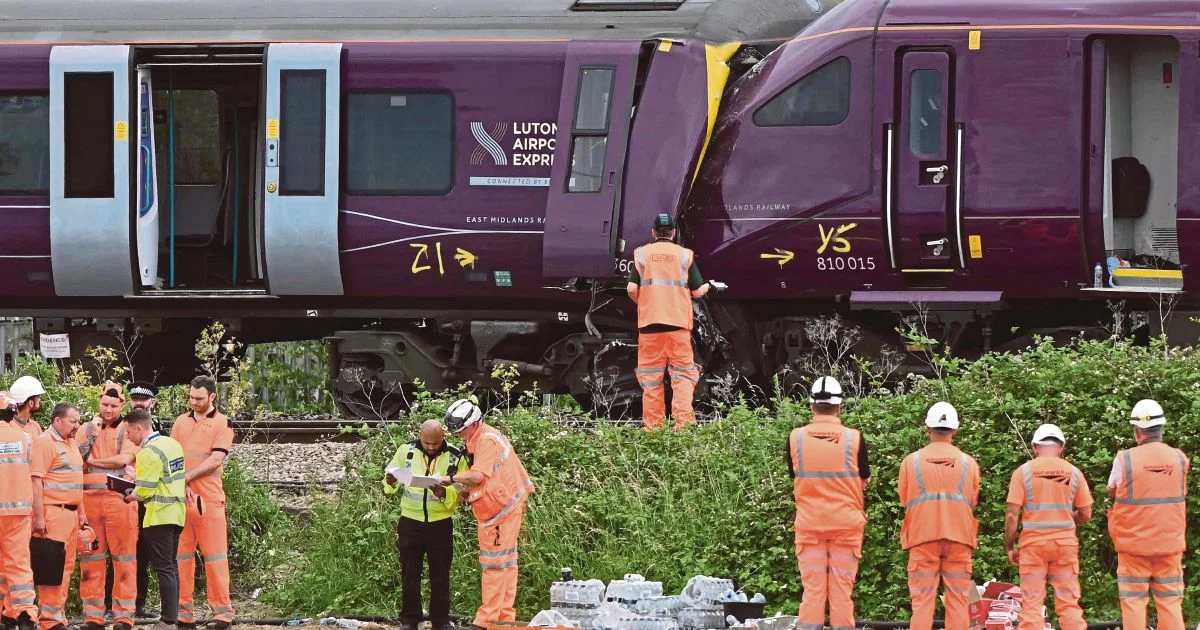
Accident investigators in the United Kingdom have launched a comprehensive investigation into the circumstances surrounding a train collision that occurred north of London, an incident that resulted in one fatality and left dozens of passengers requiring medical treatment. The collision claimed the life of a train driver, while 28 others were transported to hospitals across the region, with nine of those casualties listed in critical condition following the impact.
The accident represents a significant transport incident for the UK rail network, prompting immediate responses from emergency services and regulatory authorities tasked with determining what led to the collision. Initial reports suggest multiple emergency vehicles were dispatched to the scene, with medical teams working to treat the injured and transport the most severely affected to nearby medical facilities. The scale of hospitalizations underscores the violence of the collision and raises questions about safety protocols on the route where the incident occurred.
For Malaysian readers familiar with rail transport challenges across Southeast Asia, such incidents serve as stark reminders of the operational pressures facing rail networks in heavily populated regions. The UK incident highlights how even mature transport systems in developed nations can experience catastrophic failures, a consideration relevant to ongoing discussions about rail safety standards and investment priorities in Malaysia's expanding rail infrastructure. The comparable severity of injuries and fatalities offers perspective on what constitutes a major transport accident by international standards.
The involvement of critical injuries among nearly one-third of the casualties suggests the collision involved substantial force and speed, pointing toward potential failures in signaling systems, driver response protocols, or track maintenance procedures. Investigators will likely examine whether automated safety systems functioned correctly and whether driver training and reaction times met required standards. These technical assessments take on particular importance given Malaysia's own ongoing investment in railway modernization, particularly through projects like the expansion of the Klang Valley Mass Rapid Transit system and planned high-speed rail initiatives.
The location of the accident north of London indicates it occurred on a major transport corridor serving one of Europe's most densely populated regions. Such corridors typically experience intense daily traffic volumes, creating cumulative pressure on infrastructure and operational staff. The timing and circumstances of this collision will likely inform broader policy discussions across European rail operators regarding capacity management, safety investment allocation, and the balance between operational efficiency and passenger protection.
Emergency response coordination appears to have been mobilized effectively, with multiple hospitals receiving casualties and medical teams working to stabilize the most critically injured. The rapid deployment of accident investigation resources reflects established UK protocols for transport incidents, a systematic approach that contrasts with varying levels of emergency preparedness observed across different regions in Southeast Asia. Understanding how such investigations are conducted internationally can inform best practices for Malaysian authorities overseeing domestic transport safety.
The investigation itself will likely prove lengthy and detailed, examining technical data from the trains involved, witness statements from passengers and staff, maintenance records, and communications between train operators and control centers. Such comprehensive inquiries typically reveal multiple contributing factors rather than single failures, findings that reshape understanding of how seemingly redundant safety systems can break down in sequence. This investigative approach has become standard practice following major accidents, producing findings that subsequently influence policy changes across the rail industry.
The human cost of the collision extends beyond the immediate injury statistics, as families of those hospitalized face extended periods of uncertainty and potential long-term recovery needs. The death of the driver represents a particularly profound loss, as operators typically receive heightened safety training and maintain specific responsibilities for passenger protection. The psychological impact on surviving passengers, railway staff, and first responders contributes to the broader social consequences of such incidents.
From a Southeast Asian perspective, rail safety remains an evolving priority as countries across the region expand their networks and increase operational speeds. The UK collision underscores that accidents can occur regardless of national development level or technological sophistication when systems fail or human factors interact unexpectedly with infrastructure limitations. Malaysia's ongoing efforts to enhance rail safety, staff training, and emergency response capabilities benefit from studying how such incidents unfold and how investigations determine causation.
The investigation findings, once released, will likely generate discussion among transport regulatory bodies across multiple jurisdictions, including Malaysia's Land Public Transport Agency and relevant railway operators. Recommendations emerging from UK investigators may influence how safety standards are applied and updated across different rail networks, particularly regarding signaling systems, collision avoidance technology, and emergency response protocols that have become increasingly standardized in modern transport operations.