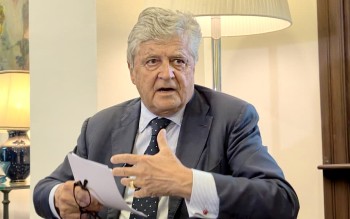
France has formally offered to partner with Malaysia on the development of civil nuclear energy, contingent upon the Malaysian government's decision to pursue atomic power as part of its broader energy transition strategy. Nicolas Forissier, France's Minister Delegate for Foreign Trade and Economic Attractiveness, made the offer during an official visit to Kuala Lumpur, underscoring that the technology represents a significant pathway toward decarbonizing electricity generation. The proposal reflects growing diplomatic engagement between the two nations and hints at France's strategic interest in expanding its nuclear footprint across Southeast Asia during a period of heightened global focus on climate solutions.
Forissier was careful to frame the initiative as contingent on Malaysia's own deliberations, acknowledging that the country remains in the exploratory phase of evaluating nuclear energy's viability within its national context. Officials in Kuala Lumpur are currently engaged in internal discussions and public debates about whether atomic power merits inclusion in Malaysia's long-term energy portfolio. The French minister's comments suggested that substantive conversations have already taken place with Malaysian government counterparts, indicating that interest exists at the policy level even as broader national consensus has yet to crystallise. This measured approach respects Malaysia's sovereign decision-making while simultaneously positioning France as a committed and knowledgeable partner should the country move forward.
France's leverage in nuclear technology stems from decades of institutional expertise and operational success. The country generates approximately 60 percent of its electricity from nuclear power plants, with the remainder sourced from renewable energy systems including solar and wind installations. This energy mix has enabled France to maintain relatively low carbon emissions in its electricity sector compared to other major industrialised nations. By showcasing its track record, Forissier sought to demonstrate that nuclear energy is not merely a theoretical solution but a proven, scalable technology that has functioned reliably across multiple economic and political contexts. The offer to transfer technical knowledge and operational experience represents a tangible commitment that extends beyond diplomatic rhetoric.
The prospect of nuclear energy development carries particular significance for Malaysia's energy security and climate objectives. The country has committed to achieving carbon neutrality by 2050 and faces mounting pressure to diversify its electricity generation away from fossil fuels. Natural gas currently dominates Malaysia's power generation mix, with coal and renewable sources comprising the remainder. Nuclear energy could provide a high-capacity, baseload power source that operates continuously regardless of weather conditions, unlike intermittent renewables. For a nation with growing electricity demand driven by industrialisation and urbanisation, nuclear power offers a potential solution to the challenge of meeting rising consumption while reducing greenhouse gas emissions.
Forissier emphasised that nuclear energy development demands long-term institutional commitment and planning. He noted that such projects typically operate for 50 to 80 years, requiring sustained investment, technical expertise, regulatory frameworks, and public confidence across multiple political cycles. This observation underscores a fundamental reality: nuclear power is not a short-term energy fix but rather a generational undertaking that demands strategic patience and consistent policy direction. For Malaysia, such a commitment would necessitate building sophisticated regulatory institutions, training a skilled workforce, and establishing public trust through transparent governance—all of which represent substantial prerequisite work before any construction could commence.
The French delegation accompanying Forissier on his inaugural official visit to Malaysia comprised representatives from more than 20 French companies with interests spanning sectors relevant to energy development, industrial cooperation, and advanced technology. The delegation's composition signals that France's interest extends beyond government-to-government engagement to encompass private sector opportunities. French firms see potential market demand in Malaysia and across Southeast Asia as nations pursue energy transition initiatives. This commercial dimension lends practical substance to the diplomatic offer, as companies bring technical capacity, investment capital, and implementation experience to potential partnership arrangements.
The timing of Forissier's visit reflects the accelerating pace of bilateral engagement between France and Malaysia across multiple domains. The visit follows recent high-level diplomatic exchanges, including conversations between the foreign ministers of both nations and Malaysian Defence Minister's visit to a French aircraft carrier in March 2025. Most significantly, Prime Minister Datuk Seri Anwar Ibrahim travelled to France in early July 2025, just days before Forissier's Malaysia visit. These successive high-level interactions demonstrate that both governments view the relationship as sufficiently important to merit sustained attention and resource allocation. The nuclear energy discussion thus represents one component of a broader deepening of diplomatic and economic ties.
Malaysia's consideration of nuclear energy occurs within a broader Southeast Asian context in which several nations are reconsidering atomic power's role in their energy futures. Thailand, Vietnam, and Indonesia have at various points explored or expressed interest in nuclear development, though each faces distinct technological, financial, and political considerations. A Malaysian decision to move forward with civil nuclear energy would not occur in isolation but rather would influence regional perceptions about nuclear technology's acceptability and feasibility in tropical, developing-economy contexts. Such a precedent could either accelerate or impede similar initiatives elsewhere in Southeast Asia depending on implementation outcomes.
Public and parliamentary acceptance remains a critical unknown variable in Malaysia's nuclear calculus. While the government evaluates options through official channels, broader public sentiment toward nuclear power in Malaysia has historically been mixed, with concerns about safety, waste management, and environmental risks expressed by civil society groups and environmental advocates. Any government decision to pursue nuclear energy development would likely trigger public debate and require sustained communication about safety protocols, regulatory oversight, and long-term waste management solutions. France's offer of technical assistance could extend to helping Malaysia develop transparent communication strategies and robust public engagement processes, areas where the French nuclear industry has accumulated considerable experience.
The financial implications of nuclear energy development also merit consideration as Malaysia contemplates its options. Construction of modern nuclear power plants requires substantial capital investment, typically measured in billions of ringgit, alongside ongoing operational and maintenance costs throughout the facility's lifespan. Malaysia would need to secure financing mechanisms, potentially involving international development banks or bilateral lending arrangements, and ensure that the economics of nuclear-generated electricity remain competitive with alternative energy sources as technology costs evolve. France could potentially assist in financial structuring and facilitate access to development finance, though Malaysia retains ultimate responsibility for fiscal prudence and ensuring value for public resources invested.
Regulatory and institutional development represents perhaps the most foundational prerequisite for Malaysia's nuclear journey. The country would need to establish or substantially upgrade nuclear regulatory agencies with genuine independence and technical capacity to oversee reactor operations, safety compliance, and waste management. International cooperation, including with the International Atomic Energy Agency, would be essential to ensure that Malaysian institutions meet global standards and best practices. France's experience in building robust regulatory institutions could provide valuable guidance as Malaysia constructs the governance architecture necessary for responsible nuclear energy development.
As Malaysia weighs its energy future, the French offer serves as a concrete manifestation of the technological options available to countries committed to decarbonisation. Whether Malaysia ultimately embraces nuclear power depends on multiple factors including cost-competitiveness relative to rapidly advancing renewable technologies, public acceptance, available financing, institutional capacity, and strategic alignment with broader development priorities. France has positioned itself as a patient, knowledgeable partner willing to support Malaysia's decision-making process and implementation should the country move forward. The coming months and years will reveal whether Malaysia's internal deliberations conclude that nuclear energy merits a central role in the nation's energy transition or whether alternative pathways prove more compatible with Malaysian circumstances and preferences.

