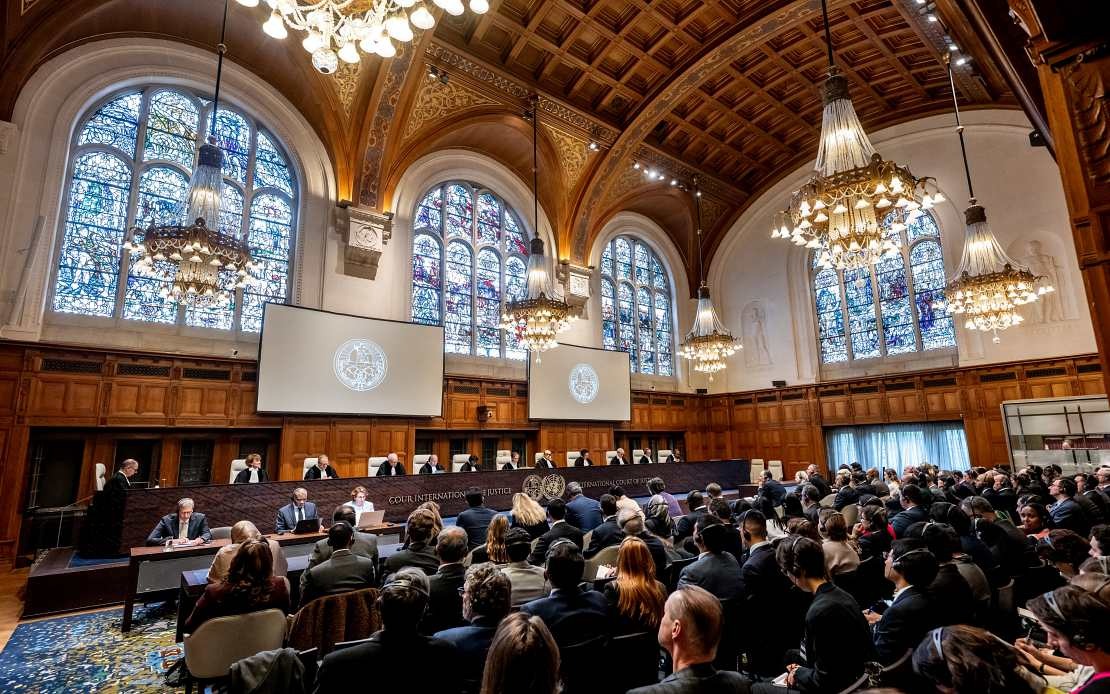
Paris doubled down on its backing for the International Criminal Court on Thursday, firmly rejecting American assertions that the institution represents a threat to state autonomy. The French Foreign Ministry's position underscores a significant diplomatic divide between Washington and major Western allies over the legitimacy and proper scope of international criminal justice mechanisms.
French Foreign Ministry spokesman Pascal Confavreux articulated the country's position with clarity, emphasizing that the ICC functions as a prosecutorial body targeting individuals rather than governments themselves. This distinction proves crucial to understanding the fundamental disagreement between Paris and Washington. While the United States has long harboured skepticism toward the court, recent criticism from Secretary of State Marco Rubio has escalated tensions, with Washington now actively encouraging other nations to reconsider their membership. The French response demonstrates that key European powers intend to resist this pressure and maintain their institutional commitments.
Confavreux stressed that France's support for the ICC remains steadfast despite mounting American hostility. He underlined the court's role in combating impunity for the world's gravest offences, positioning the institution as essential infrastructure for global justice. This framing reflects a broader philosophical divide: European democracies tend to view the ICC as a cornerstone of rules-based international order, whereas American administrations have historically viewed it with suspicion, fearing potential constraints on US military and intelligence operations.
The French government also condemned what it characterized as mounting threats and attacks against ICC personnel and officials. By elevating this issue alongside its substantive defence of the court, Paris implicitly connected the dots between American diplomatic pressure and the broader erosion of institutional safety. This rhetorical move suggests concern that Washington's campaign might embolden hostile actors or create an environment hostile to the court's operations in The Hague.
Rubio's recent statements represent a notable escalation in American opposition to the international body. His announcement that Washington intends to persuade other countries to withdraw from the ICC signals a coordinated diplomatic offensive rather than mere rhetorical critique. The State Department has simultaneously launched a separate initiative explicitly designed to curtail the court's capacity to assert jurisdiction over American nationals or interests. Such moves signal a comprehensive strategy to undermine the institution from multiple angles simultaneously.
The underlying tension reflects divergent constitutional philosophies. The United States, as a non-signatory to the ICC's founding treaty, has maintained that it cannot accept external judicial oversight of its citizens and military personnel. American policymakers have long worried that the court might pursue cases against US officials, soldiers or intelligence operatives for actions taken in pursuit of national security. This deep-seated concern predates recent political developments and enjoys bipartisan support among significant segments of the American foreign policy establishment.
Meanwhile, France and other member states have integrated the ICC framework into their conception of international legality and peacekeeping. The court, established in 2002 and headquartered in The Hague, was designed specifically to prosecute individuals responsible for genocide, war crimes, crimes against humanity and aggression. For European nations, the institution represents an important mechanism for preventing atrocities and holding accountable those who commit them. The French position essentially argues that surrendering on this commitment would undermine decades of international consensus-building around these norms.
The timing of this Franco-American disagreement carries particular significance for Southeast Asian observers. Many nations in the region navigate complex relationships with both Washington and European capitals, and tensions within the Western alliance over institutional architecture have downstream effects throughout global governance structures. Countries like Malaysia, Indonesia and other ASEAN members that have considered or engaged with ICC mechanisms must weigh these dynamics carefully, particularly as geopolitical competition intensifies across the Indo-Pacific.
France's firm response also reflects the European Union's broader commitment to multilateralism and rules-based international order, concepts that have become increasingly contested in contemporary global politics. By publicly reaffirming its ICC support, Paris signals that Europe will not simply fall into line with American strategic preferences, even when Washington applies diplomatic pressure. This assertion of independence carries symbolic weight beyond the immediate dispute and speaks to evolving power dynamics within traditional Western alliances.
The practical implications of this disagreement remain uncertain. While the United States cannot unilaterally dissolve the ICC, American pressure could potentially weaken it through reduced funding, targeted sanctions against member states or sustained diplomatic campaigns encouraging withdrawals. Whether France and other committed members can maintain the institution's integrity and effectiveness in the face of sustained American opposition will likely emerge as a defining question for international justice mechanisms over the coming years.

