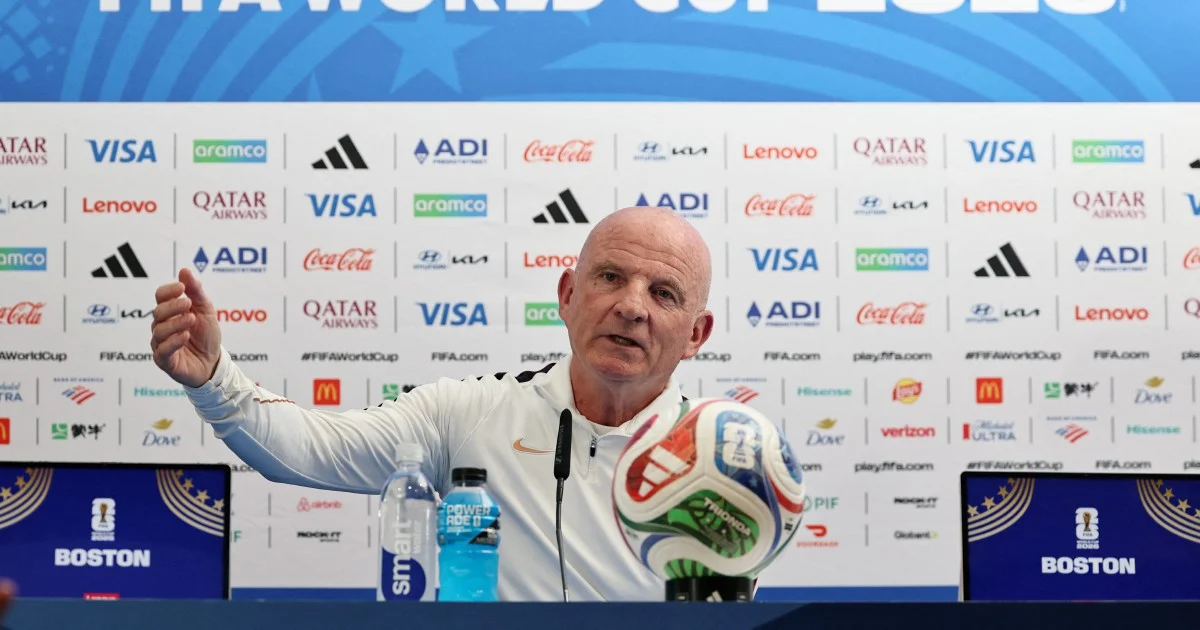
France will pursue top spot in their World Cup Group I when facing in-form Norway on Friday, driven by pragmatic logistical considerations that extend far beyond mere sporting prestige. Speaking in place of manager Didier Deschamps, who has returned to France for his mother's funeral, assistant coach Guy Stephan outlined how finishing first would keep the two-time champions anchored in the northeastern United States through the quarter-finals, whereas second place would force the squad into exhausting cross-continental travels stretching to Dallas, Miami and Atlanta. This operational reality reflects how modern tournament football increasingly hinges on factors beyond tactics and talent, particularly in a sprawling nation like the United States where venue distances dwarf those in traditional European competitions.
With both teams already assured of knockout progression after winning their opening matches, Friday's encounter at the home of the New England Patriots near Boston takes on particular significance. France require only a draw to secure top billing thanks to superior goal difference, providing them with a mathematical cushion that removes the pressure of pursuit. Yet Stephan made clear that Deschamps and the entire squad regard the group finale as anything but a ceremonial affair, emphasising the management's commitment to the structural advantages that first place brings. The concentration on logistics underscores how tournament football at elite level involves meticulous planning that begins long before the opening kickoff, with travel schedules, accommodation arrangements, and player recovery cycles all factoring into performance calculations.
The assistant coach's remarks revealed that France will navigate Friday's match without central defender William Saliba, whose absence represents a significant loss to a backline that has proven organisationally sound in the group stage. Additionally, striker Marcus Thuram is battling a calf complaint that may affect his availability or effectiveness should he feature. These injury concerns inject uncertainty into France's selection processes precisely when they are targeting maximum points, forcing Stephan and his staff to recalibrate their approach against opponents who have demonstrated attacking prowess throughout the competition. Such personnel pressures highlight the gruelling nature of international tournaments, where fixture congestion and the physical toll of top-level competition compound managerial decision-making.
Stephan's comments regarding Deschamps' absence carried a tone of measured professionalism befitting the gravity of the situation. While expressing that he maintains regular telephone contact with his manager, Stephan acknowledged that Friday would constitute an exception to their usual communication patterns, as Deschamps grieves his mother's passing. This temporary separation of the head coach from his technical staff during a crucial fixture exemplifies how personal circumstances intersect with sporting obligations, a reality that international football frequently confronts. Despite Deschamps' physical distance, his strategic imprint remains evident through the team's collective understanding of objectives and the clear delegation of authority to Stephan and the supporting coaching structure.
France's position as the 2018 World Cup champions carries expectations that transcend individual matches, yet the group stage remains the foundational phase where maintaining consistency builds momentum for deeper runs. The squad's accumulation of six points from two games represents precisely the kind of efficient start that championship-winning teams typically construct, providing psychological security and practical advantages in group standings. Stephan's observation that such rapid qualification "doesn't happen very often" acknowledges the competitive intensity of modern international football, where even established powers cannot assume progression. His emphasis on group-stage positioning reflects managerial pragmatism rooted in understanding how tournament structures reward planning and resource allocation.
Norway, equally undefeated after two matches, represents a formidable opponent that cannot be dismissed as makeweight in the equation. The Scandinavian nation has demonstrated the combination of defensive organisation and clinical finishing that characterises competitive World Cup squads, meaning France cannot approach Friday's encounter with complacency. The head-to-head nature of their confrontation, combined with the knockout implications already determined, promises a match where both teams will pursue maximum points for their respective strategic objectives. This dynamic creates the kind of competition that international football audiences find compelling—two capable teams with clear motivations engaging in a high-stakes group finale.
From a regional Southeast Asian perspective, France's methodical progression through the group stage serves as a reminder of how European football maintains competitive advantages through systematic preparation and execution. Malaysian football enthusiasts observing the tournament gain insight into the professional standards that separate elite international competitors from developing footballing nations, particularly in areas such as squad rotation management, injury prevention protocols, and the coordination of technical staff during unforeseen circumstances. The emphasis on logistical efficiency, while seemingly mundane, reflects the difference between organisations that professionalise every aspect of their operations and those that concentrate primarily on match performance.
The temperature considerations that Stephan highlighted present another dimension often overlooked in superficial tournament analysis. Playing in the northeastern United States provides climatic conditions markedly different from southern venues, with humidity and heat significantly impacting player conditioning and tactical execution. Maintaining a base near Boston until the quarter-finals would allow France to acclimate to consistent environmental conditions rather than repeatedly adapting to disparate climates across distant cities. This physiological dimension underscores how tournament success involves managing multiple variables simultaneously, from competitive performance through institutional organisation to environmental adaptation.
As Friday's match approaches, France's pursuit of first place represents the convergence of multiple considerations—sporting ambition, logistical efficiency, player welfare, and organisational continuity. Stephan's articulation of these factors demonstrates the comprehensiveness with which elite football operations function, extending far beyond the ninety minutes of play. While Deschamps' temporary absence adds an unusual dimension to France's preparation, the squad's demonstrated focus suggests that collective commitment transcends individual presence, a hallmark of well-constructed football organisations that distribute responsibility across technical structures rather than concentrating authority in single figures.

