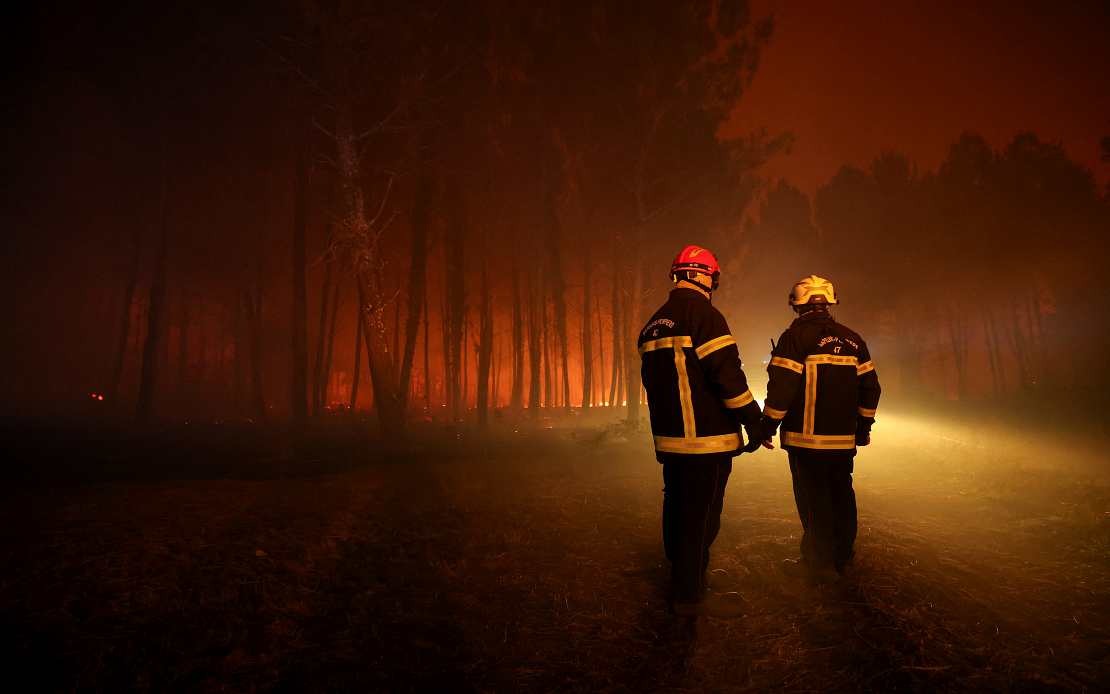
A French court has charged a 15-year-old boy in connection with a deadly fire near Bordeaux that claimed the lives of two emergency responders in July. The teenager appeared before a judge on Thursday and was subsequently remanded in a closed educational facility pending further proceedings. The incident underscores the often-tragic consequences of careless behaviour and raises questions about youth responsibility and public safety in Europe's densely populated areas.
The fire broke out in Merignac, a town situated close to Bordeaux airport, and rapidly consumed a residential building. According to reporting from regional newspaper Sud Ouest and broadcaster BFMTV, the teenager allegedly initiated the blaze by discarding a lit cigarette onto dry grass near a parking area. The circumstances suggest a momentary lapse in judgment that spiralled into catastrophic consequences, with the flames spreading quickly enough to trap emergency vehicles responding to the scene.
On July 21, two firefighters lost their lives after their emergency vehicle became surrounded by advancing flames while they were engaged in active firefighting operations. The rapid intensity of the fire prevented their escape, turning a routine emergency response into a tragedy. The incident prompted the Bordeaux prosecutor's office to launch a comprehensive investigation into both the circumstances of the emergency response and the root cause of the fire itself.
Initial inquiries led authorities to suspect two brothers who had been in the vicinity. Both the 15-year-old and his 22-year-old sibling were taken into police custody for questioning following their arrest. Investigators examined whether either or both had contributed to starting the fire. The elder brother, apprehended on Wednesday, was subsequently released without charges after the teenager accepted full responsibility for the incident during his interrogation.
According to accounts provided to local media, the two brothers had stopped in the area and were both smoking cigarettes. The older sibling disposed of his cigarette butt in the parking lot, where it posed minimal risk. The younger boy, however, discarded his cigarette onto nearby grassy terrain, which apparently ignited and triggered the conflagration. This distinction between the two actions proved critical in determining culpability and explaining why only the teenager faced formal charges.
The charging of a minor in a case resulting in two deaths represents a significant legal moment in France, bringing questions of adolescent accountability into sharp focus. While the teenager did not consciously intend to cause harm or fatalities, French law nonetheless permits prosecution for the consequences of negligent or reckless conduct. His placement in a closed educational centre rather than a conventional detention facility reflects France's judicial approach to young offenders, which emphasises rehabilitation alongside accountability.
The Merignac fire represents a stark reminder of how everyday actions, particularly those involving fire and combustible materials, can escalate into emergencies with irreversible human costs. Firefighters routinely encounter preventable incidents sparked by discarded cigarettes, yet the combination of dry conditions, flammable vegetation, and rapid flame spread occasionally creates scenarios beyond rapid containment. In this instance, the structural characteristics of the building and the speed of fire propagation proved particularly lethal.
For the broader European context, and particularly for Malaysia given the tropical climate's inherent fire risks, the case highlights the importance of public education regarding fire safety and responsible smoking practices. Many fires across Southeast Asia originate from similarly careless disposal of smoking materials, particularly during dry seasons or in areas where vegetation moisture content diminishes. The French incident demonstrates that such consequences are not confined to developing nations or regions perceived as having weaker safety protocols.
The loss of two firefighters has rippled through local communities in the Bordeaux region and reverberated nationally, prompting renewed discussions about fire prevention and the hazards faced by emergency personnel. Families, colleagues, and public officials have had to grapple with the sobering reality that routine equipment disposal decisions can cascade into unprecedented tragedy. This psychological and social dimension extends beyond legal proceedings, affecting workplace culture and safety consciousness across emergency services.
Looking forward, the prosecution and adjudication of this case may establish important precedents regarding minor culpability in incidents resulting in fatalities through negligence. The judiciary's approach—balancing the defendant's age and developmental maturity against the gravity of consequences—will likely influence how similar cases are handled in the French system. Educational interventions and restorative justice approaches may feature alongside conventional sentencing, reflecting contemporary European perspectives on juvenile delinquency and rehabilitation.

