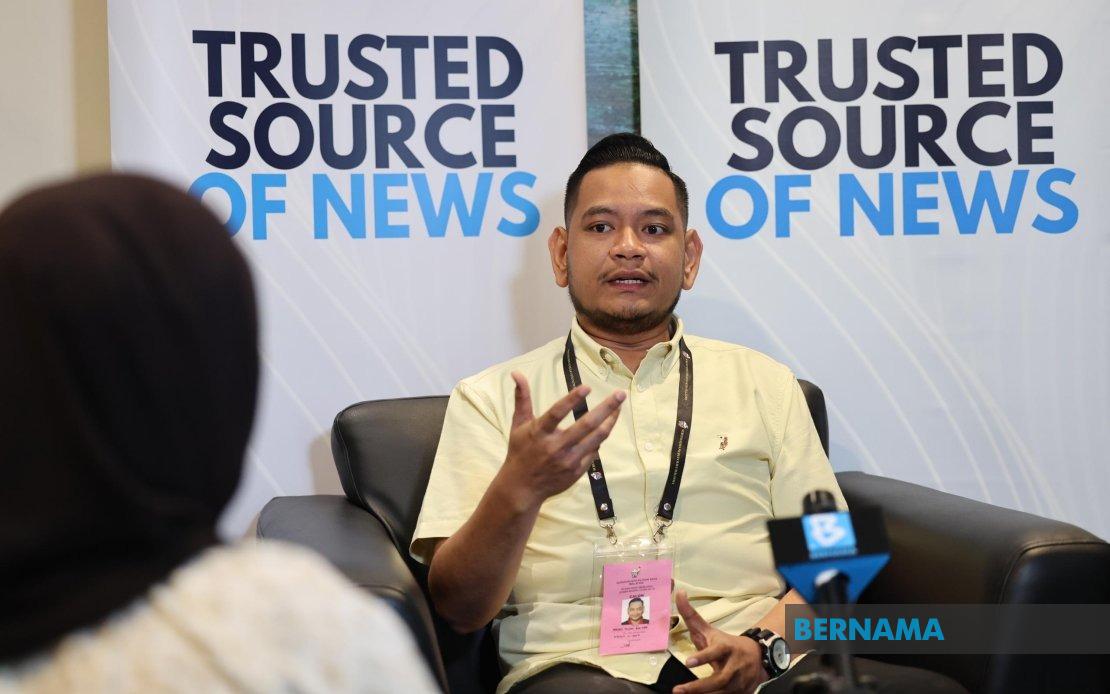
At 29 years old, Amirul Huzni Onn is banking on a generational shift to overcome the institutional advantages his rivals bring to the Sedili state assembly contest in Johor's upcoming election. The Parti Amanah Negara (Amanah) Youth chief and Pakatan Harapan (PH) standard-bearer is undeterred by facing incumbent Barisan Nasional (BN) candidate Muszaide Makmor and Perikatan Nasional (PN) contender Rasman Ithnain, a former three-term assemblyman with deep roots in the constituency. His strategy rests on a counterintuitive framing: that his lack of political baggage and relative newness to elected office represent competitive advantages rather than liabilities in an electorate potentially fatigued by establishment politics.
In a political landscape dominated by figures with decades of parliamentary and state assembly experience, Amirul Huzni's youth candidacy reflects broader regional trends across Southeast Asia where younger voters and reform-minded constituencies are increasingly receptive to candidates unburdened by association with past governance failures. The Sedili race encapsulates this tension between experience and renewal, with Amirul Huzni explicitly reframing his status as a blank slate—free from the accumulated compromises and unpopular decisions that often haunt long-serving politicians. This positioning carries particular resonance in constituencies where local frustration over unmet developmental promises has accumulated over multiple electoral cycles.
When discussing his electoral prospects, Amirul Huzni demonstrates a disarming candour about the structural disadvantages he faces. He acknowledges that measured by traditional political metrics—party machinery, financial resources, established networks of patronage—his campaign operates from a considerable deficit compared to rivals representing both BN and PN, coalitions with significantly deeper organisational reach across Johor. Yet he reorients the conversation toward what he characterizes as the binary reality of electoral contests: victory or defeat. This rhetorical move sidesteps the temptation to obsess over resource disparities, instead emphasizing agency and the capacity of generational cohorts to forge their own political narratives independent of institutional scaffolding that has traditionally determined electoral outcomes.
The substance of Amirul Huzni's campaign agenda underscores a pragmatic rather than visionary approach to local governance. He has deliberately avoided grandiose promises or wide-ranging manifestos, recognizing that such platforms often become liabilities when implementation proves impossible or delayed. Instead, his electoral offer concentrates on a single, concrete developmental priority: the construction of a fuel station in Sedili, a facility that has become emblematic of unmet local needs. The long-awaited petrol station acquisition has particular symbolic weight in Sedili, where fishing and recreational boating communities have repeatedly voiced frustration over the absence of convenient fuelling infrastructure, a gap that imposes genuine inconvenience and costs on residents conducting livelihoods or recreation within the constituency.
The fuel station exemplifies how local candidates can differentiate themselves not through expansive policy pronouncements but through demonstrable focus on tangible grievances affecting daily life. Amirul Huzni has noted that the infrastructure project has stalled despite apparent preliminary groundwork—site identification and land clearing completed over a year prior—with no subsequent progress. This stalled development becomes a focal point for his candidacy: a concrete commitment to break through bureaucratic inertia and deliver on promises that earlier representatives have failed to materialise. For a young challenger lacking the political capital of incumbents, concentrating campaign messaging on such specific, verifiable issues may prove strategically sounder than competing on broader ideological or policy terrain where established parties maintain clear advantages.
Amirul Huzni's approach to electioneering extends beyond policy substance to encompass the tone and conduct of the campaign itself. He has explicitly advocated for conducting the Sedili contest in a manner that prioritizes community harmony and respectful engagement among rival candidates. This emphasis on civility and magnanimity represents a deliberate positioning strategy in an era when political campaigns across Malaysia have occasionally descended into personal acrimony and character assassination. By framing his candidacy around mature, dignified conduct—evident in his early outreach to opponents stressing his determination to learn from the experience—Amirul Huzni is appealing to constituents potentially exhausted by the negativity that periodically characterizes contemporary Malaysian electoral politics.
The Sedili race takes place within the broader context of Johor's 16th state election, scheduled for July 11, with early voting set for July 7. As one constituency among numerous competitive battlegrounds across Malaysia's most populous state, Sedili represents a microcosm of the generational and ideological tensions reshaping Malaysian politics. The presence of three viable candidates from different coalitions—PH's Amirul Huzni, BN's Muszaide Makmor, and PN's Rasman Ithnain—reflects how Malaysia's traditional two-coalition framework has fractured, with Perikatan Nasional emerging as a substantial third force capable of mounting credible challenges in previously settled electoral terrain. For voters in Sedili, this three-way contest offers genuine choice, contrasting with constituencies where electoral outcomes appear predetermined by demographic and organisational factors.
From a regional perspective, the Amirul Huzni candidacy illustrates how younger politicians across Southeast Asia are experimenting with alternative narratives about competence and legitimacy in office. Rather than relying exclusively on party machinery, family political dynasties, or claims of administrative track records, these emerging candidates are inverting conventional wisdom by arguing that inexperience in Malaysia's often-compromised political ecosystem constitutes a virtue rather than a deficit. This rhetorical strategy resonates particularly among voters aged under 40, demographics that have demonstrated receptiveness to reformist messaging and skepticism toward traditional power brokers in recent electoral cycles across the region.
The outcome in Sedili will provide early indication of whether Johor voters are prepared to embrace generational renewal in state assembly races, or whether incumbency, established networks, and coalition machinery continue to determine electoral results regardless of the specific candidate or messaging. For Pakatan Harapan, success would represent valuable ground gained in a state where BN has traditionally dominated; for Perikatan Nasional, maintaining the seat would consolidate its recent gains in Johor politics; for Amirul Huzni personally, the contest offers a platform to demonstrate whether youth and political freshness can overcome the conventional advantages that have long structured Malaysian electoral competition. The July 11 polling date will provide the definitive answer to whether his unconventional campaign strategy can translate into votes.

