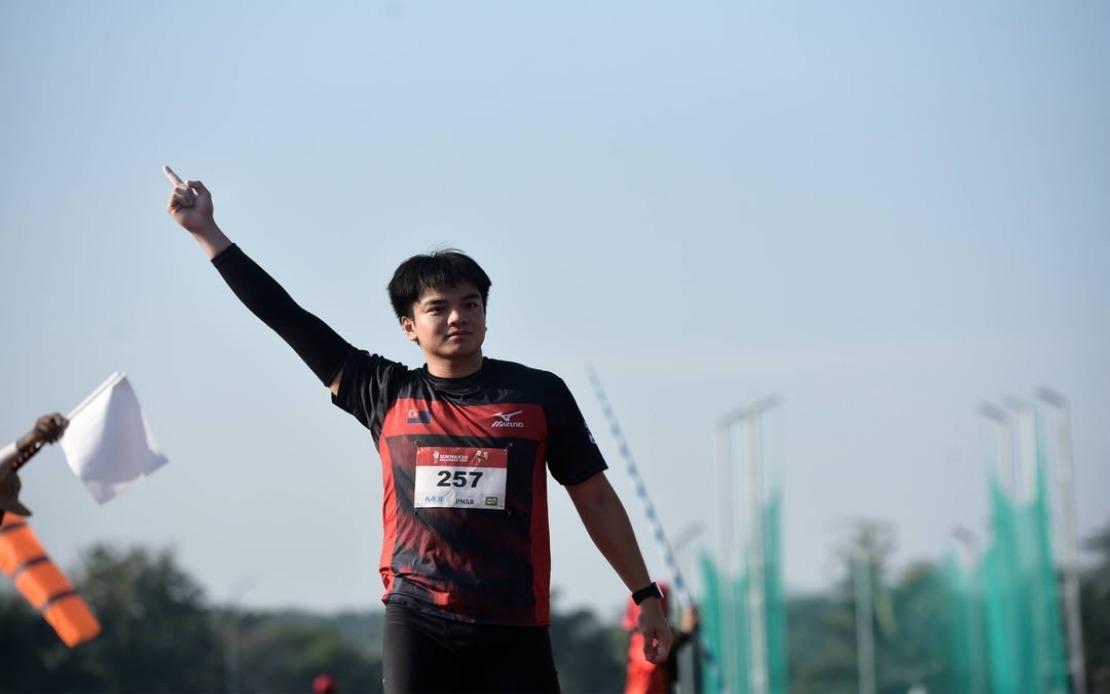
An 18-year-old javelin thrower from Johor has rewritten the record books at the Malaysia Games, etching his name into sporting history with a throw that surpasses a mark that has stood for more than a quarter-century. Chai Kai Le hurled the javelin 64.44 metres at the Universiti Putra Malaysia Sports Centre, demolishing the previous SUKMA record of 62.33 metres established by Sarawak's Kho Mei Kuan during the 2000 edition held in Penang. The achievement at Selangor 2026 represents not merely a personal triumph but a watershed moment for Malaysian javelin, signalling the emergence of fresh talent in a discipline where consistency at elite level has proven elusive.
The trajectory of Kai Le's athletic career defies the conventional template of sporting excellence in Malaysia. Rather than being identified through systematic talent identification programmes from a young age, his entry into javelin came almost serendipitously, emerging from an observation made by an attentive educator during his schooldays. When Kai Le was enrolled in Standard Six, a teacher recognised something distinctive in the mechanics of his badminton play—specifically, the velocity and precision with which he released the shuttlecock. This seemingly minor classroom interaction proved transformative, compelling the youngster to experiment with javelin as an alternative pursuit. What might have remained a passing suggestion crystallised into genuine commitment as Kai Le progressed through the competitive ranks, eventually gravitating towards formal training and structured competitions in his teenage years.
The psychological dimension of Kai Le's ascent merits particular scrutiny. As a pre-university student at Bukit Jalil Sports School, he has had the advantage of training within Malaysia's premier sports development ecosystem. Yet institutional support alone does not fully account for his breakthrough. Rather, his progression accelerated significantly after witnessing senior athletes in action, observing the distances they achieved and envisioning himself replicating such feats. This imaginative projection—the capacity to visualise oneself among elite performers—represents a crucial intangible factor in athletic development that extends beyond coaching methodologies and physical conditioning. Kai Le's articulation of this motivational process during interviews reveals a young athlete operating with unusual clarity about his ambitions, demonstrating the sort of purposefulness that frequently distinguishes sustained performers from those who achieve isolated successes.
Beneath Kai Le's individual achievement lies a more profound narrative concerning the role of parental investment in Malaysian sport. His father, Chai Yin Huan, has been instrumental throughout, shouldering financial burdens that would discourage many families in Malaysia's middle-income context. Recovery from injuries requires access to physiotherapy and medical intervention, equipment necessitates regular replacement as worn items compromise performance, and training progression often demands specialised coaching and facilities that carry substantial costs. Chai Yin Huan's willingness to absorb these expenses reflects not merely parental affection but a deliberate commitment to nurturing his son's potential. Significantly, this support has operated without the expectation of commercial returns or celebrity status—the father's stated objective was simply that his son perform to his capabilities while maintaining physical wellbeing. This distinction matters considerably in Malaysian society, where familial support structures often become instrumentalised or commercialised.
The past twelve months have tested Kai Le's resilience in ways that might have derailed less committed athletes. Recurring injuries to his back, right shoulder, and elbow have created a tapestry of physical setbacks that remain incompletely healed even as he competes at the Games level. These are not minor inconveniences but structural impediments that constrain training intensity and competitive frequency. Yet rather than retreating into rehabilitation or accepting diminished ambitions, Kai Le has persisted through a training regime designed to maximise performance within these physiological constraints. This determination proved vindicated when he competed at the Indonesia Open earlier in 2026, where he established both a personal best and a national under-20 record of 65.65 metres. The fact that his Games-winning throw of 64.44 metres represents a slightly lower distance than his personal best underscores the unpredictable nature of athletic competition, where conditions, psychological states, and tactical considerations produce variability even among elite performers.
The implications of Kai Le's record-breaking performance extend beyond individual accolade into the broader landscape of Malaysian athletics development. Javelin represents a technical discipline requiring years of systematic progression to achieve international competitiveness, yet Malaysian performance in this event has historically operated beneath Southeast Asian benchmarks. The emergence of an 18-year-old capable of producing record-breaking performances suggests that talent development pathways may be yielding results despite systemic challenges that constrain Malaysian sport. Furthermore, Kai Le's trajectory demonstrates that unconventional entry routes into athletic careers—via teacher observation rather than formal talent screening—retain validity in generating elite performers. This observation carries implications for how Malaysian sports organisations conceptualise talent identification, suggesting that decentralised institutional awareness might complement centralised screening mechanisms.
Looking forward, Kai Le has established an ambitious target: achieving a 70-metre throw within the next twelve months. This goal represents neither fantasy nor casual aspiration but a strategic objective positioned within the broader ambition of qualifying for the 2027 SEA Games. To realise this objective, he has committed to a month-long training stint in Japan scheduled for early next year, seeking exposure to elite coaching methodologies and training environments that Malaysia's domestic infrastructure may not yet provide. This decision reflects pragmatic recognition that breakthrough performances frequently require access to international expertise and facilities. Japan's prominence in javelin coaching, combined with training conditions and competitive standards that exceed regional baselines, offers Kai Le an opportunity to accelerate technical refinement and competitive readiness. The investment required for such international exposure further underscores the financial commitment that sustained athletic development demands in Malaysian contexts.
For Malaysian sports observers, Kai Le's achievement arrives at a moment when questions about domestic athletics performance demand greater scrutiny. The SUKMA Games themselves remain crucial barometers of talent emergence, yet producing Games records does not automatically translate into international competitiveness. Kai Le must now navigate the transition from regional prominence to continental and global visibility, a pathway that has challenged countless Malaysian athletes before him. His confidence—articulated through the simple but resonant statement that "if you really want it, it will come"—reflects the psychological fortitude necessary for such progression. Whether this conviction withstands the rigours of international competition remains to be determined, but the foundation upon which such aspirations rest appears considerably more robust than many athletic endeavours that capture headlines within Malaysian sport.

