The Paris Vivatech festival is once again serving as a global platform for emerging technologies, with startups and established firms demonstrating innovations designed to reshape multiple sectors from healthcare to defence. Displayed across a sprawling venue, several projects stand out for their potential to address long-standing challenges and create new possibilities for industries ranging from bone reconstruction to aerial logistics.
One of the most significant developments on display comes from Berlin-based Blueprint Biomed, which is tackling a problem that affects millions of patients annually. The company has engineered an artificial replacement for bone grafts, structures that are currently harvested from patients' own bodies to support healing after injury or surgery. Chief executive Aaron Herrera explained to AFP that the conventional approach carries substantial risks. Autologous grafts—taken from the patient themselves—frequently fail, necessitating additional surgical interventions. In some cases, patients experience serious complications that undermine the original treatment objective.
Blueprint's solution relies on three-dimensional printing technology to create customizable bone scaffolds from polycaprolactone, a biodegradable polyester. These structures are layered with collagen, a naturally occurring protein that the human body recognizes and integrates. The beauty of this approach lies in its impermanence by design: the collagen dissolves within three months, while the underlying scaffold breaks down over approximately two years. This timetable allows the patient's own bone to gradually replace the artificial structure, leaving no foreign material behind. The Berlin firm is seeking US$2.5 million in funding as it advances toward human clinical trials, with Herrera projecting that surgeons could begin implanting these devices in patients by 2028.
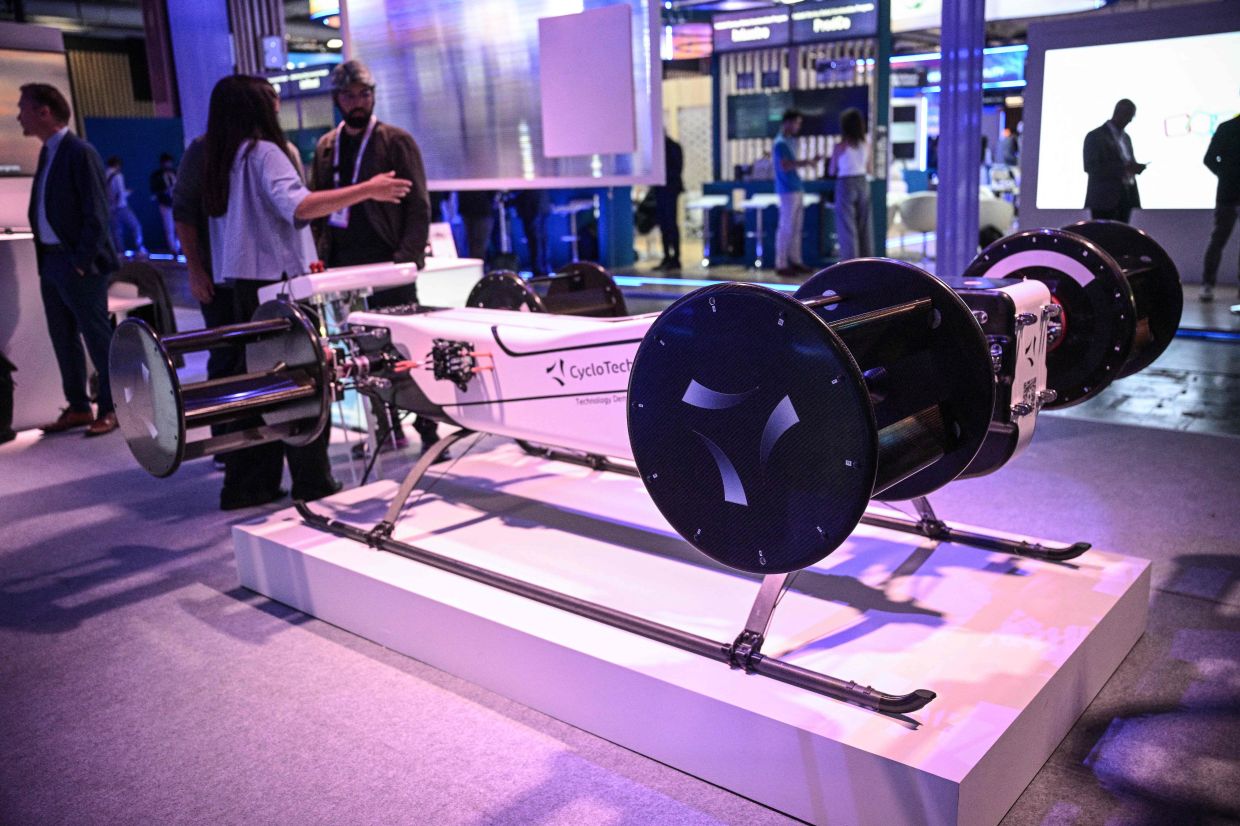
The festival also highlights revolutionary changes in drone technology, a field that has expanded rapidly beyond recreational flying into commercial delivery, emergency response, and military applications. Vienna-based startup CycloTech believes it can fundamentally enhance aircraft agility through a reimagined motor design. Rather than conventional propellers, the company has developed motors shaped like open cylinders, with each side comprised of wing-shaped blades. According to marketing chief Andrea Marchsteiner, these motors grant aircraft unprecedented versatility: they can hold position like a helicopter, accelerate forward like a conventional airplane, execute mid-air braking manoeuvres, and even reverse direction. This flexibility opens possibilities that traditional quadcopters cannot achieve, from navigating cramped urban streets for parcel delivery to transporting individual passengers through densely populated areas.
CycloTech, which has assembled a workforce of 65 engineers and designers, has already secured €40 million in venture funding but continues seeking additional capital and industry partnerships. The company is actively courting established aerospace manufacturers and drone producers who could integrate its motor technology into their existing platforms. The military applications Marchsteiner referenced hint at the technology's potential value to defence ministries across Europe and beyond, particularly given current geopolitical tensions and the proven importance of advanced drones in modern conflict.
Fraud prevention and voice security take centre stage through French technology firm Whispeak, which has evolved far beyond its original purpose. The company initially developed software to verify customer identity through voice recognition for banking and financial services institutions. However, the rapid advancement of generative artificial intelligence has fundamentally changed the threat landscape. Deepfake voice technology can now convincingly imitate virtually any person using audio samples shorter than ten seconds, and in many cases the tools are freely available. This reality prompted Whispeak to pivot its focus toward detection and mitigation.
Chief executive Florent Van Calster disclosed that following three years of intensive development using Whispeak's own AI systems, the company now operates what it claims is the world's most effective audio deepfake detector. This assertion carries substantial weight: the technology has placed first in multiple international detection competitions. Testing against available training data reveals an error rate below one per cent, a remarkable achievement considering the rapidly evolving nature of audio manipulation techniques. Whispeak is currently partnering with French telecom giant Bouygues to screen inbound calls, alerting users when suspicious deepfake audio is detected. However, Van Calster acknowledged the inherent limitations of any detection system: as fraudsters develop more sophisticated tools, defenders must continually upgrade their own capabilities in an endless cycle of technological one-upmanship.
For athletes and fitness enthusiasts, real-time biometric monitoring has long relied on elaborate sensors and frequent blood draws. Hong Kong-based startup PointFit offers a fundamentally different approach through adhesive skin patches equipped with microscopic sensors. These devices read biomarkers such as glucose and cortisol levels directly from sweat, eliminating the need for invasive testing or bulky equipment. Chief executive Kenny Oktavius began developing this technology in 2019 while still completing his university education.
PointFit's innovation extends beyond simple sensor readings. The company has developed an artificial intelligence system that generates a personalized "sweat index" for each user, automatically adjusting expectations and baseline measurements according to individual demographics and environmental conditions such as ambient temperature. Oktavius presented a compelling use case: professional marathon runners, despite using expensive sophisticated sensors, occasionally collapse during competition. Traditional heart rate monitoring, he emphasized, provides an incomplete picture of an athlete's physiological state. Hospital emergency departments prioritize biomarkers when assessing critical conditions, suggesting that sweat-based monitoring could offer earlier warning of dangerous physiological deterioration.
PointFit has already established relationships with elite sports organizations, including Red Bull's Athlete Performance Centre and Puma's Nitro Labs innovation division. These partnerships validate the technology's potential within professional and elite amateur athletics. However, Oktavius's ultimate ambition targets the mass consumer market, where partnerships with major sporting goods retailers such as Decathlon and eyewear conglomerate EssilorLuxottica could place sweat sensors into the hands of millions of fitness-conscious consumers worldwide. Such expansion would transform biometric monitoring from a specialized professional tool into an accessible wellness technology for ordinary people.
These projects collectively demonstrate how current innovation is oriented toward solving genuine problems while creating entirely new categories of products and services. The progression from laboratory prototypes toward commercial reality involves navigating complex regulatory frameworks, securing substantial capital, building manufacturing capabilities, and convincing consumers and institutions to adopt unfamiliar technologies. For Malaysian readers and Southeast Asian observers, these developments carry particular significance: the region's growing healthcare demands, expanding aviation sector, increasing digital security threats, and surging interest in sports and wellness all position these innovations as potentially relevant to local markets and entrepreneurial ecosystems.
%22%2F%3E%3C%2Fpattern%3E%3C%2Fdefs%3E%3Crect%20width%3D%22100%25%22%20height%3D%22100%25%22%20fill%3D%22url(%23ph3q5g4g)%22%2F%3E%3Crect%20width%3D%22100%25%22%20height%3D%22100%25%22%20fill%3D%22url(%23ph3q5g4p)%22%2F%3E%3Ctext%20x%3D%2250%25%22%20y%3D%2250%25%22%20text-anchor%3D%22middle%22%20dominant-baseline%3D%22central%22%20fill%3D%22rgba(255%2C255%2C255%2C0.95)%22%20font-family%3D%22Georgia%2C%20'Times%20New%20Roman'%2C%20serif%22%20font-weight%3D%22700%22%20font-size%3D%22226%22%20letter-spacing%3D%22-0.02em%22%3EPenang%3C%2Ftext%3E%3C%2Fsvg%3E)
%22%2F%3E%3C%2Fpattern%3E%3C%2Fdefs%3E%3Crect%20width%3D%22100%25%22%20height%3D%22100%25%22%20fill%3D%22url(%23ph104fig)%22%2F%3E%3Crect%20width%3D%22100%25%22%20height%3D%22100%25%22%20fill%3D%22url(%23ph104fip)%22%2F%3E%3Ctext%20x%3D%2250%25%22%20y%3D%2250%25%22%20text-anchor%3D%22middle%22%20dominant-baseline%3D%22central%22%20fill%3D%22rgba(255%2C255%2C255%2C0.95)%22%20font-family%3D%22Georgia%2C%20'Times%20New%20Roman'%2C%20serif%22%20font-weight%3D%22700%22%20font-size%3D%22226%22%20letter-spacing%3D%22-0.02em%22%3EExists%3C%2Ftext%3E%3C%2Fsvg%3E)