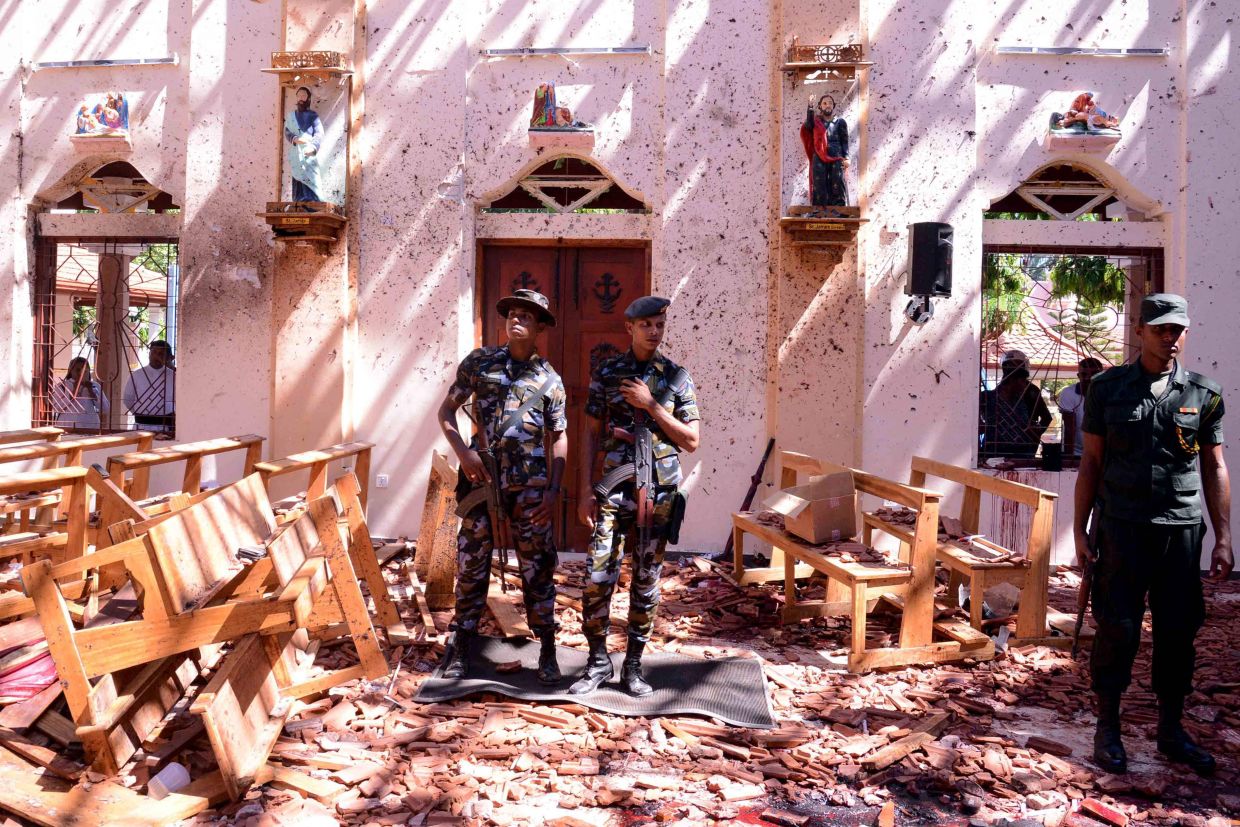
The arrest of Suresh Sallay, a retired Sri Lankan major general and internationally recognized counterterrorism specialist, in February on suspicion of orchestrating the 2019 Easter bombings has thrust the island nation into a bewildering espionage thriller that challenges the official account of one of South Asia's most traumatic terrorist attacks. Sallay, who has lectured at the Pentagon and addressed the United Nations on terrorism and radicalization, now faces charges of masterminding the deadliest civilian assault in Sri Lankan history—a staggering reversal that has exposed fissures in the government's explanation of how 279 people died and over 500 were wounded in coordinated suicide bombings across Colombo on April 21, 2019.
The initial narrative presented to the world was straightforward and terrifying: seven Sunni Muslim suicide bombers, inspired by the Islamic State group, attacked three upmarket hotels and three churches in a wave of simultaneous strikes that claimed the lives of 45 foreigners alongside Sri Lankan victims. The casualties included tourists from Australia, Britain, China, Denmark, the Netherlands, Japan, and the United States, making the attacks not merely a domestic tragedy but an international incident that devastated Sri Lanka's tourism industry and shattered the country's sense of security. Yet even as emergency services dealt with the immediate aftermath, intelligence experts began raising uncomfortable questions about how such a coordinated operation could evade detection despite Indian intelligence agencies providing advance warnings that authorities allegedly dismissed or ignored.
Public Security Minister Ananda Wijepala's declaration in June that Sallay was the "mastermind" who "conspired with and strategically directed Islamic extremists" represents a fundamental departure from years of official statements. Wijepala revealed before parliament that merely three weeks before the attacks, Sallay had met with Muslim men to obtain specific details about the locations that would later be bombed—a damning allegation that suggests complicity rather than intelligence failure. This public accusation from a sitting minister marks the first time a high-ranking government official has directly blamed Sallay rather than focusing on the bombers themselves or broader security lapses, indicating a significant evolution in how authorities are framing responsibility for the tragedy.
The investigation's shift toward allegations of a deep-state conspiracy reflects growing skepticism about whether the attacks were genuinely perpetrated by independently motivated extremists or whether they formed part of a calculated political strategy. Critics contend that the bombings succeeded precisely because they were orchestrated by intelligence operatives—suggesting not a catastrophic security failure but rather a deliberate operation designed to manufacture a national security crisis. According to court investigators who have presented evidence before judges, the alleged plot's objective was creating sufficient chaos and fear that the electorate would embrace Gotabaya Rajapaksa as a strongman capable of crushing Islamist militancy, drawing a parallel to his previous military reputation for suppressing Tamil separatism during the 1983-2009 civil war.
Britain's Channel 4 television reported in 2023 on allegations from a whistleblower suggesting the attacks were permitted to proceed specifically to help Rajapaksa secure victory in the subsequent 2019 presidential election on a hardline security platform. Rather than viewing the bombers as rogue operatives who escaped control, this narrative suggests state intelligence agencies deliberately cultivated and directed them toward specific targets to manufacture a security threat. Government inquiries have documented links between the bombers and at least two state intelligence agencies, raising questions about whether these connections represented surveillance operations that turned tragic, or something far more sinister. The irony deepens when one considers that Sallay himself was appointed to head the State Intelligence Service following Rajapaksa's 2019 election victory, making him the first military officer to lead this crucial agency—a position that would have granted him access to classified information about the very attacks he now stands accused of masterminding.
Sallay's previous actions as spy chief offer additional context to current accusations, though they also complicate the narrative significantly. In 2020, he ordered the arrest of Hejaaz Hizbullah, a Muslim human rights lawyer, accusing him of being the Easter bombings' mastermind—allegations that collapsed spectacularly when authorities failed to produce credible evidence and Hizbullah was released after 22 months in custody. This earlier miscarriage of justice now casts doubt on the government's competence in investigating the attacks and raises troubling questions about whether the current accusations against Sallay himself rest on firmer evidentiary ground or represent another instance of the security apparatus pursuing convenient scapegoats rather than truth.
The accusations also highlight uncomfortable historical context regarding how Sri Lankan intelligence services have historically employed extremist proxies. Multiple Rajapaksa administrations have acknowledged funding jihadist networks during the civil war period to gather intelligence on Tamil rebel movements, though they maintain that these militants subsequently betrayed their handlers and carried out the Easter attacks independently. This admission that the state deliberately cultivated relationships with Islamic extremist groups—regardless of the stated rationale—creates a plausible foundation for theories that such networks could be manipulated for political purposes, lending credibility to allegations that the 2019 bombings might have formed part of a calculated strategy rather than an unintended consequence of rogue operatives.
Sallay's international profile as a terrorism expert lends particular weight to allegations that he could have orchestrated such attacks, though it simultaneously raises questions about motive and opportunity. A career military officer who served in Sri Lanka's diplomatic missions in France and Malaysia, he studied at India's prestigious National Defence College and Britain's University of Bradford, credentials that positioned him as a legitimate voice on security matters. His 2003 Pentagon address titled "Suicide Terrorism and its Impact" and his 2023 speech at United Nations headquarters, where he warned that social media platforms enable radicalization and extremism, demonstrate his reputation as a sophisticated security analyst—credentials that paradoxically make the charges against him simultaneously more shocking and more plausible, as someone with his expertise would theoretically possess the knowledge required to plan and execute such an operation.
The diversity of Sallay's personal background mirrors the religious pluralism of Sri Lanka itself, where approximately 70 percent of the 22 million population practices Buddhism, with 12 percent Hindu, 10 percent Sunni Muslim, and 7 percent Christian communities coexisting in varying degrees of harmony. That Sallay, a Muslim, maintains a marriage to a Buddhist woman and has a Catholic mother who has appealed to the Pope for his release speaks to a Sri Lanka more religiously mixed and interdependent than the current political climate would suggest. Yet the investigations into the Easter bombings have increasingly weaponized religious identity, with critics arguing that the network of bombers was deliberately cultivated to create an Islamist enemy that justified government backing for radical Buddhist-nationalist groups aligned with the Rajapaksa political dynasty, potentially inflaming communal tensions that had previously remained dormant.
As Sallay's next court hearing approaches, the case remains extraordinarily fluid, with no formal charges filed despite his continued detention under anti-terrorism laws. His lawyers maintain his complete innocence, yet the government narrative has crystallized around accusations of strategic direction and conspiracy that extend far beyond the straightforward intelligence failure explanation that prevailed in the attack's immediate aftermath. The broader implications extend throughout Southeast Asia, where several nations face persistent questions about the relationship between state security agencies and extremist networks, and where the line between penetrating terrorist cells and inadvertently enabling attacks remains persistently murky. Malaysia and other regional countries watching Sri Lanka's legal proceedings may be prompted to examine their own intelligence relationships with potential extremist elements and the institutional safeguards necessary to prevent deliberate manipulation of such proxies for political purposes.
The Easter bombings investigation represents a singular moment in Sri Lankan legal and political history, where a figure who lectured international institutions on preventing radicalization now stands at the center of allegations that he weaponized extremism for political gain. Whether courts ultimately vindicate or condemn Sallay, the case has already fundamentally transformed how Sri Lankans understand their recent past and raises uncomfortable questions about the state's willingness to sacrifice civilian lives to engineer political outcomes. The 279 people killed and 500 wounded on that April morning deserve clarity about whether their deaths resulted from genuine security failures or deliberate manipulation, and the international community's patience for answers grows finite as judicial proceedings continue without resolution.

