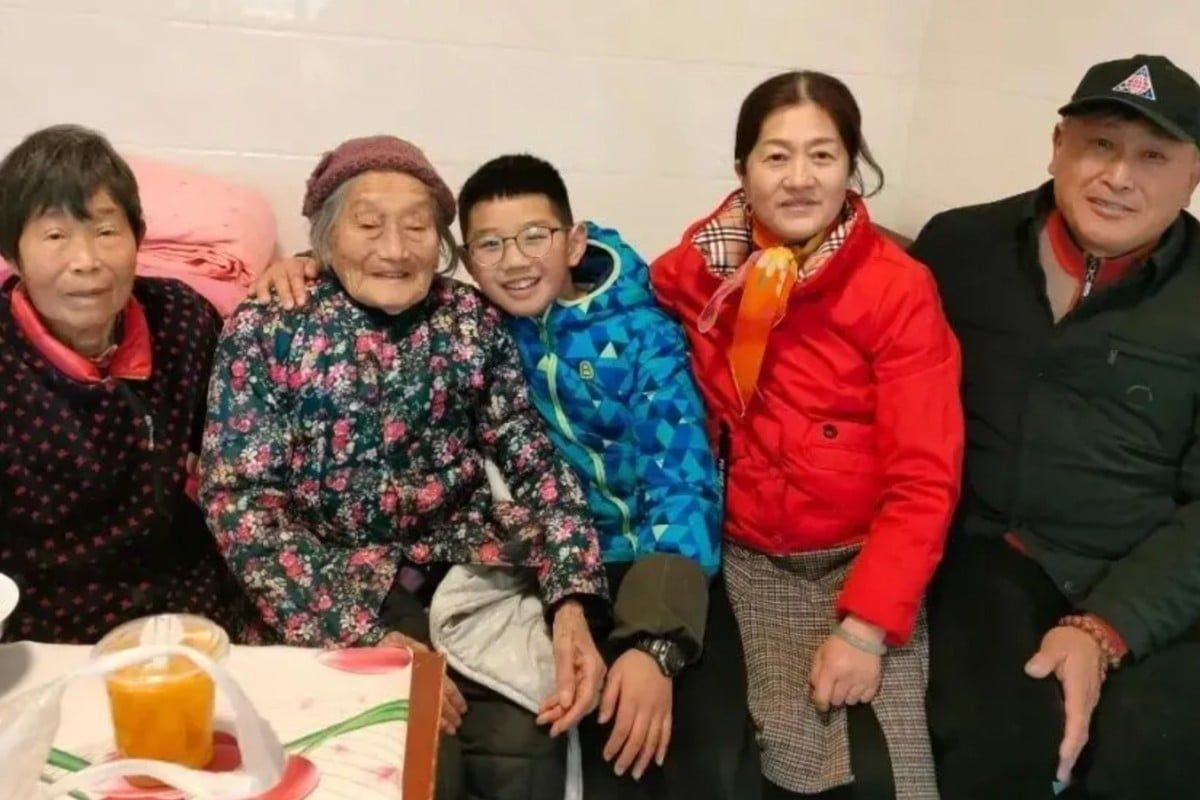
In the eastern Chinese city of Rugao, nestled within Jiangsu province, an extraordinarily robust centenarian has captured widespread public fascination by demonstrating that longevity may hinge not on expensive interventions or extraordinary circumstances, but rather on the deliberate cultivation of modest, sustainable routines. Wang Gaiying, now 111 years old, has become a digital phenomenon after attributing her exceptional health and mental acuity to habits so commonplace that their power often goes unrecognized—yet her living testament suggests they merit serious consideration.
Rugao itself possesses a remarkable distinction within China, earning recognition as one of the nation's premier "longevity capitals." The region hosts an extraordinarily concentrated population of centenarians, with records from February revealing 672 residents who had surpassed the century mark. This statistical anomaly sparked curiosity among scientific researchers who sought to understand whether environmental or genetic factors explained such concentrated longevity. Investigators from the Chinese Academy of Sciences' Institute of Soil Science in Nanjing conducted detailed analysis and concluded that the region's mineral-rich soil composition plays a significant role, producing agricultural crops that concentrate trace elements known to benefit human physiology. For Malaysian readers accustomed to diverse tropical agriculture, understanding how soil mineralization influences nutritional density offers valuable perspective on why certain regions consistently produce longer-lived populations.
Wang's family structure reflects traditional Chinese arrangements that remain common across East and Southeast Asia, with her household encompassing five generations under one roof, including a grandson already aged 60. She maintains robust cognitive function and physical capability that would impress individuals decades her junior, a phenomenon that family members attribute not to genetic luck but to her relentless commitment to remaining functionally active. Rather than accepting the sedentary lifestyle often imposed upon the elderly, Wang has deliberately reframed domestic responsibilities as her primary exercise regimen. She continues performing light household tasks—wiping tables, folding garments, attending to basic maintenance—with the explicit understanding that these activities preserve muscular tone, maintain joint mobility, and sustain adequate cardiovascular demand.
Wang's perspective on aging fundamentally challenges prevailing Western gerontological assumptions that retirement from productive activity represents an aspirational goal. Instead, she articulates a philosophy wherein continuous gentle motion constitutes the foundation of healthy aging. When family members suggest she should rest more substantially, she resists such counsel by explaining that housework generates the muscular engagement and circulatory stimulation necessary for maintaining vitality. This approach aligns with emerging research in gerontology demonstrating that sedentary lifestyles accelerate functional decline far more dramatically than continued moderate activity. For Malaysian society, where both traditional values emphasizing continued contribution and modern pressures toward retirement coexist, Wang's example provides compelling evidence that staying purposefully engaged may offer greater health dividends than withdrawal from daily responsibilities.
Nutrition comprises another pillar of Wang's longevity framework, though her approach emphasizes simplicity and balance rather than exotic superfoods or restrictive dieting. Her family deliberately rotates her meals between various staple options including handmade dumplings and steamed buns, preventing the monotony that might otherwise diminish appetite or nutritional variety. Fish holds particular prominence in her dietary preferences, likely reflecting both its nutritional profile—rich in omega-3 fatty acids and easily digestible protein—and its cultural significance within Chinese cuisine as food traditionally associated with longevity. She consciously resists the impulse toward overconsumption, maintaining that moderation in quantity paired with intentional diversity in food choices creates superior health outcomes compared to indulgent single meals. This perspective contrasts sharply with contemporary global food culture that often prioritizes abundance and intensity of flavor.
Historically, Wang enjoyed rice infused with baijiu, a potent traditional liquor deeply embedded within Chinese social rituals, yet her family made the pragmatic decision approximately five years ago to discontinue this practice. Their reasoning reflected clear-eyed assessment of risk-benefit calculations: while such beverages possessed cultural and perhaps minor health associations, the genuine danger of accidental intoxication and resulting fall injuries outweighed any potential benefit for someone of her advanced age. This decision-making exemplifies the kind of adaptive wisdom that often characterizes centenarians and their families, who learn to distinguish between traditions worth maintaining and those requiring modification as physical capacities inevitably change.
Perhaps most intriguingly, Wang attributes significant weight to psychological and spiritual dimensions of longevity that strictly biomedical approaches often marginalize. She maintains a personal discipline of performing one deliberate good deed daily, whether expressing genuine appreciation to family members or maintaining contact with elderly friends through brief greetings. This practice reflects Buddhist and Confucian philosophical frameworks that emphasize interconnection and daily virtue as pathways toward harmony. Her emotional management strategy proves equally notable: she refuses to carry resentment, frustration, or worry into sleep, consciously choosing instead to release troubled thoughts and trusting that morning perspective will reveal many concerns as less significant than they appeared the previous evening. Contemporary neuroscience increasingly validates what contemplative traditions have long taught—that psychological burden and chronic emotional stress accelerate aging processes at cellular levels.
Wang's sleep architecture maintains strict discipline, consisting of approximately twelve hours nightly between 7pm and 7am, supplemented by one or two daytime naps. This pattern, while seemingly excessive by modern productivity standards, aligns with research suggesting that adequate sleep regeneration provides foundational support for immune function, metabolic regulation, and cognitive maintenance. For Southeast Asian readers navigating environments where both traditional afternoon rest practices and modern work pressures create scheduling tensions, Wang's example demonstrates that protecting sleep duration need not constitute selfishness but rather represents essential preventive medicine.
The broader significance of Wang's longevity extends beyond personal inspiration toward implications for public health policy and social organization. Her story arrives at a moment when both developed and developing nations confront unprecedented aging populations with attendant healthcare costs and social service demands. If extended healthy lifespan emerges not primarily from expensive medical interventions but rather from sustained meaningful engagement, emotional equilibrium, adequate nutrition, and purposeful motion, then the policy implications redirect resources toward environmental and social conditions supporting these elements rather than exclusively toward pharmaceutical and surgical approaches. For Malaysia, where the population continues aging and healthcare systems face mounting pressure, Wang's example suggests that investments in community engagement, food security, emotional support systems, and opportunities for continued productive participation might yield health outcomes rivaling expensive medical technologies.
Social media observers have responded to Wang's story with widespread recognition that her longevity reflects both individual choice and circumstantial advantage. Rugao's mineral-rich environment, supportive family structure, cultural traditions emphasizing continuous engagement, and local dietary patterns all converge to create conditions where individual discipline can flourish and bear maximum fruit. Yet Wang's personal agency within these favorable circumstances remains undeniable—she actively chooses to move, to serve, to maintain emotional discipline, and to nourish her body thoughtfully. For readers across Malaysia and the broader region, her testimony offers neither false promises of effortless immortality nor intimidating prescriptions of extreme self-denial, but rather a middle path: modest daily practices deliberately maintained, emotional equilibrium consciously cultivated, and continued purposeful engagement embraced as the foundation of not merely extended lifespan but flourishing within those additional years.

