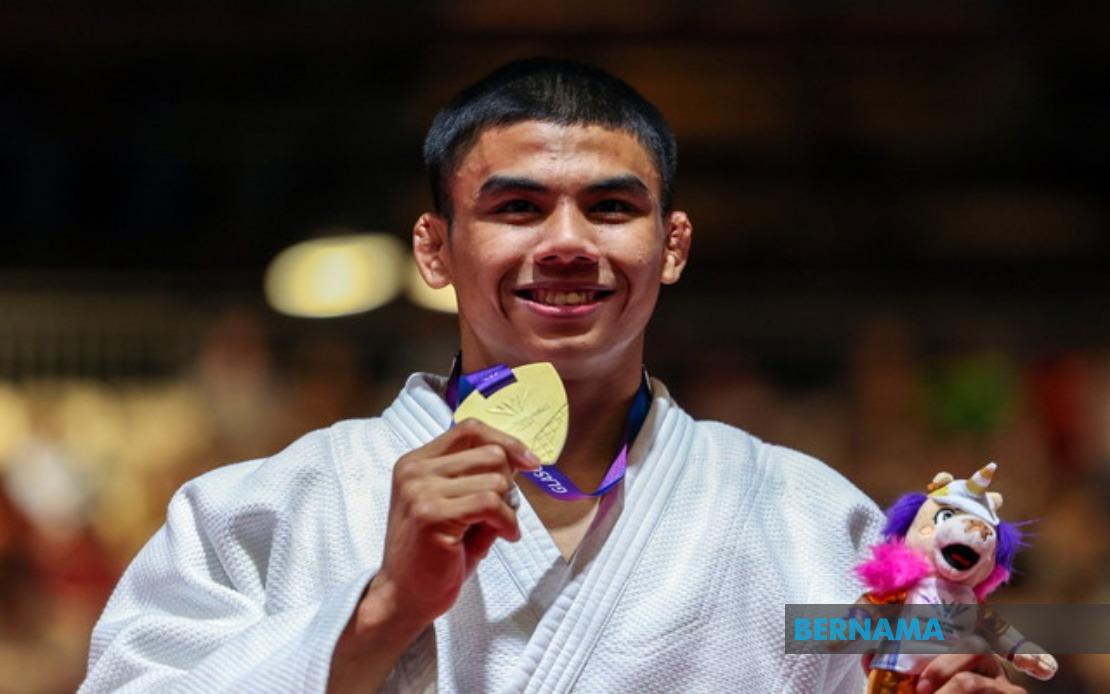
At 21 years old, Amir Daniel Abdul Majeed stands at a crossroads that few elite athletes navigate with grace. The Commonwealth Games gold medallist has traded the familiarity of personal competition for the unfamiliar terrain of coaching, discovering that mentoring athletes from the sidelines carries a psychological burden entirely distinct from performing under spotlight pressure. Speaking at the IDCC Ideal Convention Centre in Shah Alam this week, the national judo exponent articulated a truth that often escapes casual observers of sport: the transition from competitor to coach fundamentally rewires how one experiences stress and responsibility.
Serving as assistant coach of the Penang judo squad during SUKMA Selangor 2026, Amir has gained insight into an overlooked dimension of athletic leadership. Where competition demands that an athlete manage only their own physical and mental state during bouts, coaching requires orchestrating the performance, development, and psychological well-being of multiple individuals simultaneously. His Penang contingent numbered 13 athletes, each carrying their own expectations, anxieties, and potential. The shift from singular accountability to collective responsibility has proven profoundly destabilising in ways that Amir acknowledges openly, yet paradoxically, he finds the experience deeply fulfilling.
The nerves that accompany coaching stem partly from intimacy and history. Amir has watched many of these athletes mature from childhood, having previously competed beside them on the mat. That accumulated knowledge of their individual struggles, their breakthrough moments, and their untapped potential makes their setbacks feel more acutely personal than when coaching strangers. The coaching role transforms technical expertise into emotional investment, creating a form of pressure that pure competition never imposed. Amir's willingness to name this psychological shift, rather than dismiss it as weakness, signals maturity that extends beyond his chronological years.
Despite these novel anxieties, the Penang judo programme delivered tangible success at SUKMA Selangor 2026. The team concluded their three-day campaign with three gold medals, one silver, and five bronze medals, positioning Penang joint-top in the medal standings alongside Johor. This strong performance reflects not only the quality of Penang's athletes but also the effectiveness of Amir's contribution as assistant coach. The medal haul represents the cumulative result of preparation, technical instruction, and mental fortification, suggesting that Amir has already begun translating his own competitive experience into coaching capability.
Yet Amir's immediate horizon extends beyond domestic competition. He awaits official confirmation regarding his participation in the Aichi-Nagoya 2026 Asian Games in Japan, with a selection meeting scheduled for this week. The timing creates a dual focus that many athletes would find fragmenting: maintaining intensity as a coach while simultaneously preparing for personal competition at one of Asia's most prestigious sporting events. However, Amir appears to have reconciled these competing demands, viewing the coaching role and his athlete development as complementary rather than conflicting priorities.
The Asian Games represent a qualitatively different arena from SUKMA. Japanese judo, as a sport, exists within an ecosystem of technical refinement and competitive depth that has produced Olympic champions and world-class practitioners. Amir recognises that the Aichi-Nagoya 2026 competition level will dwarf what Southeast Asian regional games provide, positioning it as an invaluable developmental laboratory for someone harbouring Olympic aspirations. The tournament offers multiple opportunities to test himself against international standard opposition, accumulating experience and data about his competitive positioning ahead of future Olympic qualification cycles.
Amir's Olympic ambitions, while still years distant, inform his strategic approach to both coaching and personal competition. Rather than viewing the Asian Games as a singular objective, he constructs it as a stepping stone within a longer trajectory. The exposure to higher-quality international competition serves dual purposes: building his individual competitive resume while simultaneously exposing him to techniques, tactical approaches, and psychological resilience strategies that he can subsequently transmit to athletes he coaches. This intellectual cross-pollination between athlete and coach roles enriches both dimensions of his involvement in judo.
The SEA Games Malaysia 2027 represents another significant waypoint on Amir's competitive calendar. As Malaysia prepares to host the Southeast Asian Games, domestic athletes will face intensified expectations and media scrutiny. Amir's performance trajectory—both as competitor and coach—will unfold against this backdrop of elevated national interest. The Asian Games experience will directly inform preparation strategies for Malaysia's home Games, potentially creating advantages for Amir and athletes he influences through coaching.
Amir's narrative reflects broader patterns within Southeast Asian sport: the blurred boundaries between athlete development and coaching progression, the challenge of maintaining elite competition standards while contributing to institutional team success, and the psychological evolution required when transitioning from personal excellence to organisational leadership. His candid acknowledgment that coaching feels more nerve-wracking than competing illuminates an often-underexplored reality within sports development systems. Young athletes frequently assume that the pressure of coaching diminishes once they retire from competition, yet Amir's experience suggests the opposite—different pressure requires different coping mechanisms.
The willingness of established athletes like Amir to engage in coaching roles early in their careers strengthens the overall quality of Malaysian judo. When elite performers maintain competitive involvement while simultaneously developing the next generation, they create feedback loops that elevate technical standards across the system. Amir's transition thus extends significance beyond his individual development, carrying implications for how judo cultivation structures itself across Malaysian states and regions.
Looking forward, the question of whether Amir can sustain excellence across both competitive and coaching domains remains open. The Asian Games selection process will partly determine the answer. If selected, he will undertake the difficult balancing act of preparing for elite international competition while maintaining coaching responsibilities. Conversely, if selection does not materialise this cycle, the coaching role gains prominence, positioning Amir on a trajectory toward longer-term coaching excellence. Either path offers genuine contribution to Malaysian judo's development, though the psychological pressures will vary substantially. What remains constant is Amir's demonstrated capacity to embrace discomfort and leverage it toward productive growth.

