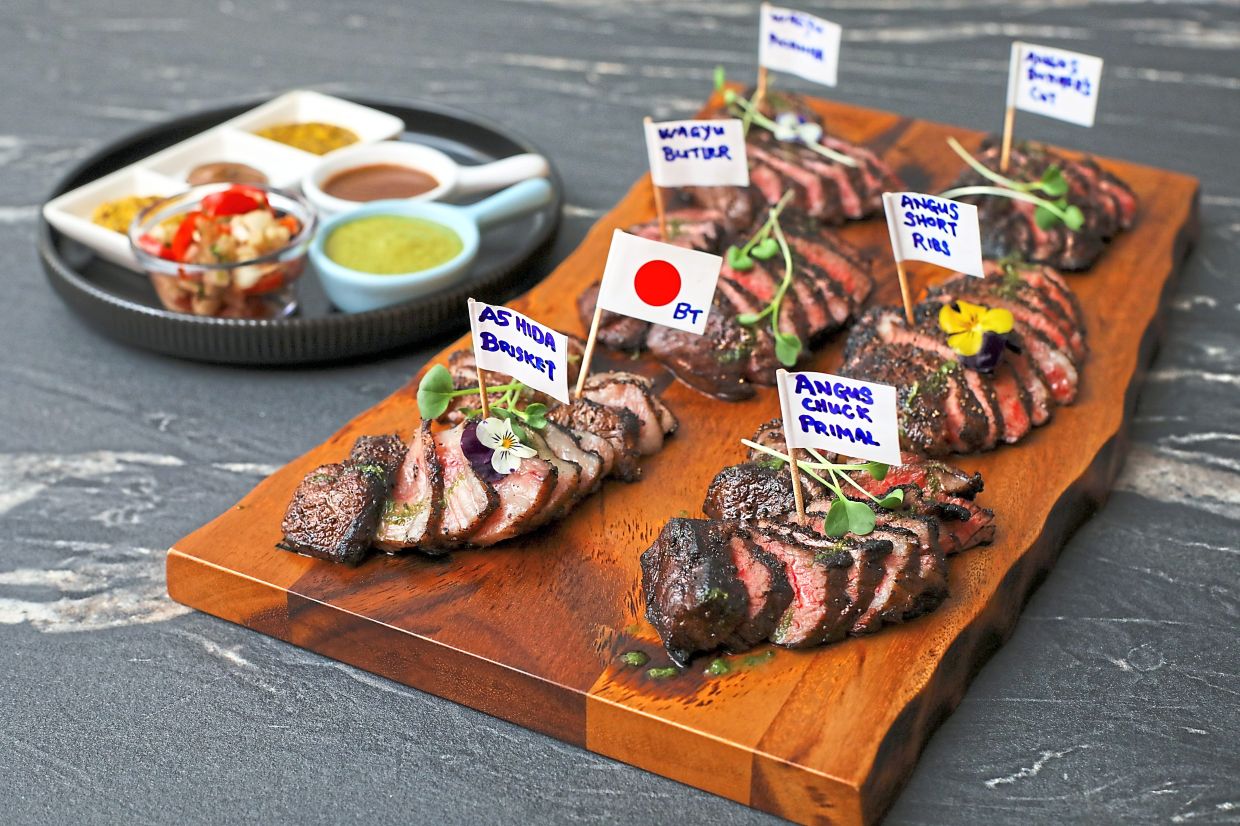
The culinary landscape across Malaysia's major dining hubs is quietly shifting, as chefs and restaurateurs discover the hidden potential of beef cuts that have long been relegated to minced meat and processed products. At Meat Feds in Petaling Jaya, chef Yenni Law meticulously works through the connective tissue and fat of secondary beef cuts—a skill that earned her and co-founder Shelly Saw a Malaysia Book of Records citation this year for featuring 20 different secondary beef cuts on a single menu, an unprecedented achievement in the local dining scene. What was once considered second-tier fare is being repositioned as worthy of prime table placement, fundamentally challenging assumptions about beef quality and value that have dominated Malaysian fine dining for decades.
Malaysian consumers hold the distinction of being Southeast Asia's largest beef eaters, yet their preferences have historically centred on the holy trinity of prime cuts: striploin, tenderloin, and ribeye. These premium selections command the highest prices at market, even though they represent merely 8 to 10 percent of a cow's total usable meat. The remaining 80 to 90 percent—encompassing cuts such as flat iron from the shoulder, flank from the abdominal muscles, hanging tender from the diaphragm, chuck from the shoulder and neck, and picanha from the top rump cap—have traditionally disappeared into ground meat, burger patties, and sausages. This wholesale conversion into commodity products meant that most Malaysian diners never experienced these cuts in their whole form, remaining oblivious to the distinct textural and flavour characteristics each possesses.
The momentum behind secondary cuts has grown noticeably within the past year, particularly across the Klang Valley's mid-range and high-end establishments. Much of this acceleration owes itself to deliberate industry initiatives rather than organic market forces. Meat & Livestock Australia, which oversees meat standards for Australian and international export, alongside domestic distributors like Lucky Frozen Sdn Bhd, have orchestrated education campaigns, seminars, and hands-on workshops specifically designed to elevate secondary cuts from utilitarian ingredients to showpiece proteins. These events position lesser-known cuts as equal performers to their prime counterparts, fundamentally reshaping how chefs and restaurateurs perceive their culinary potential.
The strategy mirrors successful precedents elsewhere. When Norway's Minister of Fisheries launched an aggressive campaign to introduce Norwegian salmon to Japan during the 1980s, Japanese chefs initially dismissed the fish outright. Through sustained marketing and education, salmon eventually became Japan's most popular sushi topping—a transformation that required shifting cultural preferences and culinary traditions through deliberate, organised effort. Malaysia's secondary beef movement operates on similar principles: by bringing master butchers into restaurant kitchens to demonstrate proper technique, holding tasting events where chefs experience these cuts prepared as succulent steaks, and providing ongoing technical support, industry bodies are systematically dismantling the perception that secondary cuts are inherently inferior. Law herself credits these educational programmes with validating her own processing methods and accelerating her team's skills development.
Economic pressures have undoubtedly accelerated this transition. Secondary beef cuts typically cost 20 to 60 percent less than prime cuts—a difference that translates to hundreds of ringgits per serving, a substantial margin in an industry operating under tightening profit margins. The global oil crisis and worldwide beef scarcity have exacerbated the problem, with prime cut prices surging approximately 30 percent while secondary cuts have experienced only modest 10 percent increases. Desmond Chong, head chef at the woodfire restaurant Ignis KL, now features three to four secondary cuts on his menu specifically because cost pressures combined with limited prime cut availability have made the shift commercially necessary. What began as a sustainability and educational initiative has become a survival strategy for many establishments.
Beyond economics, secondary cuts offer genuine culinary advantages that distinguish them from their prime counterparts. Each cut delivers unique textural and flavour profiles—different levels of bite, chew, bounce, and malleability—allowing chefs to construct more complex, varied tasting menus. At Law's establishment, a substantial platter might showcase butcher's cut, chuck primal, brisket, picanha, and short rib simultaneously, each contributing distinct bovine flavours and textural experiences. At Ignis, charcoal-fired short ribs and flat iron steaks develop beautifully charred exteriors and silken interior textures that rival prime cuts aesthetically while offering different sensory experiences. This diversity fundamentally enriches a chef's palette, enabling more creative menu construction than the relatively homogeneous quality of premium cuts alone.
Industry leaders articulate a broader vision underlying this shift. James See, business development director at Lucky Frozen Sdn Bhd, frames secondary cut adoption within a sustainability and resilience framework, arguing that whole-carcass utilisation insulates the market against beef inflation and strengthens supply chain robustness. Valeska V, regional manager for Meat & Livestock Australia's Southeast Asia operations, notes that as both chefs and consumers become more sophisticated, they increasingly accept alternatives to prime cuts, particularly when pricing pressures and supply constraints necessitate flexibility. The narrative is evolving from secondary cuts as inferior substitutes to whole-carcass utilisation as intellectually coherent strategy that serves economic, ecological, and culinary objectives simultaneously.
Yet significant barriers persist. Secondary cuts demand substantially greater technical knowledge than prime cuts, requiring butchers and chefs to master complex trimming techniques that distinguish fat from sinew, remove tough silver skin, and identify which muscle groups suit specific cooking methods. Law candidly acknowledges that mastering these skills demands extensive practice—even experienced chefs occasionally struggle to differentiate fat from sinew during butchering. This steep learning curve discourages many chefs from attempting secondary cuts, as the investment in training and the risk of menu failures deter experimentation. Without mentorship from experienced practitioners or access to quality education programmes, chefs default to safer prime cuts despite economic disadvantages.
The transition also requires restaurants to educate diners about unfamiliar products. Malaysian consumers accustomed to specific prime cut characteristics may find secondary cuts' more pronounced flavours, variable textures, and appearance unfamiliar, potentially generating disappointment if menus fail to explain these cuts' distinct attributes and optimal preparation methods. Successful adoption therefore demands marketing sophistication—compelling narratives about sustainability, skill, and culinary discovery that position secondary cuts as deliberate choices rather than compromises. Restaurants that present these cuts as prestigious selections worthy of price premiums, backed by compelling provenance stories and chef credentials, navigate this perception challenge more effectively than those treating secondary cuts as budget options.
Looking forward, the secondary cut movement represents a broader recalibration within Malaysian fine dining, one that balances pragmatic economic imperatives against genuine culinary merit. As supply pressures, environmental consciousness, and chef creativity converge, secondary cuts have transitioned from peripheral ingredients to legitimate menu attractions. Law's restaurant—dedicated entirely to secondary beef—validates that entire business models can centre on previously undervalued proteins. Whether this momentum sustains and expands depends partly on continued industry education, partly on chefs' technical mastery, and partly on Malaysian diners' receptiveness to tastier, more complex beef experiences beyond the familiar prime cut trinity. The quiet revolution unfolding across the Klang Valley suggests that such acceptance is already underway.

