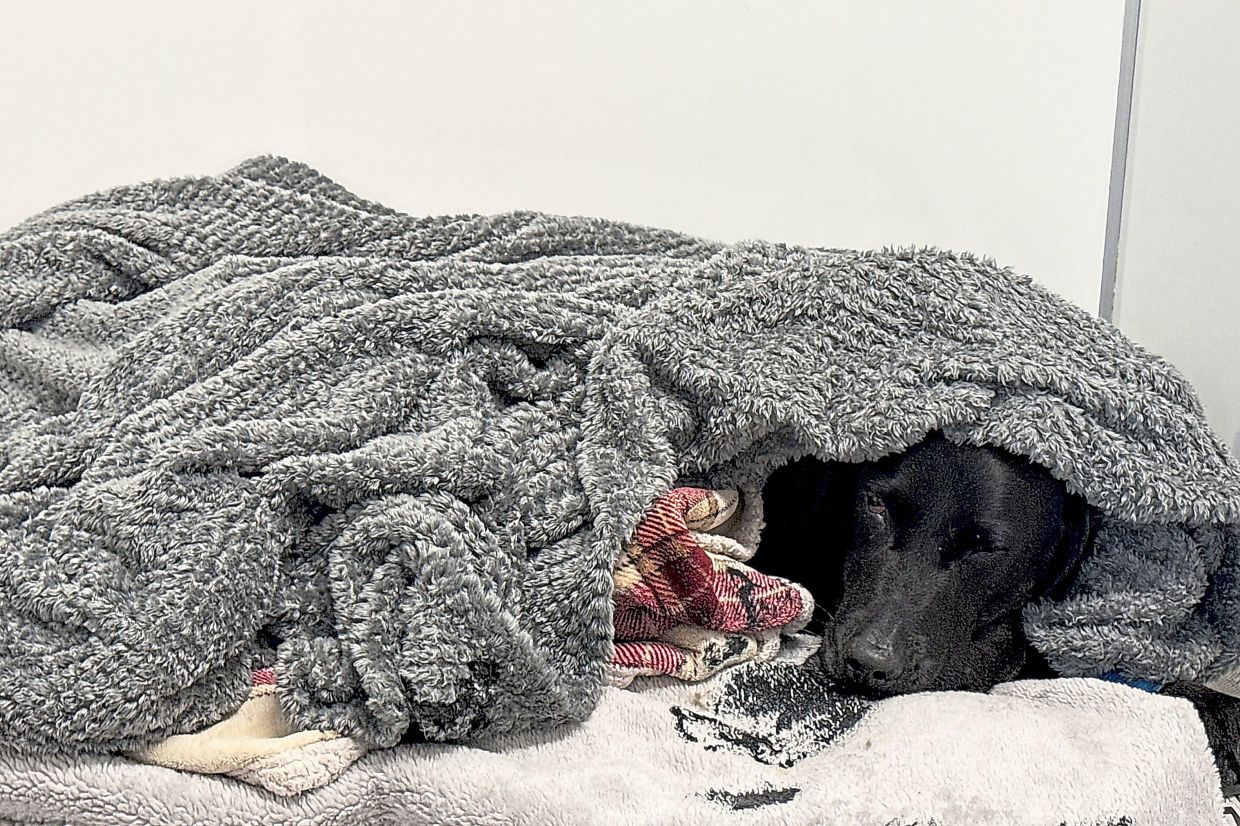
A Scottish mountain rescue operation took an unexpected turn when a black Labrador retriever named Tokyo became incapacitated by ingested cannabis during a family hike on Ben Nevis, Britain's highest peak at 1,345 metres. The incident on July 5 forced her owner, experienced canine trainer Christina Bluhme, to abandon their summit attempt and call for emergency assistance on the treacherous Scottish Highland slopes.
Bluhme was well into her climb with her son Magnus and two dogs when Tokyo's condition deteriorated dramatically. The five-year-old dog began displaying alarming symptoms—swaying movements reminiscent of intoxication followed by complete immobility—that alarmed even her seasoned handler. Despite Bluhme's 25 years of professional canine training experience, she struggled initially to comprehend what had befallen her pet. The environmental conditions worsened considerably, with clear skies giving way to rain and temperatures dropping to 5°C, transforming a pleasant summer outing into a potentially life-threatening situation for the stricken animal.
Located more than three hours into their ascent near Ben Nevis's peak, the family faced a critical decision. Recognizing that something had gone profoundly wrong with Tokyo, Bluhme made the difficult choice to halt their expedition and descend immediately. When Magnus contacted emergency services, initial police responses suggested uncertainty about whether a dedicated mountain rescue team could be dispatched to assist. However, fortune intervened when volunteers from the Lochaber Mountain Rescue Team, who were already descending from the summit after facilitating a helicopter evacuation for an injured hiker, encountered the struggling group on the trail.
The rescue operation demonstrated remarkable efficiency and coordination. The 25-kilogramme dog was carefully secured in a stretcher by the volunteer rescuers, who then undertook the challenging descent across steep, rain-slicked rocky terrain. What might have developed into a catastrophic situation unfolded with surprising speed—the team transported Tokyo from her point of distress to the trailhead in approximately one hour. Bluhme later recounted her amazement at the rescuers' athleticism and determination, noting how they nearly sprinted down the mountainside while she steadied the stretcher carrying her incapacitated companion.
Meanwhile, veterinary preparations were underway. Police had alerted Crown Vets in nearby Fort William, ensuring a veterinarian was available and prepared for Tokyo's arrival. Initial diagnostic confusion surrounded the case; veterinary staff first suspected a spinal injury, but a senior veterinarian's more comprehensive assessment identified symptoms consistent with neurotoxin exposure. The dog was exhibiting hallmark signs of neurotoxicological impact, including fluctuating consciousness levels that pointed toward something more complex than structural damage. When the clinical team consulted poison control specialists, all of Tokyo's presenting symptoms aligned precisely with cannabis intoxication.
The treatment course proved straightforward and effective. Tokyo received activated charcoal, a standard protocol for certain types of poisoning, and recovered completely overnight under professional observation. By the following morning, the Labrador appeared entirely unaffected by her ordeal, displaying no lingering symptoms or complications from her accidental ingestion. Bluhme, however, remained emotionally affected by the traumatic experience, acknowledging that her own recovery extended considerably longer than her dog's physical recuperation.
While Tokyo's case might seem isolated, it reflects a broader and increasingly concerning trend affecting pet safety across multiple countries. Cannabis toxicity in animals has emerged as a growing veterinary concern, particularly in jurisdictions where recreational or medicinal cannabis use has been legalized or decriminalized. In the United States, where cannabis legalization has advanced rapidly across numerous states, the problem has reached such proportions that the American Society for the Prevention of Cruelty to Animals elevated cannabis to its top 10 list of toxins affecting pets for the first time in 2023. This significant milestone underscores how dramatically the incidence rate has climbed in recent years.
Britain, while experiencing rising cases of cannabis toxicity in pets, has not yet reached the crisis levels documented across the Atlantic. Nevertheless, the trend direction is unmistakable, suggesting that pet owners and veterinary professionals must remain vigilant. The source of Tokyo's cannabis exposure along the Ben Nevis trail remains unknown—it may have been discarded recreational material, abandoned cultivation debris, or deliberately placed by someone indifferent to animal safety. This uncertainty highlights a secondary concern: outdoor environments cannot be reliably secured against hazardous substances.
From a pet welfare perspective, Tokyo's case serves as both cautionary tale and success story. The financial cost of her rescue and treatment proved substantial; the veterinary bill alone reached £1,000 (approximately RM5,445), representing a significant expense for many families. However, Bluhme characterized this expenditure as entirely worthwhile, given that the alternative—losing a beloved companion to an entirely preventable poisoning—would have been immeasurably worse. Her philosophical acceptance of the substantial bill reflects the emotional bonds that pet owners develop with their animals and the value placed on their lives.
The incident also illuminates the critical role of specialized mountain rescue volunteers in emergency situations extending beyond traditional mountaineering accidents. The Lochaber Mountain Rescue Team's fortuitous presence and rapid response prevented what could have become a more complex, prolonged rescue operation. Their intervention transformed a potentially tragic outcome into one defined by swift professional assistance and successful recovery.
Looking forward, the Tokyo incident suggests several practical implications for pet owners in regions where cannabis availability is increasing. Awareness of cannabis toxicity symptoms—disorientation, loss of motor control, and behavioral changes—can enable faster recognition and treatment. Vigilance during outdoor activities, particularly hiking in accessible areas where littering occurs, remains essential. For veterinary professionals, maintaining current knowledge about cannabis toxicity, recognition of its symptoms, and appropriate treatment protocols becomes increasingly important as incidents rise. As cannabis legalization expands globally, including potentially across Southeast Asian jurisdictions in future years, both pet owners and veterinarians should anticipate growing incidence of such cases.

