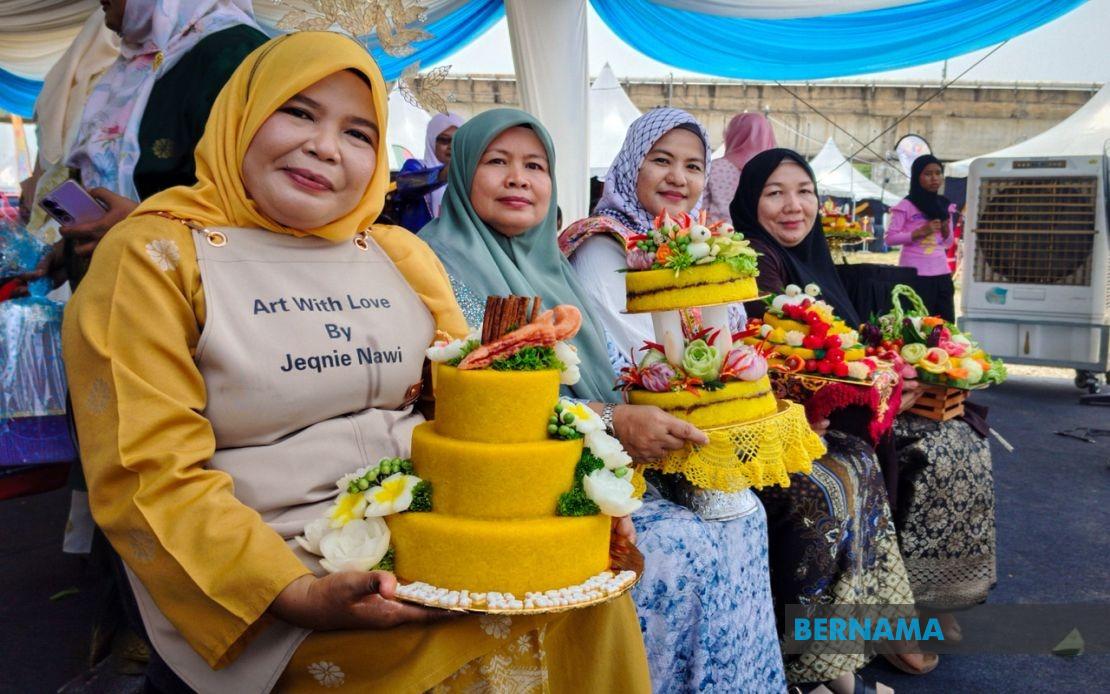
Nortiny Nawi's career pivot represents a growing trend among Malaysian professionals seeking fulfilment beyond conventional employment. Four years after resigning from her position as a resort marketing officer, the 46-year-old entrepreneur has successfully established herself as a sought-after craftswoman specialising in pulut kuning arrangements — an intricate culinary art form that blends traditional cooking techniques with elaborate decorative presentation. Operating from her home in Kampung Gong Cokoh in Pasir Puteh, Kelantan, she now commands a waiting list of customers and earns a substantial income from her passion, demonstrating that niche artisanal skills can generate genuine economic opportunities in Malaysia's growing experiential and celebration market.
The decision to abandon corporate stability required courage, yet Nortiny's background inadvertently equipped her for entrepreneurship. Her culinary interest germinated during her teenage years, but remained largely dormant until her employment at the resort. Working in hospitality provided unexpected education: during her downtime, she observed professional chefs at work, absorbing techniques and developing a deeper appreciation for food preparation. This informal apprenticeship proved invaluable when she later committed to pursuing cooking seriously, illustrating how curiosity and workplace exposure can nurture unexpected career pathways. Her transition from observer to entrepreneur reflects a broader Malaysian pattern where workers leverage experiences gained in one sector to launch ventures in entirely different fields.
Pulut kuning — turmeric-infused glutinous rice traditionally prepared for festive occasions — occupies a special place in Malay-Muslim culture, particularly in Kelantan, the state most associated with this delicacy. Rather than selling plain pulut kuning, Nortiny capitalised on an underserved market segment by transforming the humble ingredient into elaborate centrepieces for celebrations. Her signature arrangements incorporate artistic vegetable carvings, predominantly featuring intricate white radish decorations that complement the golden rice. This value-addition strategy distinguishes her from competitors selling basic versions, allowing her to command premium pricing and build a loyal customer base willing to book weeks in advance. Her work was recently validated when she captured the top prize at the Kelantan Folk Arts Festival in Tok Bali, winning recognition with an eight-kilogramme arrangement that showcased both technical mastery and artistic vision.
The business model Nortiny operates depends entirely on flexibility and responsiveness to customer demand. Rather than manufacturing standardised products, she accepts bespoke orders with prices ranging from RM100 to RM280 per arrangement, determined by the weight of glutinous rice required and the intricacy of decorative elements requested. This customisation approach appeals to her diverse clientele, which spans individual customers hosting private celebrations, educational institutions seeking catering solutions, and government departments organising official events. Her ability to accommodate up to six orders daily, contingent upon design complexity, demonstrates operational sophistication and demonstrates how even home-based businesses can achieve significant scale when built on quality and reputation.
The operational demands underlying her success remain intense and often invisible to customers. Pulut kuning arrangements cannot be mass-produced or prepared in advance like conventional baked goods that benefit from refrigeration. Instead, Nortiny's work commences between 2 and 3 am, beginning with steaming glutinous rice before proceeding through time-sensitive stages of kneading, cooling, and sculpting. This extremely early start reflects the agricultural and traditional food preparation calendar, requiring discipline and physical stamina that most corporate employees never experience. The cumulative fatigue of maintaining this schedule across multiple orders weekly might deter others, yet Nortiny views her exhaustion as a worthwhile investment in quality and customer satisfaction.
Her sustained motivation draws significantly from customer appreciation and recognition. Each compliment and positive feedback reinforces her commitment to refining her craft further, suggesting that intrinsic satisfaction and social validation matter considerably within artisanal food businesses. This psychological dimension differentiates her venture from purely commercial enterprises; her customers are not anonymous purchasers but individuals entrusting her with important celebrations, generating personal connections that transcend transactional relationships. The emotional resonance of creating centrepieces for birthday celebrations, thanksgiving feasts, and traditional bridal dinners (makan beradab) infuses her work with purpose beyond income generation.
Kelantan's cultural context significantly advantages Nortiny's business positioning. The state remains a stronghold of traditional Malay arts, crafts, and culinary practices, hosting institutions like the Kelantan Folk Arts Festival that celebrate heritage skills. This cultural ecosystem provides both market opportunity and validation platforms, as demonstrated by her festival competition success. Regional appreciation for artisanal and traditionally-grounded products creates willing customers who understand the labour intensity and skill required, potentially justifying premium pricing more readily than in more cosmopolitan urban centres where convenience often trumps tradition.
Expanding Nortiny's operation presents both opportunity and challenge. She has expressed interest in securing larger premises to accommodate growing demand, acknowledging physical constraints of home-based operations. Commercial kitchen facilities would enable higher order volumes and potentially reduce the frantic time pressures characterising her current schedule. However, such expansion introduces overhead costs, regulatory requirements, and operational complexity absent from home-based work. Her strategic consideration of expansion signals business maturity and ambition, yet successful transition requires careful assessment of whether scaling maintains the quality and personal attention that distinguish her brand.
Her trajectory offers instructive lessons for other Malaysian professionals contemplating entrepreneurial ventures. Nortiny succeeded by identifying a culturally-embedded product, developing distinctive presentation approaches, targeting underserved customer segments, and leveraging quality as her primary competitive advantage rather than competing on price. She avoided relying on external funding, built reputation gradually through word-of-mouth, and maintained flexibility in customisation. Her achievement demonstrates that lucrative livelihoods remain attainable through traditional skills adapted to contemporary celebration markets, particularly for entrepreneurs willing to tolerate early mornings and physical labour in exchange for independence and income potential.
The broader significance of Nortiny's success extends beyond individual entrepreneurship into questions about Malaysia's economic diversification and cultural preservation. As manufacturing and conventional service employment face transformation from automation and globalisation, artisanal skills rooted in cultural heritage represent increasingly valuable economic assets. Her business exemplifies how tradition and commerce can coexist productively, generating livelihoods while maintaining cultural practices that might otherwise languish as younger generations pursue alternative careers. The enthusiasm evident in customer bookings suggests considerable untapped demand for culturally-authentic, personally-crafted celebratory products across Malaysia, particularly as affluent consumers increasingly seek distinctive alternatives to mass-produced offerings.

