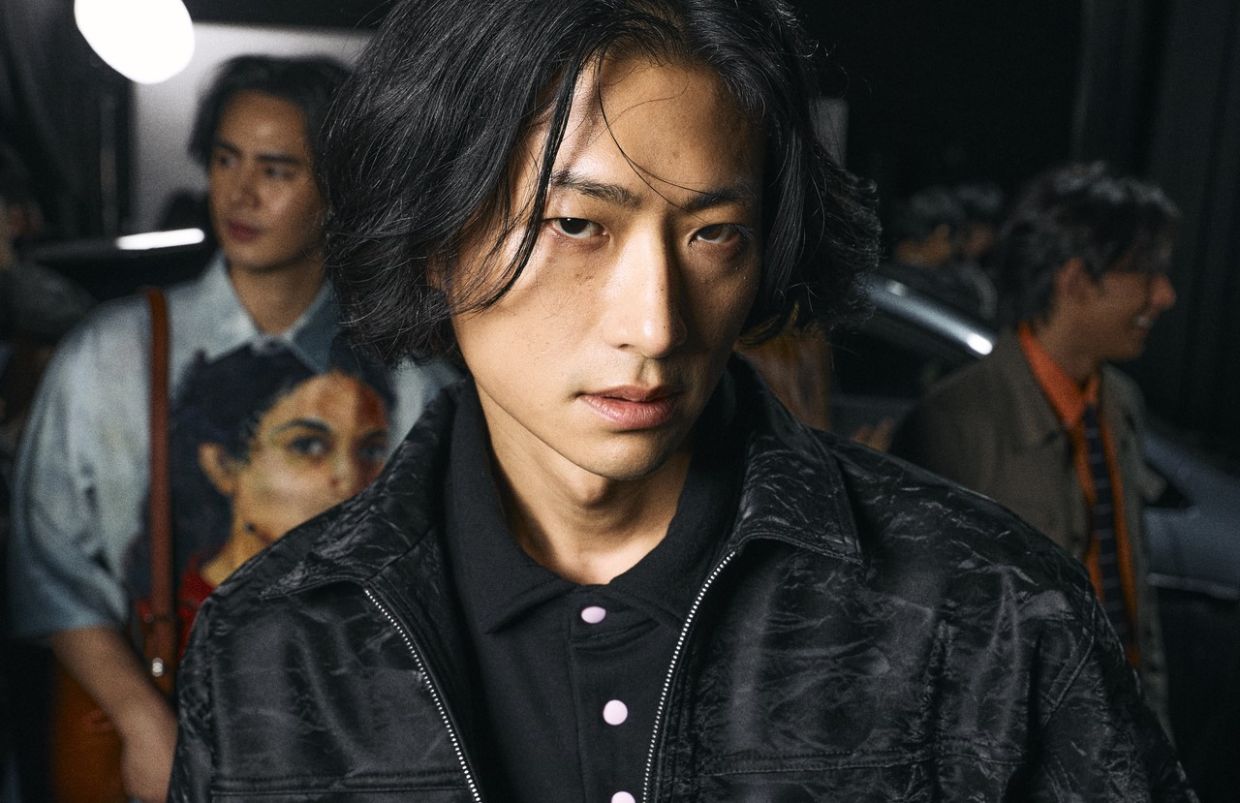
At 40 years old, Heo Yong-jin made a decision that defies conventional career wisdom: he walked away from a prestigious position in South Korea's legal sector to chase an opportunity in international fashion modelling. The shift proved transformative when he graced an exclusive Louis Vuitton trunk show in Bangkok last July, where the French luxury house unveiled menswear designed by Pharrell Williams in partnership with Japanese designer Nigo. For someone who had spent the previous decade working in litigation support at Kim & Chang, South Korea's most prominent law firm, the leap into a visibly youth-oriented industry seemed improbable. Yet what began as a casual suggestion from his wife has evolved into a genuine career pivot that has captivated audiences across Asia and beyond.
The origin of Heo's modelling ambitions traces back to 2023, when he relocated to Spain with his wife to pursue further education in sports management and the agency business. Rather than remaining confined to academic pursuits, he gradually became integrated into a fitness-focused peer group, joining classmates for recreational football and padel, a paddle sport that has gained tremendous popularity throughout Europe. This shift toward physical activity produced an unexpected side effect: his appearance underwent a noticeable transformation as he shed weight and became more athletic. His wife, observing this metamorphosis, casually proposed that he consider modelling as a potential avenue, a suggestion that would eventually redirect his entire professional trajectory.
Heo's height of 188 centimetres had never factored into his career calculations during his decade in the legal profession, but it suddenly became relevant when he contemplated a complete professional reinvention. The Korean lawyer recognised that the European market held particular demand for Asian male models, a realisation that emboldened him to take a calculated risk. With just four months remaining on his Spanish visa, he committed to building a professional portfolio independently, enlisting photographers and contacting prospective clients without agency representation. This entrepreneurial approach to breaking into the industry demonstrated resourcefulness that extended beyond typical newcomer experience, though the self-directed strategy remained unconventional within formal modelling circles.
When Heo returned to South Korea, he anticipated that his European foothold and growing portfolio would facilitate a seamless transition into the domestic market. Instead, he encountered significant resistance from established agencies, who viewed his age and lack of traditional industry credentials as disqualifying factors. This setback, rather than discouraging him entirely, prompted a strategic geographic expansion that reflected the reality of contemporary modelling: opportunity exists beyond traditional fashion hubs. He methodically contacted agencies throughout China and Southeast Asia, submitting portfolios through official channels and demonstrating persistence that recalled his earlier self-directed efforts. This persistence paid dividends when a Thai-based agency responded positively to his application, initiating the professional relationships that would establish his foothold in Asia's fashion landscape.
Operating between Thailand and South Korea, Heo began accumulating commercial work for regional brands, including advertisements for sunglasses and European insurance companies that cast him as a Malaysian father. These campaigns, while modest in scope, provided the professional validation and practical experience he had lacked. His journey gained unexpected momentum when his Instagram content chronicling this unconventional career transition reached an audience of four million viewers, transforming his personal narrative into a viral phenomenon across the region. The digital attention far exceeded what his individual commercial bookings might have suggested, indicating that audiences found emotional resonance in his story of professional reinvention and courage in defying age-related stereotypes within the fashion industry.
The Louis Vuitton trunk show appearance marked the career highlight that lent credibility to his still-nascent modelling profile, yet Heo maintains remarkable candour about the realities of his position. He deliberately resists framing his journey as a completed success narrative, instead characterising himself as still in the developmental phase of building a sustainable modelling career. This measured perspective reflects understanding that a single high-profile runway appearance, while prestigious, does not guarantee consistent bookings or industry acceptance. The experience, however, confirmed his instinct that pathways existed for mature-aged Asian models willing to navigate the industry's structural challenges with determination and realistic expectations.
Heo's transition from law to modelling represents more than a professional change; it signifies a fundamental reassessment of what constitutes meaningful work and personal fulfilment. During his decade in litigation support, he maintained an external appearance of confidence while internally questioning whether his chosen profession genuinely resonated with his values and aspirations. Modelling, by contrast, has provided what he describes as authentic self-assurance rooted in genuine accomplishment rather than professional role-playing. This psychological shift holds particular significance within Asian professional contexts, where career stability and prestige often supersede personal satisfaction in determining vocational choices. Heo's evolution suggests that such conventional hierarchies may warrant reconsideration, particularly for professionals in midlife reassessment.
The financial uncertainty accompanying his career transition initially troubled him, as the transition from a stable legal salary to freelance modelling work inherently involves income volatility. Yet Heo has concluded that the material comfort provided by his previous position did not translate into corresponding emotional satisfaction or sense of purpose. This observation challenges prevailing assumptions within competitive Asian labour markets, where compensation levels frequently serve as the primary metric for career success. His willingness to accept reduced financial predictability in exchange for creative expression and personal agency indicates a value system increasingly prevalent among younger Asian professionals but still relatively uncommon among his generational cohort.
As his second year in modelling progresses, Heo has begun receiving inquiries from South Korean brands seeking his participation in fashion editorials and lookbooks, suggesting that domestic market acceptance may gradually follow international success. These developing opportunities with local companies indicate that agencies and brands increasingly recognise commercial value in his mature aesthetic and the narrative authenticity he brings to campaigns. His ambitions have expanded beyond securing steady commercial work to include participation in major fashion weeks, with Milan and Paris presentations scheduled for late September through early October his next targets. Such ambitions appear audacious for someone with less than two years of professional experience, yet his track record of converting long-odds situations into concrete achievements suggests such goals warrant serious consideration.
Auditions for major fashion weeks present formidable obstacles, as elite houses including Prada, Bottega Veneta, Saint Laurent and Tom Ford maintain rigorous selection processes favouring established models with extensive runway experience and agency representation. For Heo, simply accessing these audition opportunities requires first securing agency representation willing to champion a relatively unknown 40-year-old competitor against younger, more conventionally credentialed rivals. This structural reality underscores that his career trajectory, while inspiring, continues to unfold within an industry fundamentally shaped by age discrimination and established hierarchies that individual determination alone cannot entirely overcome. Nevertheless, Heo's journey to date suggests that talent, persistence and strategic positioning within underutilised market segments can create meaningful pathways for unconventional candidates willing to undertake the necessary groundwork and navigate inevitable rejections.
For Malaysian and Southeast Asian audiences, Heo's story carries particular resonance, as the region increasingly features in international fashion narratives through emerging local talent and multinational brand operations. His success in securing work across Thailand, China and South Korea demonstrates the interconnected nature of Asia's fashion markets and the opportunities available for models willing to circulate throughout the region rather than fixating exclusively on Western fashion capitals. Additionally, his commercial work in Malaysia, including portraying a Malaysian father in insurance advertising, illustrates the specific market demand within Southeast Asia for mature-aged male models who can authentically represent regional demographics and cultural contexts. As Asian fashion industries continue developing sophistication and consumer purchasing power expands throughout the region, opportunities for models outside conventional age ranges and aesthetic categories will likely expand correspondingly, potentially enabling more professionals like Heo to successfully transition mid-career.

