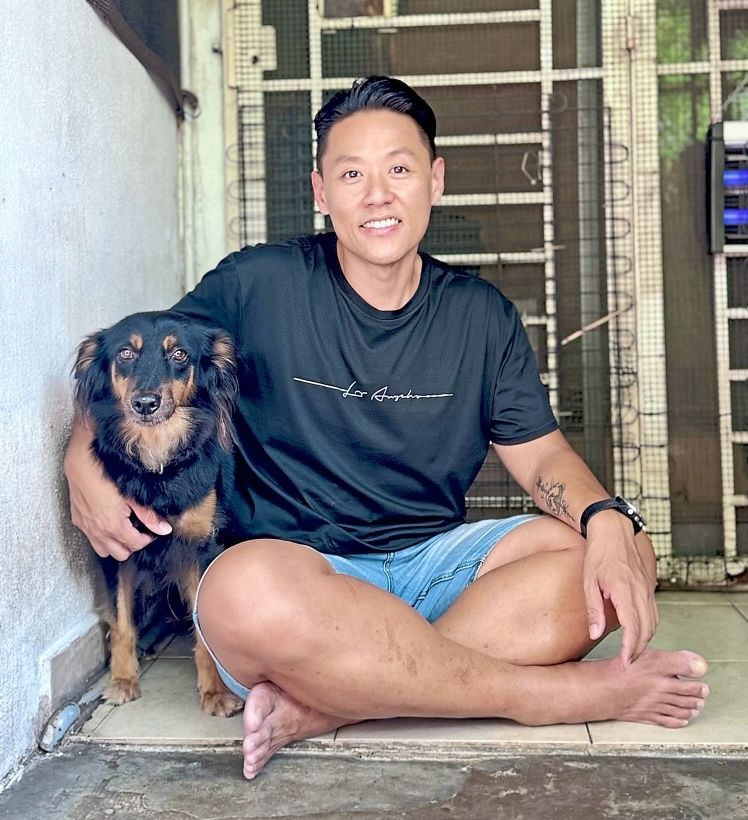
When Benjamin Tan and his family visited a pet fair at Mid Valley Megamall three years ago, they were searching for a suitable companion for Blacky, their ageing poodle. Rather than select a dog themselves, they turned to Brenda Chia, a volunteer coordinator with Malaysian Dogs Deserve Better, the animal welfare organisation dedicated to finding homes for strays and abandoned pets. Chia's choice fell on a small dog named Zudy, and the Tan household welcomed her with open arms—though what followed would test their commitment to patience and kindness in ways they had not anticipated.
Zudy's arrival revealed the heavy toll that abandonment and mistreatment had taken on her psyche. The little dog arrived in a state of acute anxiety, trembling uncontrollably and visibly distressed by her new surroundings. In those early days, her fear was so overwhelming that she struggled even to eat, refusing food as her nervous system remained locked in survival mode. Tan recalls the period with compassion tinged with frustration, acknowledging that the physical signs of her distress—constant shaking and withdrawal—pointed to a painful past. The family could only speculate about the circumstances that had driven Zudy to such a broken state, but they resolved to provide the stability and unconditional affection she needed to heal.
Healing proved to be a gradual process that demanded months of consistent, gentle care. The Tan family did not rush Zudy's recovery or force her into situations she was not ready for. Instead, they allowed her to decompress at her own pace within the safety of their home, gradually building trust through routine and reassurance. After approximately nine months of this patient support, a crucial turning point arrived when the shivering finally subsided. Though Zudy's emotional scars began to fade, her family noticed something unusual: unlike most dogs, who communicate through a rich vocabulary of huffs, whines, yips, yelps and barks, Zudy remained almost entirely silent. Her muteness became so pronounced that Tan wondered whether she might be physically incapable of vocalising at all.
As Zudy's confidence grew incrementally, the family began taking her to a dog-friendly park near their Puchong home for regular outings. Initially, she would cling to Tan's side, overwhelmed by the presence of strangers and unfamiliar dogs. The process of socialisation was slow, requiring patient exposure and reassurance. Tan would allow her to approach people at her own pace, letting her sniff and investigate before gradually encouraging closer interaction. Over time, her anxiety in public spaces diminished, though her silence persisted. Even when observing Blacky's enthusiastic barking at delivery personnel, security guards and street activity, Zudy would mimick the behaviour without producing sound—her mouth opening and her body language shifting into alert posture, yet no audible bark emerging.
The breakthrough came approximately one year after Zudy joined the household. While Blacky was barking at his usual triggers—a delivery person, perhaps, or a passing security guard—Tan heard a second bark join the chorus. This new voice was even more powerful and commanding than Blacky's established bark, and Tan's immediate assumption was that another dog must have wandered into their property. To his astonishment, the voice belonged to Zudy. After months of silence, she had suddenly found not just her voice, but a notably authoritative one. The moment marked a watershed in her emotional recovery, signalling that she had finally internalised the message that her new home was genuinely safe.
From that pivotal moment onwards, Zudy has embraced vocality with enthusiasm that sometimes requires gentle management. Today, the two dogs form a vocal partnership, with Zudy actively joining Blacky in greeting the security patrols that pass their property. She has extended her repertoire to include hunting calls directed at garden lizards and enthusiastic yaps that harmonise with the songbirds that visit their backyard. Tan observes with amusement that his once-silent companion has become so vocal he occasionally encourages her toward restraint, a remarkable reversal from the anxiety he once felt about her complete silence.
Beyond finding her literal voice, Zudy has developed the courage that typically accompanies canine confidence. In the neighbourhood park, she no longer retreats into hiding when approached by strangers. Instead, she adopts the composed posture of a dog secure in her own identity, sitting patiently and allowing people to greet her on her own terms. When released to play, she runs freely without the paralysing fear that once defined her interactions. This transformation speaks to the profound impact of security, routine and unconditional acceptance on a traumatised animal.
Perhaps most tellingly, Zudy has evolved from a victim of circumstance into an animal with agency and opinions about her own life. The family maintains a consistent dinner schedule, serving her meal at eight o'clock each evening. Should the family become distracted and drift more than thirty minutes beyond the appointed hour, Zudy will actively remind them of their obligation, appearing to issue firm reminders through pointed barking. Her demands are met with immediate compliance—the little dog who once could not find her voice now gives orders with the confidence of one who knows her family will listen.
Zudy's journey from the pet fair three years ago to her current status as a confident, vocal and slightly demanding household member illustrates a broader truth about rescue animals in Malaysia. The story extends beyond one family's compassion to reflect the work of organisations like Malaysian Dogs Deserve Better, which operates in a landscape where thousands of abandoned dogs await permanent homes. Zudy's transformation demonstrates that rehabilitation is possible when commitment meets the right circumstances. Her silence was not an inherent characteristic but a symptom of trauma, and her eventual bark represents not merely the recovery of a physical ability but the reclamation of her sense of belonging and safety. For the Tan family and their two dogs—one now elderly, one newly vocal—the journey has affirmed that adoption saves lives in ways both obvious and profound.

