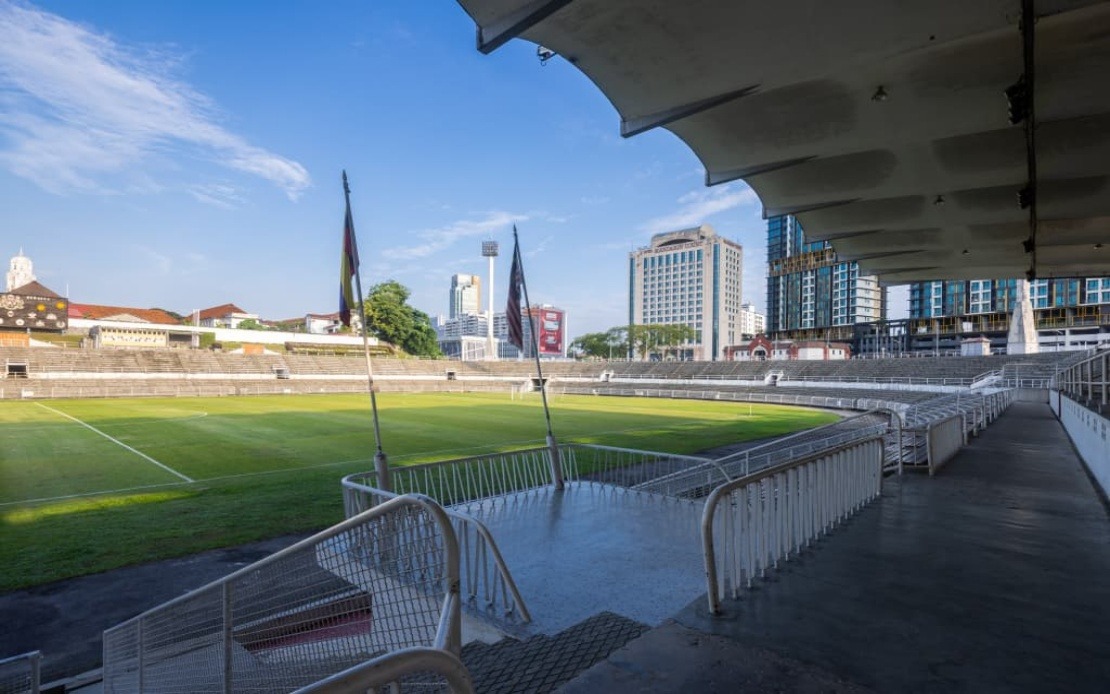
Tunku Abdul Rahman Putra Al-Haj's thunderous sevenfold cry of "Merdeka!" that reverberated across Stadium Merdeka on August 31, 1957, transcended a mere ceremonial proclamation. It fundamentally announced the arrival of a self-governing nation and set the trajectory for decades of national aspiration and development. That foundational moment, witnessed by thousands gathered in the iconic venue, became etched in the collective consciousness of Malaysians as the precise instant when colonial subjugation ended and sovereignty commenced. Yet nearly seventy years later, the physical spaces where Malaysians gather to commemorate this defining achievement have undergone considerable evolution, prompting serious reflection on how shifting venues might influence public understanding of the nation's independence struggle.
In recent years, the ceremonial heartland of National Day observance has progressively migrated from Stadium Merdeka towards Dataran Putrajaya, representing a fundamental recalibration of how the government stages the nation's self-celebration. This migration is not arbitrary; rather, it embodies Malaysia's broader trajectory from post-colonial consolidation towards administrative modernisation and sophisticated urban planning. Putrajaya, originally designated as Prang Besar before its designation as the Federal administrative centre in 1995, first assumed hosting responsibilities for the national-level commemoration in 2003, marking a watershed moment in the ceremonial geography of Malaysian patriotism. The transition signals not abandonment of historical memory but rather its integration into contemporary urban spaces designed to accommodate growing populations and technological sophistication.
The statistical pattern of Putrajaya's hosting responsibilities underscores governmental investment in the capital as the primary venue for national pageantry. Since 2003, Putrajaya has hosted the national-level celebration on ten occasions, most notably in 2003, 2005, 2018, 2019, 2020, 2021, 2023, 2024, and 2025. This frequency intensified dramatically from 2018 onwards, reflecting deliberate policy consolidation. In April 2025, the Cabinet formalised this trajectory by designating Putrajaya as the designated venue for the 2025-2027 triennium, effectively anchoring the nation's most significant patriotic gathering at a singular location for three consecutive years. This decision carries administrative efficiency gains but simultaneously raises pertinent questions about symbolic continuity and intergenerational comprehension of independence narratives.
Professor Sarjit Singh Gill, chairman of the National Unity and Progressive Society Cluster at the Malaysian Professors Council and a distinguished anthropology and sociology academic at Universiti Putra Malaysia, offers crucial theoretical scaffolding for understanding this transition. Rather than positioning Stadium Merdeka and Putrajaya as mutually exclusive symbols, Sarjit advocates for their complementary deployment in national consciousness. Stadium Merdeka, he argues, catalyses profound nostalgia particularly among elderly Malaysians aged seventy and above, who carry embodied memories of independence procurement and post-colonial construction. Conversely, Putrajaya embodies the contemporary expression of nationhood—a meticulously engineered administrative metropolis framed as a "smart city in a garden" that exemplifies how independence dividends have materialised into modern governance infrastructure. This dialectical relationship, Sarjit contends, enriches rather than diminishes patriotic understanding.
The preservation of historical consciousness amid venue transformation hinges critically on two foundational pillars, according to Sarjit's analysis. First, National Day celebrations must continuously acknowledge the sacrifices and diplomatic acumen of preceding leaders who negotiated independence through consensus rather than confrontation, thereby distinguishing Malaysia's decolonisation pathway from more violent independence struggles throughout Asia and Africa. Second, such celebrations must reinforce Malaysia's foundational commitment to racial plurality organised around "unity in diversity" principles, a constitutional bedrock that distinguishes Malaysian nationalism from ethnically exclusionary models elsewhere in the region. Without deliberate integration of these historical elements into contemporary celebrations, Sarjit warns, younger cohorts risk comprehending patriotism as disembodied spectacle rather than rooted historical consciousness.
The active engagement of youth populations emerges as the critical variable determining whether venue transitions strengthen or attenuate patriotic sentiment. Reflecting on his participation in the 1990 "Berjaya" parade, Sarjit emphasises that generational continuity depends fundamentally on young Malaysians transcending passive spectatorship to assume roles within celebratory structures. When adolescents and young adults become active choreographers rather than mere audiences of national commemoration, authentic patriotism crystallises rather than ossifies into performative ritual. This participatory imperative becomes especially urgent when ceremonies relocate from sites saturated with historical memory towards purpose-built administrative zones lacking organic connection to independence narratives.
Putrajaya's selection as the recurring venue derives substantial justification from logistical and infrastructural superiority rather than symbolic considerations. The Event Management and Innovation Unit of the Management Services Division at the Ministry of Communications articulated how Putrajaya's integration with the Mass Rapid Transit network, complemented by water taxi services and dedicated shuttle bus systems, provides multimodal accessibility superior to Stadium Merdeka. These transportation innovations fundamentally democratise participation by reducing private vehicle dependency, thereby accommodating larger demographic cross-sections. The capacity to accommodate explosive visitor volumes through efficient mobility infrastructure positions Putrajaya as pragmatically superior for staging increasingly elaborate national ceremonies that incorporate technological sophistication and mass participation.
Yet pragmatic infrastructure alone cannot sustain patriotic engagement; thematic coherence and narrative continuity prove equally indispensable. The 2026 National Day theme, "Malaysia MADANI: Kesejahteraan Dinikmati" (Malaysia MADANI: Prosperity Enjoyed), architecturally links colonial independence achievement with contemporary developmental aspirations. The formulation explicitly bridges the nation's founding struggle towards sovereignty with ongoing endeavours to translate independence into tangible citizen wellbeing. This thematic architecture acknowledges that independence constitutes not a terminal historical event but rather the foundational prerequisite for subsequent nation-building that continues into the present moment. Such temporal elasticity proves crucial for enabling younger generations to perceive patriotism as personally relevant rather than purely ancestral.
Creative and technological integration transforms potential venue limitations into pedagogical opportunities. Putrajaya's 2025 programme incorporated performances including "Gema Inovasi MADANI" and the musical fusion "Rentak MADANI, Paluan Tradisi," juxtaposing contemporary innovation with traditional cultural expression. Perhaps most significantly, the incorporation of 1,500 schoolchildren in "Human Graphic" visual formations strategically embeds youth as active agents within the ceremonial apparatus rather than relegated to spectatorial margins. Such participatory design directly addresses the challenge of transmitting patriotic consciousness across generational divides by creating memorable embodied experiences for young participants whose emotional investment in national identity crystallises through performative involvement.
Young Malaysians increasingly view National Day celebrations as experiential opportunities rather than obligatory civic ceremonies. Muhammad Nasrul Nasir, a thirty-year-old Administrative Assistant at the Federal Territories Department, exemplifies this developmental trajectory from passive observation to active contribution. His progression from spectator at last year's Dataran Putrajaya celebration to parade participant this year reflects how contemporary venues can facilitate deeper engagement when ceremonial structures afford entry points for youth involvement. Nasrul's particular recollection of skydiving performances underscores how spectacular technological elements can puncture generational consciousness, creating lasting emotional associations with patriotic occasions. Furthermore, his explicit acknowledgment of past heroes' sacrifices demonstrates that venue transitions need not attenuate historical consciousness if celebrations maintain pedagogical commitment to independence narratives.
The broader Malaysian context complicates straightforward assessment of venue migration's implications. Within Southeast Asia's diverse decolonisation trajectories, Malaysia's negotiated independence pathway distinguished itself through elite consensus-building and constitutional nationalism rather than mass mobilisation or armed struggle. Consequently, Malaysia's patriotic ceremonies cannot afford to abstract independence from the specific diplomatic and constitutional architectures through which sovereignty was achieved. Venue relocation therefore carries hidden peril: without deliberate safeguarding of these distinctive historical specificities, National Day might devolve into generic nationalist spectacle indistinguishable from celebrations throughout other post-colonial nations. The movement from Stadium Merdeka—a site saturated with founding memory—to Putrajaya—a modernist administrative construct lacking organic historical connection—potentially risks precisely this erosion of distinctively Malaysian independence consciousness.
Nevertheless, the transition from Stadium Merdeka to Putrajaya need not constitute patriotic regression if interpreted as spatial expansion rather than replacement. A mature post-colonial nationalism might indeed benefit from multiple commemorative sites, each carrying distinct resonances: Merdeka's revolutionary aura alongside Putrajaya's administrative modernity, each reinforcing distinct dimensions of Malaysian nationhood. The Cabinet's three-year commitment to Putrajaya suggests institutional confidence that the venue can sustain patriotic transmission without historical dilution. Success, however, depends critically on curatorial vigilance—ensuring that thematic architecture, participatory design, and historical narration maintain intricate connection between contemporary celebrations and the specific diplomatic, constitutional, and multiethnic foundations upon which Malaysian independence rests. Venue alone cannot guarantee patriotic consciousness; only deliberate, sustained commitment to historical education and youth engagement can ensure that the spirit ignited by Tunku's historic cry continues burning across generations and locations.

