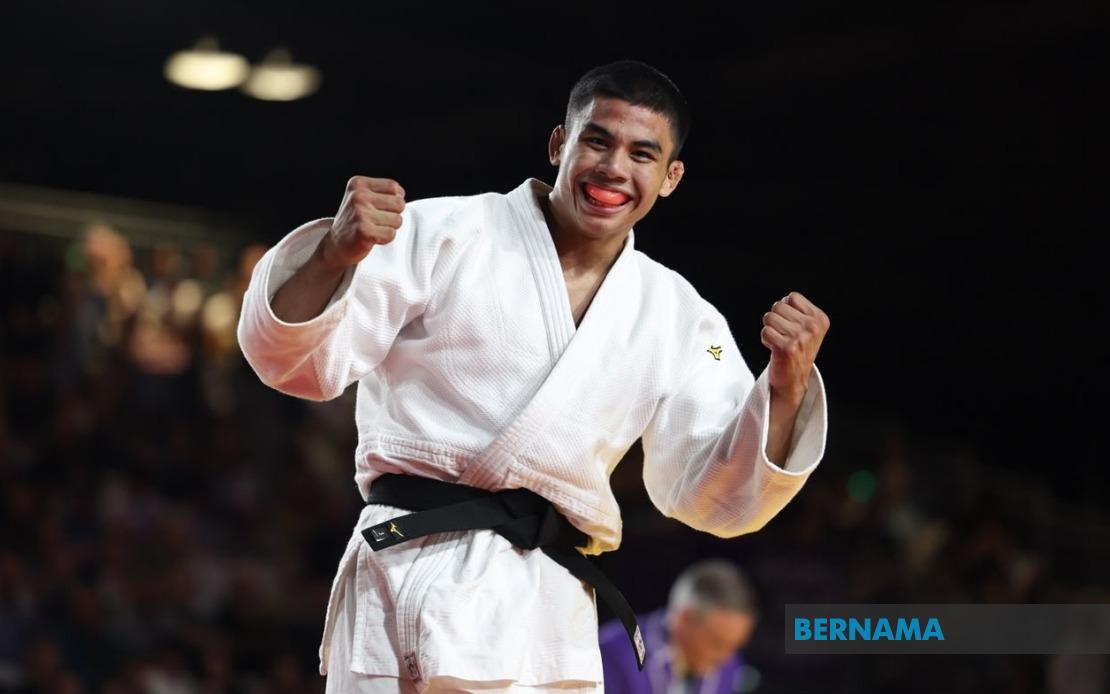
Amir Daniel Abdul Majeed's path to sporting glory began not on a judo mat, but in a family living room where a determined four-year-old made a simple bargain with his mother. The Penang-born athlete, who has just claimed Malaysia's first-ever Commonwealth Games judo gold medal at Glasgow 2026, demonstrated the unwavering commitment that would define his athletic career decades before stepping into international competition. His mother, Yeoh Suatkhim, recalls how young Amir Daniel agreed to abandon his thumb-sucking habit in exchange for a coveted storybook—and kept his word the very next day, a small act that foreshadowed the discipline and mental fortitude that would eventually carry him to Olympic-standard success.
At just 21 years old, Amir Daniel defeated South Africa's Timothy Meuwsen in the final held at the Scottish Event Campus yesterday to secure gold in the under-81 kilogramme division, delivering Malaysia's eighth gold medal of the Glasgow 2026 Games. The victory transcends the typical achievement of a single medal, representing instead a watershed moment for judo development within Malaysian sport. Prior to this triumph, no Malaysian judoka had successfully claimed Commonwealth Games gold across any previous edition, making Amir Daniel's accomplishment a genuine breakthrough for a sport that has largely operated in the shadows of more prominent Malaysian disciplines such as badminton and field hockey.
The journey toward this historic victory began when Amir Daniel was introduced to judo at age five under the guidance of national coach Md Nashriq Md Nassir, a mentor relationship that continues to this day. Rather than simply occupying the traditional coaching role focused narrowly on technical development, Md Nashriq has embedded himself into Amir Daniel's broader personal and educational framework. Yeoh describes the coach's involvement extending into academic matters, recounting how Md Nashriq would establish formal agreements with Amir Daniel before crucial examination periods to ensure that his studies remained a priority alongside his judo training. This holistic approach to athlete development—integrating discipline, education, and sportsmanship—reflects a sophisticated understanding of what sustains long-term athletic excellence in a region where many young talents struggle to balance competing demands.
Amir Daniel's progression through international judo competition reveals the consistency of his development. At the Birmingham 2022 Commonwealth Games, he competed in the under-73kg category and secured a bronze medal, indicating steady improvement in both weight class and medal tier. The step-up to gold at Glasgow 2026 in a heavier category demonstrates not merely physical maturation but also refined tactical awareness and psychological resilience under pressure. For Malaysian sports observers, this trajectory suggests that Amir Daniel possesses the foundational qualities necessary for progression to elite international platforms beyond the Commonwealth Games, particularly given the heightened competitive intensity at Olympic level.
Yeoh's influence on Amir Daniel's development extends beyond the immediate family dynamic into a broader philosophy about childhood enrichment. She deliberately exposed both her children—eldest daughter Nur Yasmeen and younger son Amir Daniel—to sports and educational activities from an early age, viewing such engagement as essential to channelling youthful energy into constructive pursuits while building character. This parental approach aligns with growing evidence in sports science suggesting that early, multi-sport exposure during childhood creates more adaptable and resilient athletes in adulthood. The combination of maternal support, sustained coaching, and personal discipline appears to have created the optimal conditions for Amir Daniel's emergence as a medal-winning athlete.
For Malaysia's judo federation and sports development agencies, Amir Daniel's breakthrough carries significant implications for programme investment and talent identification. Historically, Malaysian judo has struggled to convert participation into medal success at major Games, suggesting either gaps in technical coaching quality, insufficient athlete development pathways, or inadequate resource allocation. The success of Md Nashriq's approach with Amir Daniel provides a template worth examining and potentially replicating with emerging judokas. Additionally, the visibility generated by a Commonwealth Games gold medal frequently catalyses increased youth participation in a sport, offering judo administrators an unexpected window to expand their talent pool and programme footprint across the country.
Yeoh has expressed hopes that her son's Glasgow achievement represents merely an intermediate milestone on a trajectory toward Olympic competition. The 21-year-old athlete, already possessing Commonwealth Games gold, sits at the ideal age to develop and peak for Olympic qualification cycles. The path from Commonwealth competitor to Olympic standard demands substantial increases in technical refinement, competitive intensity, and training sophistication, as athletes must contend with judokas from judo powerhouses including Japan, France, and South Korea who dominate international rankings. However, Amir Daniel's demonstrated mental fortitude and the quality of coaching support surrounding him suggest that Olympic ambitions, while undoubtedly challenging, remain within realistic reach for a talented young athlete operating under optimal developmental conditions.
Balancing athletic aspiration with academic responsibility has emerged as a central theme in Amir Daniel's development, reflecting broader challenges facing Malaysian youth athletes. His coach Md Nashriq's insistence on maintaining educational commitments ensures that Amir Daniel builds qualifications that provide security beyond his competing years. This contrasts sharply with trajectories in some other nations where single-minded athletic focus from adolescence creates vulnerability for athletes who encounter injury or whose peak performance window narrows unexpectedly. The integrated approach demonstrated in Amir Daniel's case—where judo excellence and educational achievement advance together rather than competing for limited time and energy—offers a sustainable model for young Malaysian athletes considering professional sports pathways.
Amir Daniel's stated commitment to supporting fellow Malaysian judokas reflects a maturity extending beyond personal achievement. As the nation's breakthrough Commonwealth Games champion in the sport, he occupies an influential position within judo circles and could significantly impact how younger competitors view the sport's potential. Athletes who emerge from relatively under-resourced programmes and succeed at major Games events frequently become powerful advocates for improved funding and administrative support. If Amir Daniel leverages his newfound platform to mentor younger judokas and champion judo development initiatives, his Glasgow gold could catalyse system-wide improvements that extend far beyond his individual achievements.
The underlying narrative of Amir Daniel's rise—from a child who showed remarkable willpower in trading thumb-sucking for a storybook to a young man claiming Commonwealth Games gold—encapsulates elements that resonate across Malaysian sport. His story combines family support, quality coaching, personal discipline, and sustained effort over more than a decade and a half. In a Malaysian sporting landscape where attention and resources concentrate heavily on established medal-winning sports, Amir Daniel's breakthrough offers judo an opportunity to diversify the nation's competitive portfolio while demonstrating that excellence remains achievable in less-prominent disciplines when the right combination of talent, support, and institutional commitment aligns.

