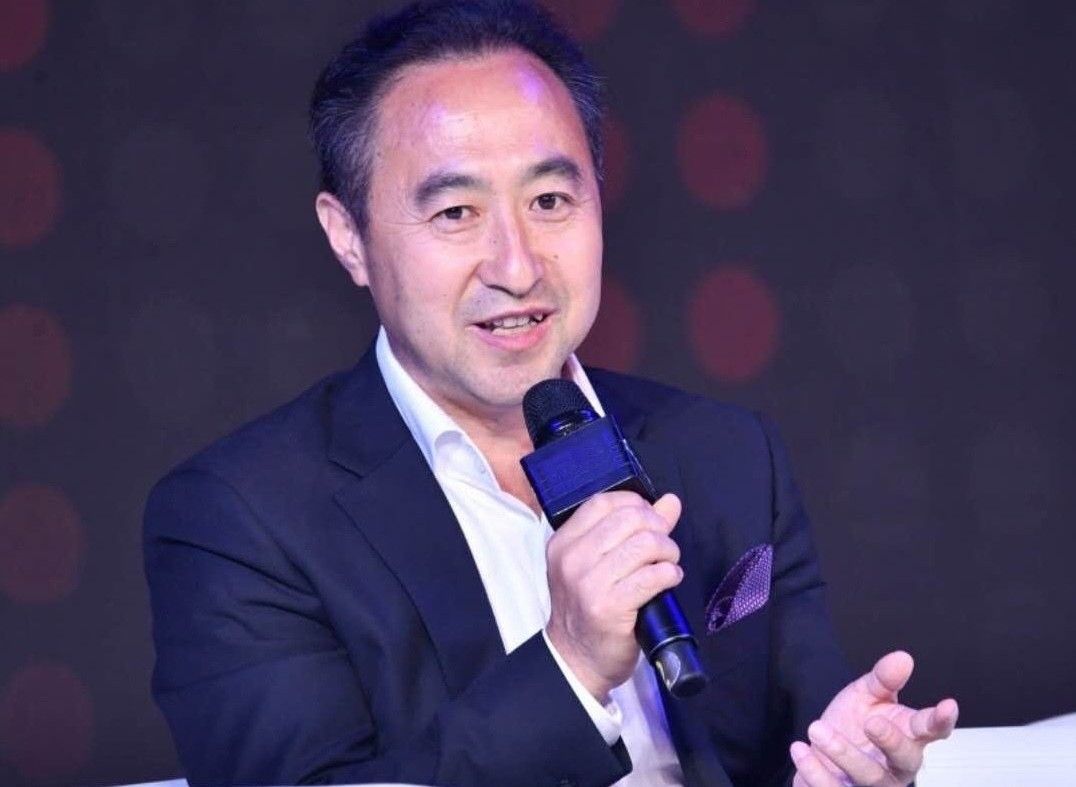
The journey of CJ Wang from provincial Chinese schoolteacher to billionaire entrepreneur offers a revealing glimpse into how personal inspiration and engineering acumen can reshape an entire industry. Born in 1969 in Yantai, Shandong Province, Wang's pathway to fortune began with humble domesticity: grinding soybeans by hand on his uncle's stone mill after school, a laborious ritual that would later become the spark for one of Asia's most successful appliance businesses. That childhood memory of repetitive, exhausting work would eventually drive him toward a technological solution that fundamentally changed breakfast preparation across China and beyond.
Wang's early trajectory seemed predetermined by family tradition. After completing electrical engineering studies at Beijing Jiaotong University, he followed his parents into the teaching profession, a respectable if unremarkable career path. Yet the limitations of this conventional route gnawed at his ambitions. In a recent interview with Time magazine—his first engagement with international media—Wang reflected candidly on this period, acknowledging that though teaching "was what my family did," he harboured larger aspirations. The decision to abandon a stable income in 1994 to pursue an engineering venture represented a calculated bet on his convictions.
The insight that crystallised Wang's entrepreneurial focus was deceptively simple: soy milk and fried dough sticks would remain dietary staples throughout Chinese breakfast culture for generations to come. Rather than chase novelty, Wang identified an entrenched consumer need and sought to mechanise the solution. His first electric soy milk maker was crude and imperfect, yet it represented a watershed innovation for household cooking. That same year, he founded Joyoung, a kitchen appliance brand that would spend the next two decades establishing itself as synonymous with affordable, dependable home technology across China's growing consumer market. Within a decade, the company had sold over one million units, validating Wang's fundamental thesis about market demand and manufacturing capability.
Joyoung's development reflected a disciplined approach to product expansion and market consolidation. Beyond soy milk makers, the brand diversified into blenders, rice cookers, and related small appliances—each product carefully engineered to balance performance with accessibility for middle-income Chinese households. The company's subsequent listing on the Shenzhen exchange established its credibility as a serious industrial player, though its recognition remained largely confined to domestic markets. This geographical limitation began to feel increasingly constraining to Wang as the 2010s progressed and he recognised the vastly larger opportunities available in Western consumer markets dominated by established foreign competitors.
Rather than construct a Western distribution infrastructure from scratch, Wang pursued a strategic acquisition strategy that would prove transformative. In 2017, his private equity interests acquired a controlling stake in SharkNinja, an American appliance manufacturer already cultivating a modest following through vacuum cleaners and blenders marketed primarily via television infomercials. Wang recognised not merely the company's existing products but its underlying potential and especially the capabilities of its leadership under CEO Mark Barrocas, whom he retained and empowered following the acquisition. This decision reflected a sophisticated understanding that sustainable growth requires preserving institutional knowledge and trusted management continuity.
Wang's diagnosis of SharkNinja's limitations proved analytically astute and commercially decisive. The company suffered from several structural constraints: its product portfolio remained comparatively narrow; its sales methodology depended excessively on broadcast television advertising while neglecting emerging digital and social platforms; its manufacturing relied on a limited supplier base concentrated in China, creating rigidity in production planning and innovation cycles. Wang's response involved transplanting Joyoung's operational strengths—supply chain diversity, manufacturing flexibility, continuous product development—while simultaneously modernising SharkNinja's go-to-market approach to leverage social media virality, particularly on platforms like TikTok where short-form video content drives consumer discovery and purchasing behaviour.
The strategic restructuring proved remarkably successful. Wang placed SharkNinja under JS Global Lifestyle Co., his broader holding company that went public in Hong Kong during 2019, signalling institutional confidence in the Chinese entrepreneur's vision. The dual-brand strategy emerged as a crucial innovation: Shark branded products targeted the vacuum and personal care segments whilst Ninja focused on kitchen appliances, allowing each division to cultivate distinct brand identities and customer communities. This architectural approach, combined with significantly enhanced research and development capabilities and aggressive expansion of product categories, generated the viral commercial successes that transformed SharkNinja from a niche American appliance maker into a multibillion-dollar enterprise commanding substantial market share.
The culmination of this transformation arrived in 2023 when SharkNinja separated from JS Global and commenced trading on the New York Stock Exchange through a direct listing, underscoring its evolution into an independent publicly traded giant. As of recent filings, Wang maintains approximately 35 percent ownership of SharkNinja and 52 percent of JS Global Lifestyle, positioning him among the world's most substantial shareholders in consumer appliance manufacturing. The Bloomberg Billionaires Index valued his total wealth at US$10.4 billion as of August 2026, reflecting the extraordinary value creation achieved through strategic acquisition and operational transformation. In 2024 alone, Wang received total remuneration exceeding HK$520 million as a Hong Kong-listed company director, underscoring the financial scale of his holdings and influence.
Despite commanding such commercial prominence, Wang cultivates a notably reserved public persona. Time magazine described him as soft-spoken and private, divulging only that golf and premium Macallan whisky represent his leisure interests. This discretion reflects not indifference to public perception but rather calculated strategic awareness. Wang's decision to grant his first international media interview emerged from deliberate consideration of geopolitical context: amid intensified United States-China trade friction and heightened scrutiny of Chinese investment in American enterprises, Wang recognised the importance of proactively controlling his narrative. His explicit motivation—to "mitigate any speculation" about his background and business interests by "putting his own story on the record"—demonstrates sophisticated understanding that silence and opacity invite precisely the suspicions he seeks to forestall.
The broader significance of Wang's trajectory extends beyond individual financial success to illuminate patterns in modern Asian entrepreneurship and industrial development. His evolution from manual labour through engineering innovation to multinational acquisition and integration represents a characteristically 21st-century model of wealth creation, distinct from either traditional manufacturing dynasties or pure technology startup narratives. For Southeast Asian business leaders and policymakers, Wang's experience illustrates how deep understanding of regional consumer preferences, combined with operational excellence and strategic acquisition capability, can generate competitive advantages that transcend geographical and cultural boundaries. His willingness to acquire rather than build from scratch, his emphasis on preserving talented management across transitions, and his rapid adaptation to digital-era marketing paradigms offer instructive lessons for investors and entrepreneurs navigating increasingly complex global supply chains and consumer behaviours.
The SharkNinja transformation particularly demonstrates how Chinese capital and expertise, when combined with Western brand recognition and distribution networks, can create formidable commercial entities. Wang's injection of manufacturing discipline and supply chain innovation into SharkNinja's operations generated capabilities that neither organisation possessed independently, a dynamic that will likely characterise successful cross-border business combinations throughout this decade. His story also underscores how seemingly mundane household appliances remain highly profitable sectors when approached through genuine innovation frameworks and consumer-centric product development. As global markets become increasingly interconnected and competition intensifies across consumer segments, Wang's trajectory from village millstone memories to billionaire industrialist offers both inspiration and practical validation for entrepreneurial ambition operating across cultural and geographical divides.

