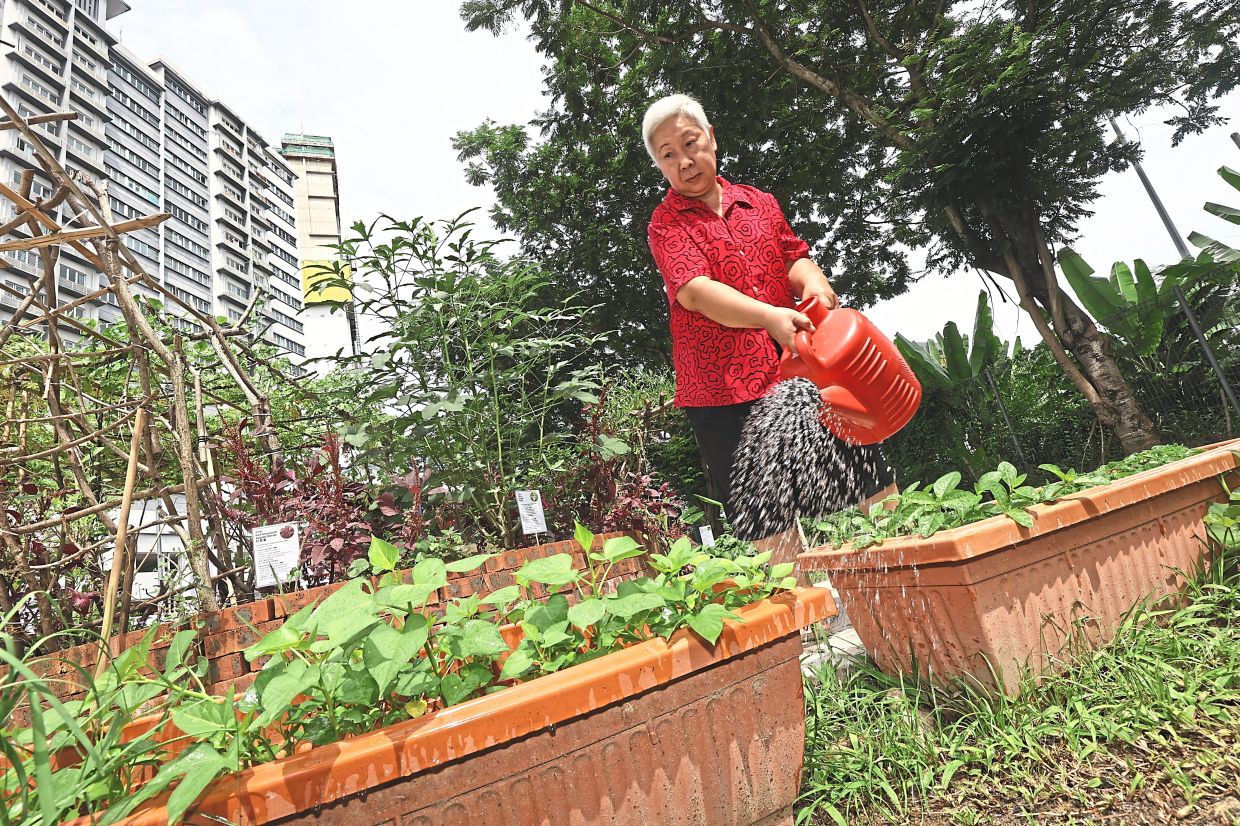
The stretch of land situated behind 1Razak Mansion in Kuala Lumpur presented a dismal picture just half a year ago—nothing but an overgrown expanse of tangled vegetation and neglect. The transformation that has since unfolded tells a compelling story about urban renewal, community engagement, and the power of repurposing public spaces for collective well-being. What now stands in its place is a flourishing garden bursting with herbs, vegetables, fruit-bearing plants and flowering species, testament to the determination of local leaders, social enterprises and residents working in concert toward a shared vision.
The initiative represents far more than simple beautification. Minister in the Prime Minister's Department (Federal Territories) Hannah Yeoh, speaking at the recent official launch of the 1Razak Mansion Food Forest, highlighted a critical demographic reality shaping the project's purpose. Approximately 80 percent of residents living at 1Razak Mansion are senior citizens, a composition that demands thoughtful programming addressing both their physical and mental health requirements. While the residential complex already offers abundant physical wellness activities such as tai chi classes, Yeoh underscored the equally pressing need for mental health support—a dimension that the food forest uniquely addresses through engagement with nature and purposeful activity.
For Alice Fernandez, a 64-year-old resident, the garden represents far more than an aesthetic improvement to her neighbourhood. She articulates a holistic vision of the benefits the space delivers, spanning economic utility, psychological well-being and social connection. The garden functions as a living pharmacy and pantry of sorts, allowing residents to harvest fresh produce for their own tables, thereby reducing household expenditure on groceries. Beyond this practical dimension lies something arguably more valuable: the simple act of tending plants offers elderly residents a structured, purposeful activity that anchors their days and provides intellectual and physical engagement. The garden also serves as a destination and gathering point, transforming what was previously an isolated, unusable corner into a destination for leisurely walks and contemplative time among greenery.
Fernandez's personal experience illuminates the garden's accessibility benefits particularly for older residents with limited mobility or energy. The space's proximity to residential units means that even seniors who cannot venture far from their compounds can access nature, fresh air and gentle physical activity without exhaustion. Her routine of visiting the garden after her morning jog and volunteering her labour to maintain the plants demonstrates how the space has become organically integrated into residents' daily rhythms and identities.
Behind the scenes, the logistical realisation of this project required dedicated coordination. Thieeben Sivabalasingam, 38, functioned as a crucial operational force throughout construction, managing material transport and site logistics alongside the project's technical leadership. His testimony captures the invisible labour that precedes such community successes. Standing in the completed garden alongside his three-year-old son, Sivabalasingam expressed profound satisfaction witnessing the vision crystallise from the initial chaos of land clearance into an ordered, thriving landscape. His observation about the necessity of maintaining daily morale and purpose among elderly populations resonates deeply with contemporary research on ageing in place and community integration.
The ripple effects of the initiative extend beyond 1Razak Mansion's own residents. Jenny Wong, 70, and her husband KC Wong, 76, both from the adjoining Razak City Residences, attended the launch and immediately recognised the project's value. Their response illustrates how successful community initiatives function as demonstration projects, inspiring neighbouring areas to pursue similar interventions. KC Wong's hope that comparable programming could be introduced at Razak City Residences reflects an emerging grassroots demand for intergenerational engagement opportunities that combat the isolation and purposelessness that often accompany retirement.
Dr Billy Tang Chee Seng, 60, the founder and social entrepreneur leading PWD Smart FarmAbility, explicitly frames the food forest as an opening phase of a considerably more ambitious vision. His strategic thinking moves beyond food production alone toward educational enrichment, skills development and scientific literacy. The planned construction of a kitchen hub within the garden, designed to teach residents how to transform their harvests into meals, represents an innovative approach to combining nutrition, culinary knowledge and intergenerational learning. By introducing microscopes to examine soil ecosystems and microorganisms, the initiative also creates pathways for younger residents to develop scientific understanding while deepening intergenerational bonds through collaborative learning.
This trajectory from abandoned land to multi-dimensional community asset exemplifies emerging approaches to urban renewal in Malaysian cities. Rather than pursuing conventional redevelopment or leaving neglected spaces dormant, the 1Razak Mansion Food Forest demonstrates how thoughtful community collaboration can unlock latent potential in overlooked corners of residential complexes. The project succeeds precisely because it addresses genuine needs within its population—the requirement for purposeful activity, affordable nutrition, mental health support and community connection—rather than imposing externally designed solutions.
The food forest also reflects broader patterns of Malaysian cities grappling with demographic shifts, particularly the concentration of senior populations in established residential clusters. Public health officials and urban planners increasingly recognise that infrastructure and programming must evolve to support ageing populations with dignity, autonomy and social integration. Community-based food production initiatives address multiple policy objectives simultaneously: they enhance food security, reduce household expenses, generate physical activity, and most importantly, they create purpose-driven gathering spaces where people of all ages can contribute meaningfully to collective life.
As the garden matures and its educational programmes develop, the 1Razak Mansion Food Forest stands poised to function as a model for other residential communities facing similar demographic compositions. Its success hinges ultimately on the genuine engagement of residents like Alice Fernandez and Thieeben Sivabalasingam, who transform a vision into daily practice through their presence, labour and investment. The project reminds Malaysian communities that wellness and dignity in later life need not depend on expensive programmes or institutional solutions alone, but rather on thoughtfully designed shared spaces where residents become active participants in their own and their neighbours' wellbeing.

