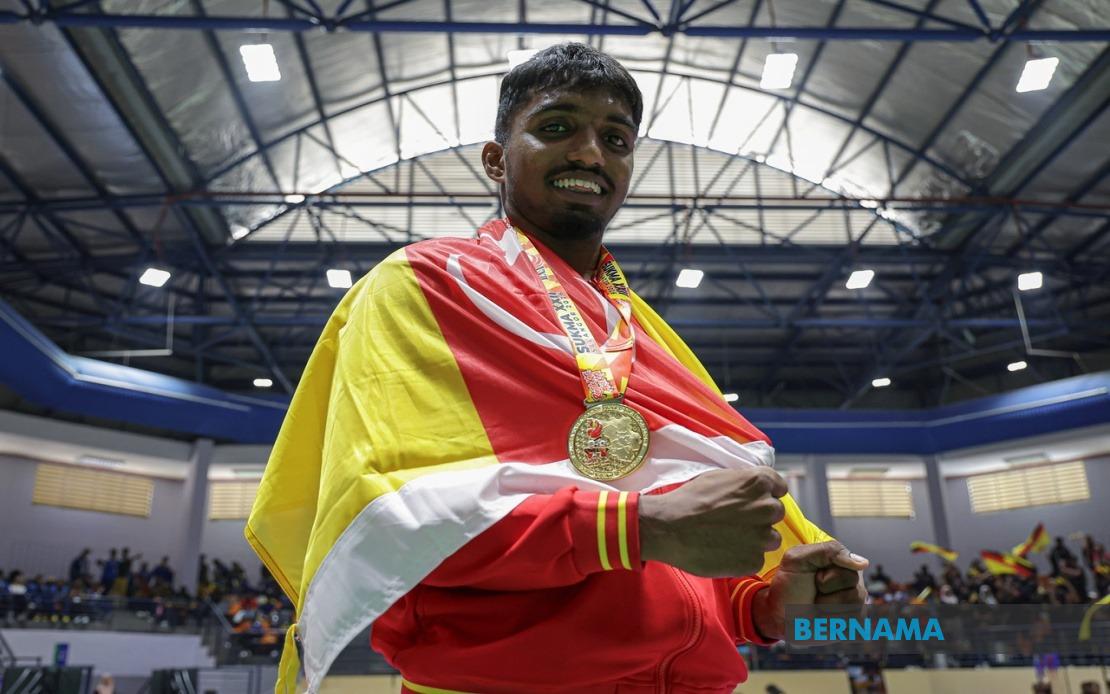
M. Mahendran has etched his name into Malaysian sporting history by becoming the first silambam athlete to secure three consecutive gold medals at the Selangor 2026 Malaysia Games (SUKMA), an accomplishment made all the more extraordinary by the fact that he managed it whilst holding down a full-time job and squeezing training into just three evening hours.
The 20-year-old from Kuala Langat works as an air-conditioning service technician in the Telok Panglima Garang area, a position he has held for over a year. The demands of this occupation left him no time for leisurely training schedules. Instead, Mahendran structured his days around a punishing routine that would test the resolve of even the most dedicated athletes. After finishing work at 6 pm, he travelled directly to training sessions that ran from 7 to 10 pm, then returned to work by 10 am the following morning, sustaining this cycle day after day.
What amplifies the significance of his achievement is the compressed timeframe in which he accomplished it. Mahendran prepared for this competition over a mere eight months, a period during which he was forced to balance his employment obligations against the rigorous demands of preparing for national-level silambam competition. Many athletes enjoy the luxury of dedicated training periods and financial support that allows them to concentrate solely on their sport. Mahendran had neither of these advantages, yet still managed to overcome competitors who likely had vastly superior resources and training time.
The historic nature of Mahendran's triple gold medal cannot be overstated within the context of Malaysian silambam. This ancient martial art has a rich tradition in the country, yet no practitioner before him has managed to achieve three consecutive SUKMA victories. The accomplishment speaks not only to his technical proficiency in the discipline but also to his mental fortitude and unwavering commitment to his sporting ambitions despite external pressures.
Mahendran's path to victory was not without complications. His win was delayed by nearly two hours before official confirmation came through, a delay attributed to a formal protest that was raised against his performance. Rather than becoming discouraged, Mahendran remained composed and confident that his victory would be upheld upon review. When the protest decision was eventually announced in his favour, his position as champion was officially confirmed, though the uncertainty of those two hours must have created considerable psychological pressure.
Reflecting on his achievement, Mahendran expressed both pride and gratitude for the opportunity to make sporting history. He recognised that accomplishing such a feat represented something unprecedented in Malaysian silambam circles. His repeated emphasis on the uniqueness of winning three consecutive SUKMA titles suggests he fully comprehends the magnitude of what he has achieved, particularly given the obstacles he faced in preparing for competition.
Beyond his own determination and skill, Mahendran credited the foundational support he received from his family as crucial to his success. His parents provided consistent motivation and encouragement throughout his eight-month preparation period, a factor that clearly held significant meaning for him. The emotional sustenance they provided helped him persevere through the gruelling combination of full-time work and evening training sessions, nights when he might easily have justified missing a session due to fatigue.
Mahendran's success offers an important perspective on sporting achievement in Malaysia, particularly for younger athletes from working-class backgrounds. His story demonstrates that elite-level performance need not require access to expensive facilities, coaching networks, or the ability to train full-time. Instead, his achievement illustrates what dedication, sacrifice, and parental support can accomplish when combined with natural talent and a clear sense of purpose. For aspiring athletes across Southeast Asia facing similar economic constraints, his example suggests that the path to national success, whilst undoubtedly difficult, remains achievable.
The implications of Mahendran's victory extend beyond personal achievement to broader questions about sports development in Malaysia. His success, achieved with minimal resources and maximum time constraints, raises questions about what might be possible if such talented individuals were provided with institutional support, coaching expertise, and training facilities. It also underscores the need for governing bodies to identify and nurture athletes like Mahendran who demonstrate exceptional commitment despite disadvantageous circumstances.
Looking forward, Mahendran's achievement as a three-time SUKMA silambam champion positions him as a potential ambassador for his discipline within the Southeast Asian region. His story resonates beyond the silambam community, offering inspiration to working young people across Malaysia and beyond who harbour sporting ambitions. Whether he continues competing at SUKMA level or transitions into coaching and mentorship roles, his legacy as a barrier-breaker in Malaysian silambam is already secured.

