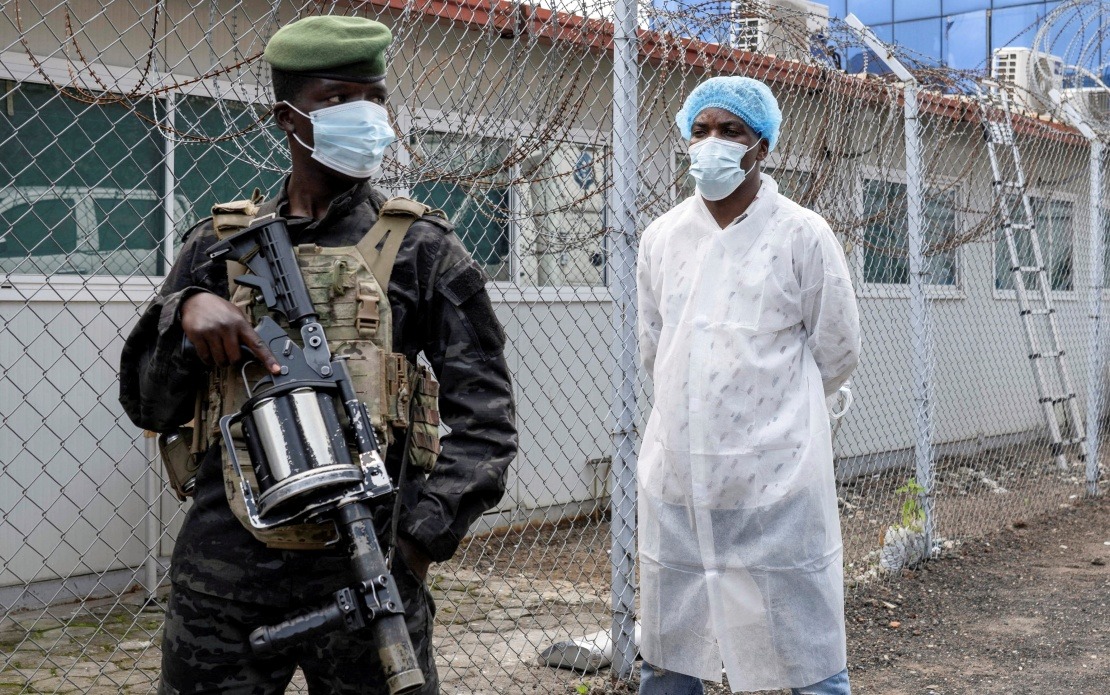
The Democratic Republic of Congo faces a mounting public health crisis as the practice of transporting deceased Ebola patients across provincial boundaries for burial in ancestral communities continues to accelerate the virus's transmission. United Nations agencies have issued urgent warnings about this pattern, which reflects deep cultural traditions even as it undermines containment efforts. The latest outbreak, declared on May 15, has already claimed more than 828 lives among 2,100 confirmed cases, positioning the nation at a critical juncture where cultural practices and epidemiological necessity are in direct conflict.
The scale of the current epidemic is staggering by regional standards. Over the course of just two months, this outbreak has become the third-largest and fastest-growing Ebola emergency ever recorded, surpassing historical precedent for the speed of its expansion. Health authorities have documented a 70 per cent increase in cases over the past two weeks alone, with an average of over 40 new infections reported daily. This trajectory suggests the outbreak could become substantially larger unless transmission routes are interrupted. The case fatality rate of 37.5 per cent underscores the severity of the Bundibugyo virus strain circulating in the population.
Geographic spread remains a persistent challenge, with the virus now present across five provinces: Haut-Uele, Ituri, North Kivu, South Kivu and Tshopo. The number of affected health zones has grown from 36 to 42 over a single week, demonstrating how rapidly the outbreak's footprint is expanding. This territorial expansion complicates response coordination and strains already limited medical resources across the country. For regional neighbours including Uganda, Rwanda and Burundi, the expanding infection zone raises concerns about cross-border transmission, making the DRC's outbreak a matter of continental significance.
The international migration agency has specifically identified the movement of victims' bodies as a critical transmission vector. Officials at the International Organisation for Migration reported that 105 bodies were intercepted at border checkpoints and entry points into different health zones during surveillance operations, suggesting that many more may have crossed undetected. These transfers typically occur because families wish to bury relatives according to customary practice in their home communities, reflecting deeply rooted cultural values around death, kinship and ancestral connection. However, the virus remains viable on deceased bodies, and traditional funeral rituals involving direct contact with the deceased substantially increase exposure risk for attendees and handlers alike.
Community resistance represents perhaps the most intractable obstacle to outbreak control. Burial teams dispatched to safely manage Ebola deaths encounter widespread opposition, and in several documented instances, violent attacks. IOM Regional Director Frantz Celestin noted that 60 per cent of reported fatalities have occurred in community settings rather than medical facilities, a statistic that reveals how far many outbreak response efforts remain from affected populations. This distribution reflects both delayed diagnosis and the reality that many infected individuals remain in their home environments, surrounded by family members and neighbours at maximum risk of secondary transmission.
Violence directed at health workers and volunteers has escalated dramatically. Red Cross personnel responding to the outbreak were seriously injured at a cemetery in Bunia, the capital of Ituri province, when violence erupted during an Ebola victim's funeral. Local reports indicated that youths attempted to force open the coffin, demonstrating how scepticism, fear and cultural imperatives can override acceptance of safe burial protocols. These attacks deter health workers from engaging with communities, creating a feedback loop in which lower responsiveness increases fear and resistance, which in turn further reduces outbreak control capacity.
The World Health Organisation's tracking of expanding health zones reflects the outbreak's acceleration and geographic scatter. As the infected territory grows, coordinating a unified response becomes exponentially more difficult, and supply chains for protective equipment, vaccines and treatment become stretched. For Malaysia and other Southeast Asian nations, the DRC outbreak serves as a reminder of how regional crises can eventually create global implications through travel networks and international supply chain disruptions, particularly if any cases reach neighbouring countries or migrate elsewhere through international routes.
Early detection and treatment access remain severely constrained by the community dynamics that enable transmission. Celestin highlighted that persistent difficulties in identifying cases early, conducting effective surveillance and ensuring timely access to medical care all stem from the same root cause: communities view the response system with suspicion rather than trust. When families prefer home care over hospitalisation, or hide cases rather than report them, the virus continues spreading undetected. Without community buy-in and cultural adaptation of response efforts, purely medical interventions will struggle to contain the outbreak.
Medical charity Doctors Without Borders has characterised this outbreak as representing a new category of Ebola crisis, one that develops with unprecedented speed and affects larger populations more rapidly than previous episodes. The combination of high transmission rates, geographic expansion, community resistance and cultural practices that facilitate viral spread creates a perfect storm for escalating death tolls. The organisation's assessment underscores that technical medical capacity, while necessary, is insufficient without addressing the social and cultural dimensions that shape how communities respond to the outbreak.
The path forward requires substantial recalibration of international response strategy to prioritise community engagement and cultural adaptation. Health authorities must develop funeral protocols that respect customary practices while minimising transmission risk, rather than imposing generic protocols that communities reject. This might include trained community members conducting safe burials, modified rituals that maintain cultural significance while reducing exposure, or other locally appropriate innovations. Without this shift toward culturally sensitive response, the outbreak will likely continue expanding despite the technical resources deployed against it, with profound consequences for the DRC and potentially for the broader region.

