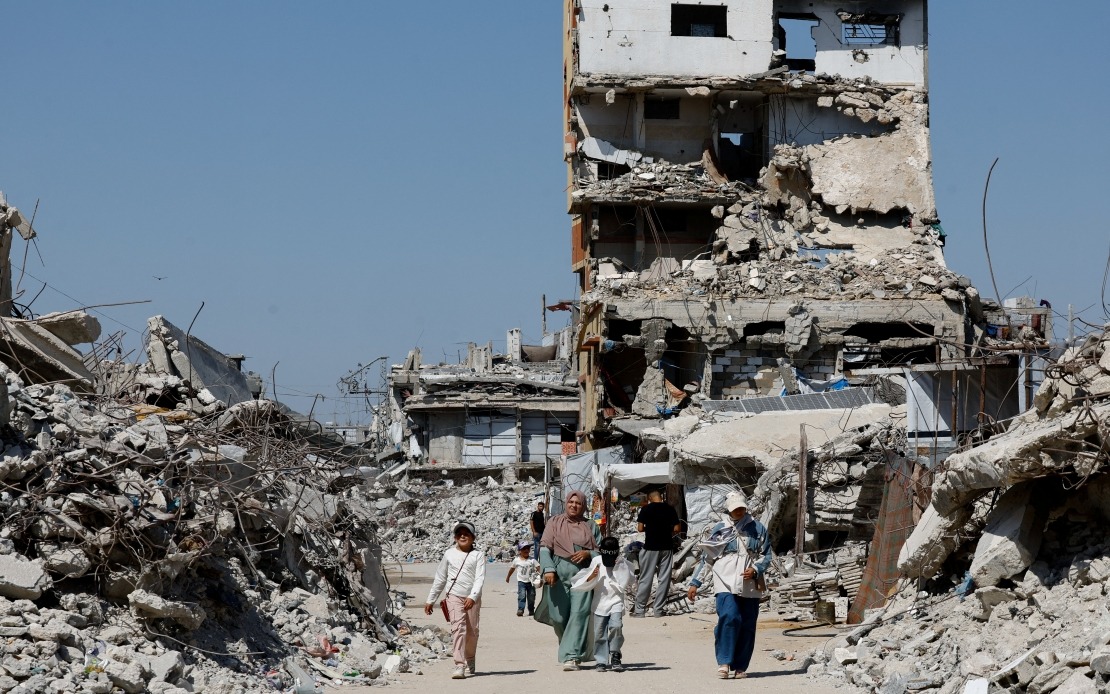
The humanitarian crisis in the Gaza Strip has deepened with another 10 Palestinians killed in the past 24 hours, according to figures released Thursday by the territory's Health Ministry. The latest casualties bring the total death count since the beginning of the conflict in October 2023 to 73,417, underscoring the sustained toll of the ongoing violence that has ravaged the blockaded enclave for more than a year.
According to the Health Ministry's daily statistical update, Gaza's hospitals received 10 bodies alongside 25 wounded individuals during the 24-hour period, continuing a grim pattern of daily casualties that has characterized the protracted conflict. The ministry's reports, while providing numerical data on those who have reached medical facilities, likely represent only a portion of the actual damage, as the infrastructure required to document and respond to casualties remains severely compromised across the territory.
Particulars surrounding the circumstances of these deaths were not detailed in the ministry's statement, though the casualties occurred amid continued violations of what was intended to be a ceasefire agreement established in October 2025. The Israeli military has maintained operations involving shelling and gunfire across multiple zones within Gaza, raising serious questions about the commitment to maintaining the truce by all parties involved in the conflict.
A significant humanitarian concern compounds the official casualty count: numerous victims remain buried beneath collapsed structures and abandoned on roadways throughout Gaza, with rescue operations severely hampered by the destruction. Ambulance services and civil defence crews have repeatedly been unable to access areas where survivors and bodies are believed to be located, meaning the true scale of loss likely exceeds documented figures by an unknown margin. This inability to retrieve casualties reflects the broader collapse of civilian infrastructure across the territory.
The scale of ceasefire violations has itself become quantifiable. Since the October 2025 agreement was intended to take effect, 1,283 Palestinians have been killed through continued Israeli military operations, with an additional 4,248 others sustaining injuries. These figures, though substantially lower than the overall conflict toll, demonstrate that violence has persisted despite the formal truce arrangement, raising concerns about the sustainability and enforceability of the agreement.
The cumulative impact of the conflict extends far beyond the casualty figures. Israeli military operations have devastated Gaza's civilian infrastructure at a scale rarely seen in contemporary conflicts, with approximately 90 percent of the territory's essential facilities—hospitals, schools, water systems, and residential areas—sustaining significant damage. The United Nations has estimated the cost of reconstructing this destroyed infrastructure at approximately US$70 billion, a figure that underscores the economic catastrophe alongside the human toll.
For Malaysian observers and policymakers, the continuing Gaza crisis carries several implications for regional stability and international relations. The persistence of violence despite ceasefire arrangements reflects broader challenges in implementing durable peace agreements in the Middle East, a region whose instability affects global oil markets, shipping routes through the Red Sea, and regional security architecture that impacts Southeast Asia. Malaysia, which maintains diplomatic relationships across multiple Middle Eastern states and has historically advocated for Palestinian rights within international forums, faces pressure to balance humanitarian concerns with broader diplomatic objectives.
The destruction of civilian infrastructure in Gaza also presents a cautionary case study for regional conflict prevention. The scale of devastation—90 percent of civilian infrastructure damaged—demonstrates how modern asymmetrical conflicts can destroy the foundations of civilian life in ways that recovery can take decades. This represents a significant departure from international humanitarian law standards and raises questions about accountability mechanisms that remain inadequate across the region.
The humanitarian dimension of the crisis cannot be separated from its political context. As ceasefire violations continue and the death toll climbs, international pressure mounts on all parties to enforce compliance with agreed arrangements. For Southeast Asian nations engaged in various multilateral forums, including the United Nations, supporting meaningful investigation into violations and support for reconstruction efforts has become increasingly important to preventing further regional destabilization and responding to the refugee crises that often accompany protracted Middle Eastern conflicts.
The ongoing tragedy in Gaza reflects enduring challenges to conflict resolution in the Middle East that extend beyond the immediate parties involved. The inability to maintain a ceasefire, despite international diplomatic efforts, suggests that surface-level agreements without addressing underlying grievances and power imbalances tend to be fragile. For regional actors and international observers, including those in Southeast Asia, the situation underscores the importance of investing in comprehensive peace-building processes rather than temporary truces that fail to address fundamental causes of conflict.

