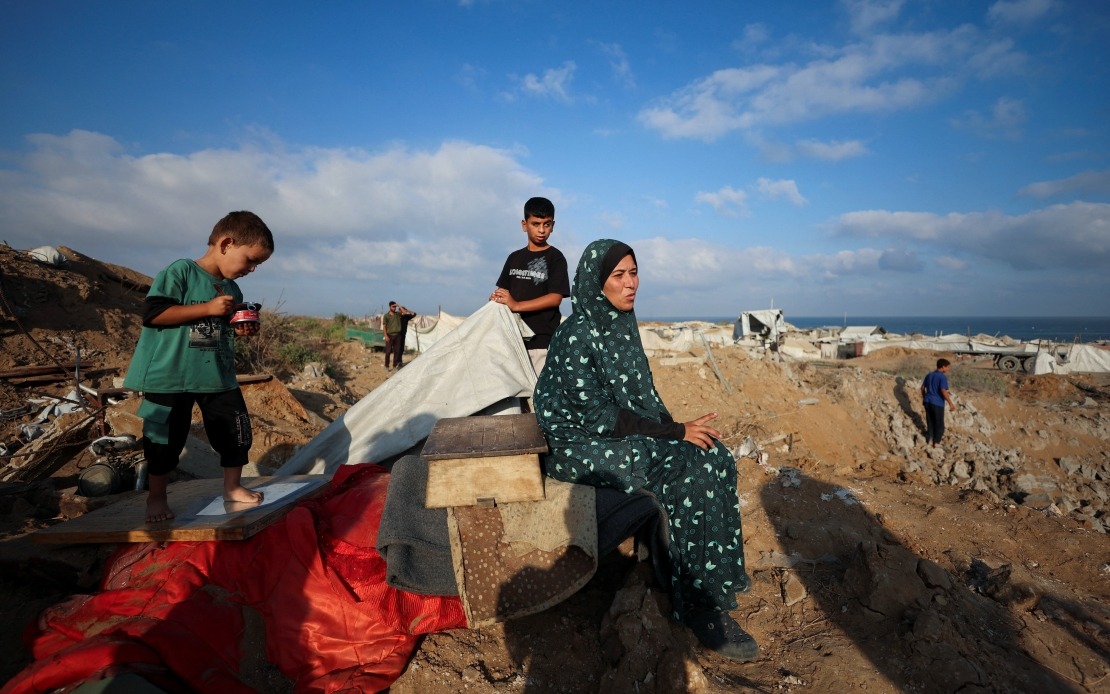
The humanitarian crisis gripping Gaza is deteriorating again, with international food security experts warning that 1.4 million Palestinians face mounting acute hunger through the end of 2026. This figure marks a concerning rise from 1.2 million documented during the April-to-June period, signalling that earlier improvements from humanitarian intervention are proving unsustainable. The Integrated Food Security Phase Classification, released this week in Geneva, paints a sobering portrait of a population slipping backward into deeper deprivation despite months of increased aid delivery.
The scope of the emergency extends across Gaza's entire territory, with all five governorates now classified as being in crisis. Most alarmingly, the analysis projects that two-thirds of Gaza's total population—approximately 67 per cent—will experience either crisis-level or worse food shortages in the coming months. Within this broader cohort, some 212,000 people are expected to remain trapped in the emergency phase, the second-most severe classification on the food security scale. These statistics underscore how the current situation extends far beyond isolated pockets of vulnerability to become a generalised societal collapse in access to adequate nutrition.
The trajectory is particularly troubling when viewed against a counterfactual scenario. Were humanitarian food assistance to cease entirely, the analysis suggests that roughly 1.9 million people—approximately 90 per cent of Gaza's population—would face high levels of acute food insecurity. This sobering projection reveals just how precarious the current situation remains and how dependent the population has become on external aid flows for basic survival. Even the modest improvements registered earlier in the year appear to be conditional on sustained international support, making any disruption to assistance channels potentially catastrophic.
The October 2025 ceasefire initially generated hope for stabilisation and recovery. In its immediate aftermath, expanded humanitarian operations managed to deliver food assistance to roughly 1.49 million people by May, contributing to some measurable improvements in food security metrics. However, the underlying structural problems remain largely unaddressed. The IPC analysis reveals that most households—83 per cent of families surveyed—have no income-generating capacity whatsoever, rendering them entirely reliant on external charitable assistance for survival. This comprehensive collapse of livelihoods means that even as food arrives, it addresses only the immediate symptom rather than enabling any pathway toward self-sufficiency or economic recovery.
Further complicating the picture, humanitarian assistance itself has begun contracting. Since February, aid volumes have declined meaningfully as funding constraints tighten and operational uncertainty surrounding international organisations clouds the landscape. This funding squeeze arrives at precisely the moment when needs are intensifying, creating a dangerous mismatch between requirements and available resources. The fragility of recent gains cannot be overstated—improvements in food security and nutrition metrics are being characterised as highly vulnerable to reversal, hanging entirely on continued external support.
The analysis extends beyond immediate hunger to encompass the long-term health consequences of prolonged malnutrition, particularly affecting the youngest and most vulnerable populations. By April 2027, roughly 74,200 children under five years of age are projected to require treatment for acute malnutrition, with approximately 11,432 of these cases classified as severe enough to pose life-threatening risks. In parallel, some 24,600 pregnant and breastfeeding women have been identified as requiring urgent nutritional support, indicating that the nutritional deficit will directly compromise maternal and child health outcomes for years to come.
These projections carry profound implications for the region and for the international humanitarian system more broadly. Malaysia and other Southeast Asian nations maintain growing engagement with Middle Eastern affairs, whether through trade relationships, religious solidarity networks, or participation in regional diplomatic forums. The deterioration of basic humanitarian conditions in Gaza generates migration pressures, regional instability, and demands on international resources that eventually affect global stability. The failure to prevent a renewal of acute crisis—despite the existence of technical capacity to predict and prevent it—raises uncomfortable questions about the adequacy of current international mechanisms for protecting vulnerable populations.
The IPC has outlined a three-part prescription for preventing further deterioration: sustained humanitarian access enabling continued food delivery, expanded nutrition programs targeting the most vulnerable groups, and a permanent cessation of hostilities that would create the conditions necessary for economic rehabilitation. Each element is essential, yet each faces significant obstacles. Sustained access requires cooperation from parties on the ground and international funding that is already proving inadequate. Expanded nutrition programs depend on resources and security conditions that remain uncertain. A permanent ceasefire hinges on political developments that remain contested and fragile.
The situation exemplifies how humanitarian crises become entrenched when they stem from conflict rather than natural disaster. While food assistance can prevent immediate starvation, it cannot restore livelihoods, rebuild economic systems, or restore the psychological and social fabric of communities. The 83 per cent unemployment figure speaks to a population not merely lacking food but lacking any mechanism for dignified self-provision. This creates long-term dependency and intergenerational trauma that extends far beyond the immediate food security metrics.
For policymakers across Asia-Pacific, this unfolding crisis offers several sobering lessons. First, the prevention of humanitarian catastrophe requires addressing its root causes—in this case, the continuation of conflict—rather than attempting to manage symptoms through aid. Second, humanitarian assistance, however well-intentioned, cannot substitute for political solutions that restore basic economic functioning. Third, the international community's capacity to support vulnerable populations is finite, and competing crises can rapidly deplete available resources. The situation in Gaza suggests that without fundamental political change, humanitarian interventions risk becoming permanent fixtures rather than bridges toward recovery.

