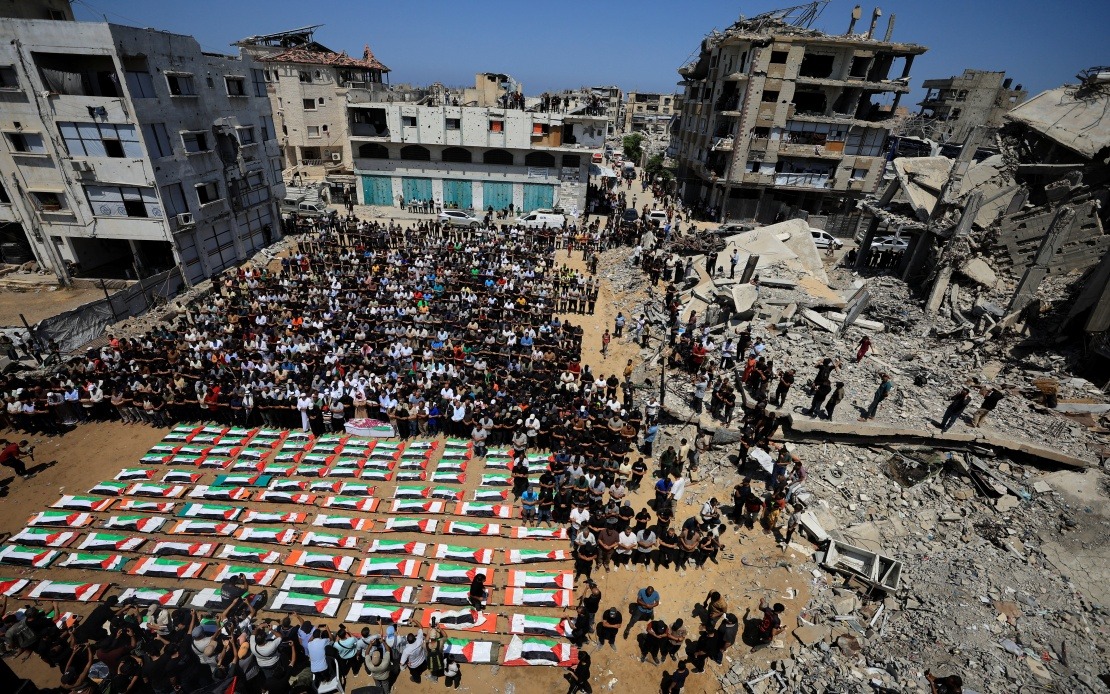
The fragile optimism that briefly gripped Gaza when Hamas accepted a mediators' proposal for the conflict's second phase has given way to deepening uncertainty and anxiety. Families with critically ill members and those desperate to return home are experiencing a devastating emotional rollercoaster as negotiations reveal fundamental disagreements between the parties over implementation timelines and military withdrawals. For many Palestinians, each development in the talks represents either a step toward relief or another crushing setback in a process that has already dragged on far too long.
Saeed Helles, a 55-year-old father of five, exemplifies the human cost of negotiation delays. His 13-year-old daughter Saja requires urgent cancer treatment that Gaza's depleted medical infrastructure cannot provide. When mediators unveiled their second-phase proposal, Helles felt genuine hope for the first time in months. He began preparing his daughter's travel documents, envisioning her crossing into Egypt for the specialised care that could determine whether she survives. That prospect of imminent evacuation provided psychological relief to a man who had watched his child's condition deteriorate amid the conflict's medical collapse. Yet this optimism proved short-lived.
The hopes of patients like Saja collided with hard realities when statements emerged regarding Israeli military positioning and the sequencing of various ceasefire components. A statement from international mediators indicated that Israeli forces would only withdraw beyond designated positions after weapons and tunnel decommissioning processes had concluded. This conditionality introduced precisely the kind of complexity that has derailed previous attempts at agreement. Hamas countered that progress on second-phase discussions, particularly matters involving heavy weapons, must be contingent on Israel halting military operations entirely and fully implementing the first phase before any withdrawal occurs. The gap between these positions revealed fundamental mistrust that no amount of diplomatic language could bridge.
The medical dimension of the stalled negotiations highlights the humanitarian emergency that persists beneath the political calculations. Mohammed Abu Nada, medical director at the Gaza Cancer Centre, reported that approximately 11,000 cancer patients face critical medicine shortages while roughly 4,000 patients with valid medical referrals remain unable to leave Gaza due to border crossing restrictions. The situation has become dire enough that Abu Nada confirmed three cancer patients die daily for lack of adequate treatment. Every day that border restrictions remain in place represents preventable deaths that could have been averted had negotiations progressed. The continued medical isolation of Gaza means conditions worsen steadily regardless of diplomatic progress.
Beyond the acute medical crisis lies the broader humanitarian catastrophe affecting displacement and displacement's psychological toll. Mariam Qudaih, a 46-year-old mother of four, was displaced from Khan Younis in southern Gaza and has spent months in displacement camps yearning for return. She represents thousands of Palestinians whose lives remain suspended in an state of profound uncertainty. When the second-phase proposal emerged, Qudaih dared to imagine rebuilding even amid ruins. She reassured her children that they might soon walk on their family's land again, and they began discussing with genuine excitement what return might look like. That emotional investment makes each setback in negotiations more psychologically devastating than the last.
Qudaih's account reveals how negotiation stalls operate as repeated psychological trauma for affected populations. Each time international mediators announce progress, displaced Palestinians allow themselves to invest emotionally in the possibility of return. Then fresh complications emerge, and those carefully constructed hopes collapse. The cycle repeats with enough frequency that Palestinians have stopped believing in diplomatic timelines altogether. Qudaih describes the sensation of being reset to square one repeatedly, with each negotiation cycle consuming emotional reserves that populations already drained by years of conflict can scarcely afford. The human psyche, it seems, has limits to how many cycles of hope and devastation it can endure.
The core negotiation impasse reflects deeper strategic disagreements that current mediation efforts appear unable to resolve. Israel's insistence on security conditions being met before military withdrawal appears designed to maintain leverage throughout implementation. Hamas's conditional approach to second-phase discussions similarly protects Palestinian negotiating positions but risks prolonging uncertainty. Both sides have stated positions that seem fundamentally incompatible regarding sequencing, which creates deadlock. Political analyst Mustafa Ibrahim noted that linking Israeli withdrawal to completion of disarmament processes gives Israel significantly greater leverage over the timeline and nature of second-phase implementation. This asymmetry troubles many observers who fear the current framework systematically advantages one party while disadvantaging the other.
The broader regional context makes Gaza's humanitarian crisis increasingly untenable. Other Arab states and international actors have invested diplomatic capital in these negotiations, expecting that second-phase implementation would begin swiftly once agreement was reached in principle. Instead, the gap between agreeing to second-phase talks and actually implementing second-phase measures has created a new kind of limbo where ceasefire mechanisms partially function but fail to deliver expected humanitarian dividends. Medical patients cannot leave; displaced persons cannot return; reconstruction cannot commence. The population exists in a state of suspended animation that extends the war's psychological and humanitarian consequences even as active combat may have decreased.
For Malaysian and Southeast Asian observers, Gaza's negotiation stalemate offers sobering lessons regarding conflict resolution frameworks. The reliance on international mediators with limited enforcement capacity appears insufficient when fundamental security concerns divide parties. The emphasis on sequential implementation creates opportunities for disagreement over when conditions have been met for advancing phases. The inability to establish confidence-building measures that would allow simultaneous progress on multiple fronts suggests that future regional conflicts may prove equally intractable. Malaysia, as a significant Muslim-majority nation with diplomatic influence, has particular interest in how Gaza's negotiations unfold and what lessons might be applied to other regional disputes.
The human stories emerging from Gaza underscore why diplomatic processes matter beyond abstract principle. Saja Helles remains in a Gaza City hospital clutching a doll as her medical condition deteriorates. Mariam Qudaih continues in a displacement camp wondering whether she will ever return home. Mohammed Abu Nada witnesses preventable cancer deaths occurring daily as medicines run short. These individuals did not create the political conditions that have made their situations so desperate, yet they bear the consequences of negotiation delays with their health, their futures, and their lives. Until second-phase implementation actually commences with meaningful implementation rather than continued discussion, Palestinians will continue experiencing the emotionally devastating cycles of hope and disappointment that have become their reality.

