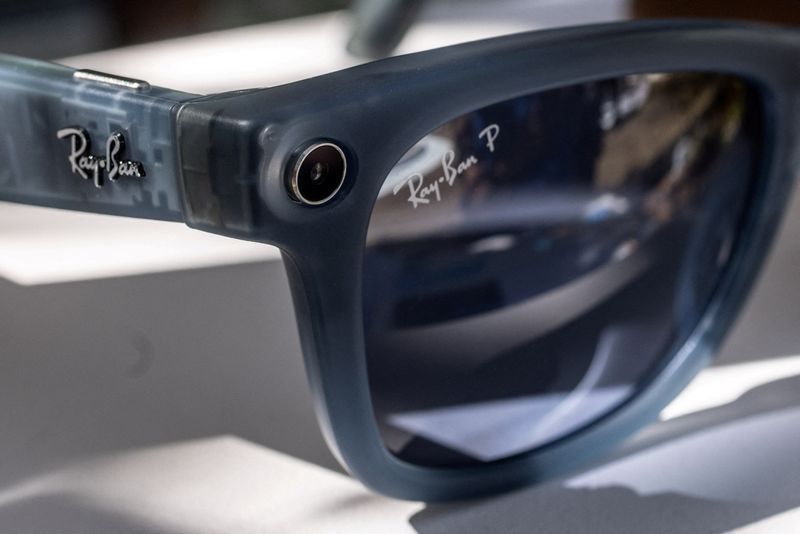
Germany's digital rights sector has escalated its scrutiny of wearable recording technology by launching a formal criminal complaint against Meta Platforms and several major retailers distributing the Ray-Ban Meta Wayfarer smart glasses within the country. The complaint, filed through HateAid, a digital advocacy organisation focused on online harassment and privacy violations, represents the latest regulatory challenge facing the technology giant's expansion into consumer wearables that incorporate video and audio capabilities.
HateAid argues that the devices breach Germany's stringent digital privacy legislation, reflecting the nation's deep-rooted constitutional commitment to privacy protections. The organisation submitted its complaint to Frankfurt's specialised digital crime prosecution unit, known as ZIT, naming Meta's management alongside EssilorLuxottica divisions—the parent company of Ray-Ban—and four major German retailers: Fielmann, Apollo-Optik, Mister Spex, and MediaMarkt. This multi-target approach underscores how privacy advocates view the distribution chain as collectively responsible for potentially unlawful sales.
Josephine Ballon, HateAid's managing director, articulated the core concern driving the complaint: individuals in public spaces face continuous exposure to hidden recording without meaningful warning or consent mechanisms. She emphasised that wearers of such glasses present an inescapable surveillance threat, as bystanders have no reliable way to detect when they are being filmed or to prevent footage from being shared online. This framing positions smart glasses not merely as consumer electronics but as tools that fundamentally alter the privacy calculus in everyday public interactions.
The legal foundation for HateAid's complaint rests on Germany's federal digital communications law, which specifically prohibits the marketing and sale of devices designed for covert recording of individuals without their knowledge. This statutory framework predates the smart glasses phenomenon, but advocacy groups argue it directly encompasses the Ray-Ban Meta devices. Germany's Federal Network Agency, the telecommunications regulator known as BNetzA, had already issued guidance in late 2023 cautioning that connected wearables capable of concealed audio or video recording violate existing regulations.
However, BNetzA's current position introduces a crucial interpretive nuance that complicates enforcement. The regulator stated that ownership, importation, and sale of smart glasses remain lawful provided the recording function features clearly visible indicators—such as optical signals—that alert nearby individuals to active recording. This technical requirement condition creates a pathway for compliance without prohibiting the devices outright. The agency indicated on Wednesday that while it maintains close oversight of the smart glasses market, it has not yet initiated formal investigations into potential breaches, suggesting cautious observation rather than aggressive enforcement.
One of the named retailers, Mister Spex, responded to the complaint by noting it had not received official notification and reaffirmed its commitment to privacy protection principles. The other companies and prosecutorial authorities did not immediately comment on the filing, though their silence may reflect the early stage of what could become a protracted legal and regulatory process. The absence of immediate responses also indicates how novel these challenges remain within German enforcement frameworks.
Germany is not alone in wrestling with smart glasses regulation. In July, a state-level privacy protection agency based in Hamburg initiated separate legal proceedings against smart glasses usage, suggesting fragmentation across Germany's federal system. This patchwork approach underscores the tension between national commerce interests and regional privacy enforcement priorities, a dynamic particularly relevant for multinational technology companies seeking uniform compliance standards.
HateAid's complaint specifically draws attention to its documentation of rising image-based digital violence, predominantly targeting women. The organisation contends that smart glasses represent a particularly insidious evolution in surveillance technology because they camouflage recording capability within ordinary fashion accessories. Unlike smartphones or dedicated cameras that users might visibly hold and which trigger social awareness of recording, smart glasses enable continuous documentation of others' movements, expressions, and activities with minimal perceptible indication.
For Malaysian and Southeast Asian observers, this German legal challenge carries significant implications. Malaysia and neighbouring countries increasingly face similar tensions between technological innovation and privacy protection, particularly as artificial intelligence and wearable technologies proliferate. The German approach—combining advocacy group mobilisation, criminal prosecution mechanisms, and regulatory guidance—offers a template for jurisdictions considering how to balance consumer device innovation with fundamental privacy rights. The precedent may influence how regional regulators address comparable technologies entering their markets.
The complaint also reflects broader European attitudes toward personal data protection that diverge substantially from permissive approaches elsewhere. Germany's historical commitment to privacy—rooted partly in experiences with state surveillance—positions it as unusually protective compared to markets where commercial interests receive greater deference. Whether German authorities ultimately sustain enforcement actions may establish important precedent for other European nations and potentially influence how tech companies design and market recording devices globally.
Meta's response to this challenge remains unclear, but the company faces mounting regulatory pressure across multiple jurisdictions over data privacy, content moderation, and algorithmic transparency. The smart glasses complaint adds another dimension to its European regulatory difficulties and may prompt the company to introduce technical modifications to the devices or adjust their marketing approach within the German market. How this case develops over coming months will likely signal whether privacy advocates can effectively challenge technologies that corporations present as inevitable consumer conveniences.

