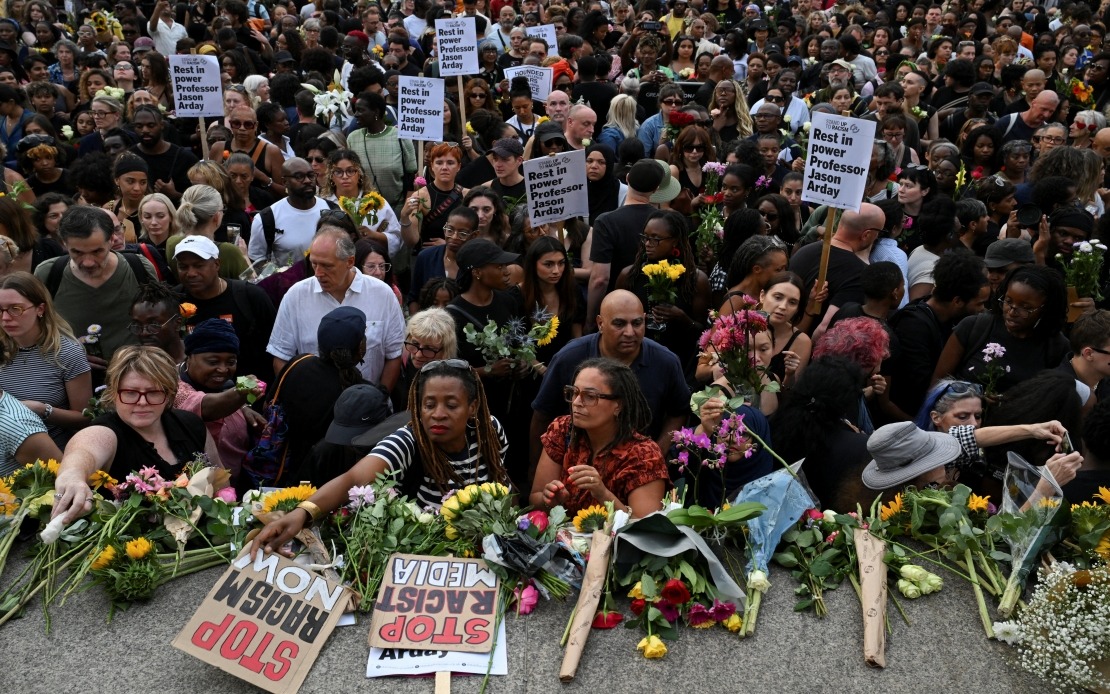
The suspension of Nathan Cofnas by Ghent University in Belgium marks a significant escalation in a controversy that has gripped European academic circles, following the sudden death of Jason Arday, who served as Cambridge University's youngest Black professor. Cofnas, a postdoctoral researcher in the philosophy and moral sciences department, had levelled plagiarism allegations against Arday before the professor's passing earlier this month, prompting the university to take formal action against him for what it characterises as discriminatory conduct.
Arday's resignation from Cambridge in early August came after weeks of intense public scrutiny surrounding plagiarism accusations and questions about elements of his academic record and personal narrative. The University of Cambridge had announced plans to investigate the circumstances of his appointment just days before his death on August 14, when he was discovered at his home in south London. Although police treated the death as unexpected, authorities determined it was not suspicious, leaving the academic community grappling with the sudden loss of a prominent scholar at the height of a damaging controversy.
Cofnas has characterised his suspension as retaliation for his role in exposing what he considers scholarly misconduct. Through posts on the social media platform X, he indicated that the university investigation targets his conduct rather than examining the substance of his original allegations, asserting that he faces potential dismissal. However, Ghent University's leadership, represented by rector Petra De Sutter and vice-rector Herwig Reynaert, framed the suspension differently, emphasising that the institution takes "very seriously" recent public statements made by Cofnas and views them as potentially violating the rights of others.
The broader context of this dispute reveals fundamental tensions within contemporary academia regarding academic freedom, institutional accountability, and the boundaries of permissible speech. Cofnas holds self-described "race realist" views that have generated significant controversy within academic and public discourse. In 2024, he lost a research associate position at Emmanuel College, Cambridge, after publishing a blog post arguing that Black people possess lower average intelligence than white people and suggesting that achieving racial parity among professors at institutions like Harvard would require abandoning meritocratic principles entirely.
Ghent University's statement attempted to balance competing institutional commitments, acknowledging that academic freedom and open debate remain central to university values, even when perspectives prove controversial. Yet the university also affirmed that such freedom carries responsibilities and operates within limits designed to protect the rights and dignity of other community members. This formulation reflects a growing international consensus that academic freedom, while essential, does not provide absolute immunity for all utterances, particularly those making broad claims about racial hierarchies in intelligence or capability.
Arday's trajectory embodied remarkable achievement within a higher education system often characterised by persistent barriers to advancement for scholars from marginalised backgrounds. Born to Ghanaian immigrant parents and raised in a working-class south London household, he overcame significant obstacles, including autism, learning difficulties, and communication challenges—he remained nonverbal until age eleven and did not learn to read and write until eighteen. His appointment as Cambridge's youngest Black professor in 2023, holding the position of professor of sociology of education, represented a milestone celebrated within academic and social policy circles.
Yet the allegations against Arday, which emerged in July before his death, complicated this narrative of triumph and institutional progress. Questions about plagiarism in his academic publications, combined with scrutiny of biographical elements and his scholarly record, generated intensive debate about institutional due diligence and the verification of credentials during appointment processes. Arday's decision to resign on August 5 included a carefully worded statement asserting that his departure should not be interpreted as accepting the narratives that had emerged around him, suggesting he maintained his version of events even as he withdrew from public academic life.
For Malaysian and Southeast Asian observers, this case illustrates challenges that extend across higher education systems globally. Universities throughout the region face similar tensions between fostering inclusive academic environments and ensuring rigorous scholarly standards. The question of how institutions balance protecting vulnerable scholars from harassment or discrimination against legitimate concerns about academic integrity remains unresolved. Cofnas's suspension raises particular concerns about whether universities risk suppressing legitimate scholarly critique when that critique becomes entangled with broader ideological positions deemed unacceptable.
The timing of Arday's death adds tragic complexity to an already fraught situation. While the investigation concluded his passing was not suspicious, his loss denied the academic community—and Arday himself—the opportunity for a thorough, transparent examination of the allegations and his response. This absence of resolution has created a vacuum that various parties have attempted to fill with competing narratives about institutional failure, discrimination, and the fragility of academic spaces for scholars from underrepresented backgrounds.
Ghent University's measured response indicates the institution recognises the sensitivity surrounding this matter but also maintains that certain boundaries exist regarding acceptable public discourse within its community. The university declined to specify details about additional actions beyond Cofnas's suspension, citing concerns about pre-empting potential future decisions. This cautious approach reflects institutional awareness that further transparency might intensify polarisation already evident in online discussions of the case.
The suspension of Cofnas will likely intensify ongoing debates about academic freedom within European universities, where contested questions about immigration, racial categories, and scientific claims have increasingly become matters of institutional policy. Universities throughout Europe have faced mounting pressure to define boundaries around permissible scholarship on these subjects, balancing commitments to open inquiry against commitments to inclusive and respectful academic communities. This case will inevitably inform how other institutions navigate similar controversies.
Looking forward, the episode underscores the necessity for clearer institutional frameworks governing how universities investigate allegations of scholarly misconduct while simultaneously protecting all members of the academic community from discrimination and harassment. Southeast Asian universities, many of which have rapidly expanded their international research profiles and recruited scholars from diverse backgrounds, would benefit from developing transparent policies that address these tensions explicitly. The Arday case demonstrates that without such clarity, controversies can spiral in ways that damage institutional credibility and harm individuals across multiple dimensions.

