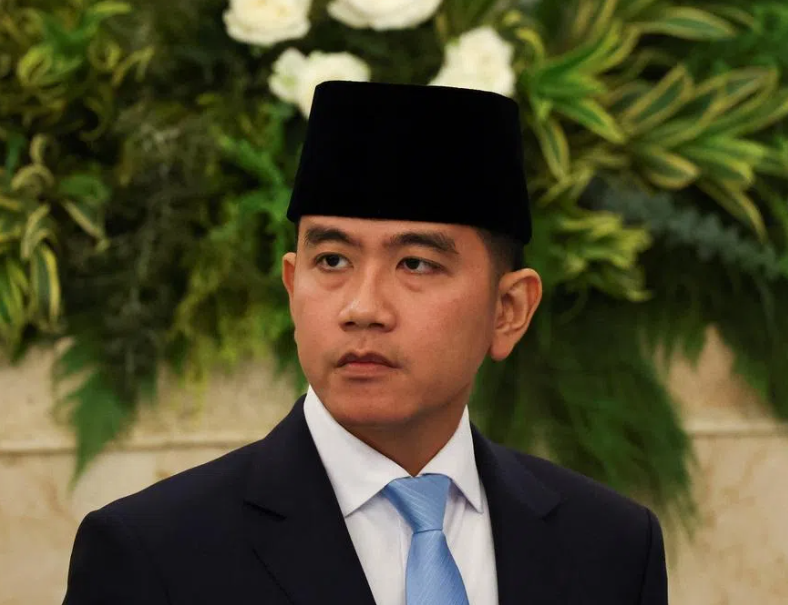
Vice-President Gibran Rakabuming Raka's recent outreach to student protesters has placed a spotlight on his evolving position within President Prabowo Subianto's administration and raised questions about his long-term political intentions. The initiative, which included private discussions with university representatives and an invitation for five students to join a working visit to eastern Indonesia on June 18, suggests an ambitious effort to bridge the gap between public discontent and government policy. This engagement comes at a moment when student-led demonstrations have intensified across Indonesia, particularly targeting two of the administration's most prominent programmes: the free meals initiative and the Red and White Cooperative scheme designed to establish thousands of village-run businesses.
The closed-door meeting with student leaders occurred just three days after their street protests, and the Vice-President's Office subsequently released a statement indicating receptiveness to the students' research findings and concerns. Muhammad Abdi Maludin, a student leader from Bung Karno University, reported that Gibran had pledged to review the findings and present them to President Prabowo. This apparent responsiveness to criticism contrasts sharply with the administration's typical top-down approach to governance, presenting Gibran as an unusually accessible political figure willing to engage directly with youth activists. However, the choreography of the encounter quickly drew scrutiny from observers and online commenters who questioned both the authenticity of the engagement and the selection process for student representatives.
Criticism emerged swiftly on social media platforms, where observers noted that the invited students did not represent Indonesia's largest or most prominent universities, suggesting the meeting may have been strategically curated rather than genuinely representative of the broader student movement. Commenters questioned whether inviting representatives from larger institutions such as the University of Indonesia or Institut Teknologi Bandung would have lent greater credibility to the proceedings. This scepticism deepened when reporting emerged that student participants had received cash payments ranging from 2 million to 20 million rupiah following the meeting, with the Presidential Palace subsequently announcing an investigation into the source and purpose of these funds. The revelation immediately undermined claims of organic, grassroots engagement and suggested instead a carefully orchestrated public relations exercise.
Analysts at Jakarta-based think tanks characterise Gibran's strategy as deliberately performative, designed to generate political capital without necessarily translating into substantive policy changes. Nicky Fahrizal, a researcher at the Center for Strategic and International Studies, describes the persona being projected as that of a communicative, citizen-focused vice-president willing to bridge institutional hierarchies and listen to ordinary people. This cultivated image appears explicitly calculated for the 2029 presidential election cycle, according to observers tracking the Vice-President's positioning. While Gibran has not publicly announced electoral intentions, speculation regarding his potential candidacy has intensified, particularly given his youth and his status as the eldest son of former president Joko Widodo. Analysts suggest that his current visibility around controversial government programmes serves as early foundation-building for future political ambitions.
Despite the apparent activist positioning, Gibran's actual institutional power over the targeted programmes remains severely limited. The free meals initiative operates under the National Nutrition Agency, which reports directly to the president rather than the vice-president. Similarly, the Red and White Cooperative programme functions as a presidential priority coordinated across multiple ministries and agencies, bypassing the Vice-President's Office in its chain of command. Irman Lanti of Padjadjaran University notes that military and police institutions appear to exercise primary control over both initiatives, suggesting Gibran's involvement remains peripheral rather than central. This structural reality constrains the Vice-President's capacity to implement the reforms that student protesters demand, even should he wish to do so. His engagement, therefore, functions primarily as symbolic representation rather than institutional authority.
Since assuming office alongside President Prabowo in October 2024, Gibran has struggled to articulate and cement a distinct governmental role. Unlike certain predecessors who received specific policy portfolios or ministerial responsibilities, the 38-year-old Vice-President has been assigned high-profile symbolic duties—including Papua's development and oversight of the new capital Nusantara—without corresponding executive authority over flagship programmes. This marginalisation from substantive decision-making authority has forced Gibran to establish relevance through alternative means, namely public visibility and direct engagement with constituencies expressing grievances. The student outreach represents an attempt to demonstrate governmental responsiveness and position himself as an intermediary between public concerns and executive decision-making, compensating for his limited formal power through cultivated perception of influence.
The timing of Gibran's engagement coincides with intensifying scrutiny of the free meals programme following corruption allegations at the National Nutrition Agency. In June, agency chief Dadan Hindayana was replaced and subsequently arrested alongside two former deputies during an investigation into alleged procurement irregularities. This scandal created political vulnerability for the administration and heightened public demand for accountability and reform. During a visit to a primary school in East Nusa Tenggara on June 18, Gibran publicly acknowledged shortcomings in the programme's governance and called for improvements, instructing officials to accelerate implementation in areas with completed infrastructure while promising follow-up on local concerns. This responsive positioning allows him to appear statesmanlike and reformist while technically remaining within the bounds of supportive vice-presidential conduct.
Researchers at CSIS characterise Gibran's strategy as deliberately employing what one analyst termed the "lowest-cost" methods of attracting public attention during a period of elevated government criticism. Edbert Gani Suryahudaya suggests that the Vice-President is seeking to maintain public relevance and positive visibility through relatively simple, performative gestures that generate media attention without requiring institutional transformation. In this framework, direct engagement with protesting students functions as an inexpensive mechanism for projecting an image of responsiveness and accessibility, particularly valuable when formal authority over policy implementation remains restricted. The apparent orchestration of the student meeting—including the selective invitation of representatives from smaller universities and the controversial cash distributions—reveals the calculated nature of this approach.
For Malaysian and Southeast Asian observers, Gibran's manoeuvring illuminates broader patterns in how second-tier political figures navigate institutional constraints and cultivate electoral viability within hierarchical governance structures. The Vice-President's situation reflects the tension between formal constitutional roles and the political work required to build coalitions and public support outside institutional channels. His emphasis on direct citizen engagement and accessibility represents a departure from traditional vice-presidential invisibility, suggesting a deliberate attempt to establish an independent political identity distinct from the president. This positioning strategy may offer valuable lessons for other regional political actors seeking to build influence in contexts where their formal authority is circumscribed.
Looking toward 2029, Gibran's current activities suggest he is constructing a political narrative centred on youth, accessibility, and responsiveness to public grievances—qualities that may distinguish him in future electoral contests. However, the contradictions between his cultivated image and the apparent fabrication of grassroots engagement, evidenced by the cash payments to student participants, risk undermining his credibility if widely publicised. The challenge facing the Vice-President involves sustaining an appearance of authentic engagement while operating within a hierarchical system that fundamentally constrains his decision-making autonomy. His evolving approach to this challenge will likely shape both his institutional relevance and his electoral prospects in the coming years.