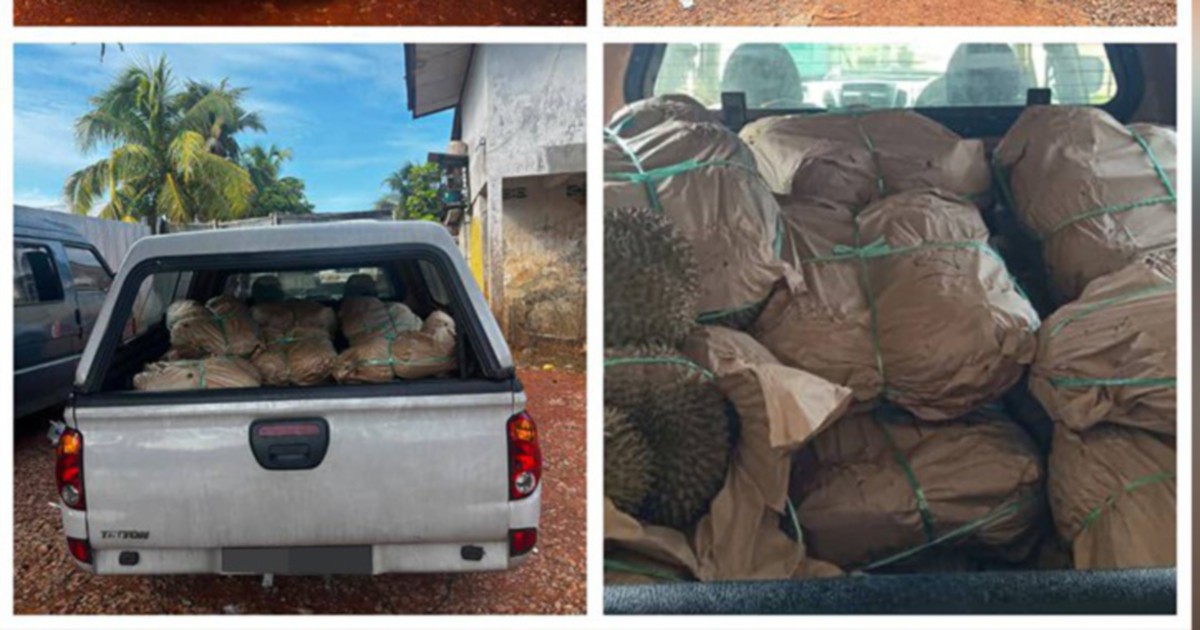
The General Operations Force has moved to crackdown on cross-border agricultural smuggling, intercepting a significant haul of contraband durians at the Abe Li Posmen illegal jetty in Rantau Panjang. A 20-year-old driver was apprehended following the discovery of 350 kilogrammes of the fruit, which authorities valued at more than RM50,000. The vehicle used in the smuggling operation, a four-wheel-drive, was also seized during the enforcement action.
Rantau Panjang, situated along Kelantan's border region, has emerged as a critical flashpoint for illicit trade activities connecting Malaysia with Thailand. The municipality's porous waterways and remote jetties have historically presented enforcement challenges for federal agencies tasked with monitoring cross-border movement. The illegal landing point at Abe Li Posmen represents one of several clandestine access points where contraband routinely enters Malaysian territory under cover of darkness or unfavourable weather conditions.
Smuggling of agricultural products, particularly premium fruits like durians, represents a persistent challenge for Malaysia's customs and border security apparatus. The lucrative nature of such operations stems from significant price differentials between neighbouring countries, combined with inconsistent enforcement capacity across remote border areas. Durian smuggling specifically reflects broader patterns of illicit trade where high-value commodities attract organised networks capable of deploying vehicles and personnel for coordinated operations.
The interception underscores ongoing tensions between legitimate cross-border commerce and illegal trafficking schemes. Malaysian durians command substantial premiums in regional markets, particularly Thailand, where the fruit attracts wealthy consumers willing to pay significantly above local production costs. This price gap incentivises smuggling networks to bypass official customs channels, avoiding tariffs and regulatory compliance that legitimate traders must observe.
The General Operations Force's intervention demonstrates heightened vigilance along maritime borders, where traditional law enforcement struggles against determined trafficking networks. Seasonal variations in border security effectiveness have historically allowed smuggling operations to flourish during periods of reduced surveillance or adverse weather that complicates interception efforts. Yesterday's successful bust represents concerted effort to disrupt established smuggling corridors before they become entrenched conduits for larger-scale illicit activity.
The recovery of both the agricultural cargo and the vehicle used for transport reflects a more comprehensive enforcement strategy extending beyond simple commodity seizure. By impounding the four-wheel-drive, authorities remove critical infrastructure that smuggling networks require for operational effectiveness. This approach targets not merely individual shipments but the underlying logistical capabilities enabling recurring cross-border violations.
The 20-year-old suspect's arrest raises questions about recruitment patterns within smuggling enterprises. Younger operatives often occupy frontline positions as drivers or couriers, bearing disproportionate legal exposure while higher-level organisers remain insulated from direct law enforcement contact. This structural feature of trafficking networks complicates prosecutorial efforts, as authorities must establish complicity chains linking foot soldiers to organised criminal hierarchies.
For Malaysian consumers and legitimate agricultural producers, agricultural smuggling represents an economic concern extending beyond border security considerations. Illegal trade undermines domestic producers' market position while introducing goods lacking proper quality inspection or pest management certification. The absence of regulatory oversight creates potential public health implications, as contraband agricultural products may carry diseases or contaminants that domestic quarantine systems are designed to prevent.
The seizure occurs amid broader Southeast Asian concerns regarding cross-border smuggling networks that exploit geographical proximity and porous boundaries. Thailand, Malaysia, and other regional nations increasingly recognise that individual enforcement actions, while tactically important, require coordinated regional strategies addressing supply-chain vulnerabilities. Intelligence sharing and joint border operations between neighbouring customs authorities have demonstrated effectiveness in dismantling organised trafficking networks operating across multiple jurisdictions.
Recent technological enhancements and personnel deployment increases suggest Malaysian border agencies are progressively strengthening interception capabilities. Real-time monitoring systems and intelligence analysis platforms enable more precise targeting of known smuggling routes and timeframes. However, resource constraints and the vastness of maritime borders continue to present significant enforcement challenges requiring sustained investment and international cooperation.
The GOF's action reflects commitment to protecting legitimate trade channels and maintaining border integrity against organised criminal exploitation. Each successful interdiction generates intelligence data informing future enforcement strategies, gradually degrading smugglers' operational effectiveness. Accumulated enforcement pressure eventually forces networks to reassess route viability and cost-benefit calculations, potentially redirecting illicit activity or rendering certain corridors economically unviable.
Moving forward, authorities will likely intensify scrutiny of Rantau Panjang and similar identified smuggling hotspots. The incident reinforces that cross-border agricultural crimes, though appearing minor relative to narcotics trafficking, merit serious enforcement attention due to their scale, organisation, and potential for expansion. Continued vigilance, coupled with intelligence-driven operations targeting network infrastructure rather than individual shipments, remains essential for maintaining effective border security.

