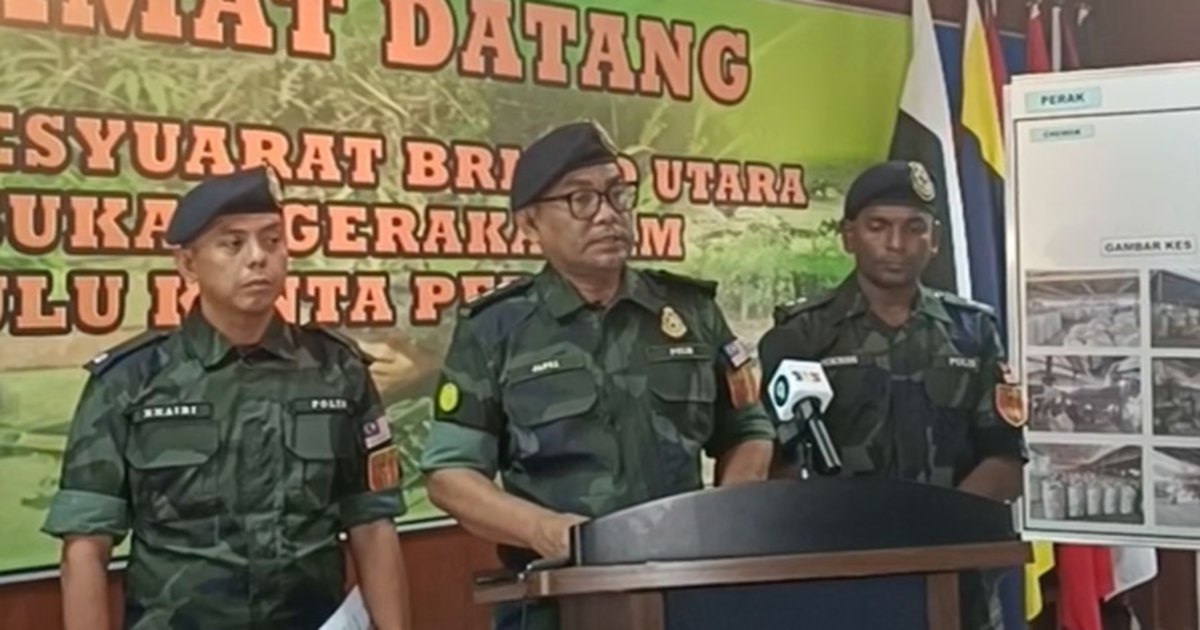
Malaysia's law enforcement has delivered a significant blow to the nation's illegal mining network, with the General Operations Force Northern Brigade dismantling operations that had accumulated substantial assets across two major states. The coordinated action resulted in the detention of 30 suspects and the seizure of minerals and industrial machinery valued at RM31.7 million, marking one of the more substantial enforcement sweeps in recent times against the persistent problem of unregulated mineral extraction.
The enforcement operation, which unfolded across the Perak and Kedah regions, targeted both the extraction and processing dimensions of illegal mining enterprises. This dual-pronged approach reflects evolving law enforcement strategies that recognise the interconnected nature of unauthorised mineral operations, which frequently operate vertically integrated networks spanning from pit to processing facility. By simultaneously disrupting extraction sites and processing infrastructure, authorities aimed to dismantle the complete supply chains rather than merely addressing surface-level symptoms.
Illegal mining remains a considerable challenge across Malaysia's northern corridor, where geography and mineral-rich terrain create opportunities for unscrupulous operators to evade detection. The problem extends beyond mere resource theft; illegal operations frequently operate without environmental safeguards, causing severe land degradation, water contamination, and ecosystem damage. Communities in affected areas have repeatedly raised concerns about the environmental toll, with abandoned mining sites leaving behind dangerous voids and contaminated water bodies that pose long-term public health risks.
The scale of the seizure underscores the financial stakes involved in illegal mineral extraction. The RM31.7 million valuation represents not merely contraband but represents the proceeds and assets accumulated through sustained criminal enterprise. Such operations often generate significant illicit revenue streams that feed into broader organised crime networks, funding other illegal activities and creating economic incentives that perpetuate environmental destruction.
From a regional perspective, illegal mining in Malaysia intersects with broader Southeast Asian challenges around resource trafficking and transnational organised crime. The ease with which illegal minerals can be laundered through supply chains and exported across borders means that domestic enforcement efforts must contend with international dimensions of the problem. Without robust tracking mechanisms and regional cooperation frameworks, confiscated materials can be replaced by supplies sourced from across the porous borders of the region.
The detention of 30 suspects provides authorities with opportunities for intelligence gathering that extends beyond the immediate operation. Interrogation of individuals involved in these enterprises frequently reveals supplier networks, distribution channels, and the financial arrangements that sustain illegal operations. This intelligence component can prove as valuable as the physical seizures, potentially enabling law enforcement to map out organisational structures and identify higher-level operators who orchestrate these activities.
For Perak and Kedah, both states with considerable mining histories, the continued prevalence of illegal operations represents a complex problem that strains state-level enforcement capacity. While legitimate mining activities contribute significantly to state economies and government revenue, the simultaneous presence of unregulated operations creates unfair competition, undermines legitimate operators who bear compliance costs, and diverts resources that would otherwise flow to state coffers. Legitimate mining companies operating within regulatory frameworks face competitive pressure from illegal operators with lower overheads and no environmental or safety compliance expenses.
The environmental dimension cannot be overstated. Illegal mining operations typically lack rehabilitation protocols, leaving behind landscape scars and contaminated groundwater that burden future remediation efforts. The cost of restoring degraded mining areas frequently falls upon the state or federal government, effectively socialising the costs of private extraction while profits accrue to illegal operators. Communities living adjacent to these sites experience diminished property values, compromised water quality, and increased dust and noise pollution.
The GOF operation also reflects the broader challenge of enforcing regulations across vast territories with limited personnel resources. Northern Brigade operations must cover substantial geographical areas and mountainous terrain where clandestine extraction activities can remain hidden from casual observation. The success of this operation likely involved intelligence work, surveillance, and coordination among multiple agencies, demonstrating the importance of sustained commitment to combating organised illegal mining networks rather than treating enforcement as episodic.
Authorities now face the challenge of ensuring that detained suspects face appropriate prosecution under relevant mining and environmental protection laws. The legal framework governing mineral extraction in Malaysia, spanning federal and state-level regulations, provides multiple avenues for prosecution. However, securing convictions frequently requires extensive documentation, expert testimony regarding mineral valuations, and proof of operational knowledge and intent—a process that requires significant prosecutorial resources.
The seizure also highlights the importance of supply-chain vigilance among downstream industries that rely on minerals and aggregates. Purchasers of minerals have growing obligations to verify legal provenance, a responsibility increasingly reinforced through industry standards and regulatory expectations. The RM31.7 million in seized materials represents minerals that were diverted from legitimate supply chains, potentially destined for construction, manufacturing, or export markets.
Looking forward, sustained enforcement efforts will prove essential. The profitability of illegal mining means that dismantled operations can be reconstructed unless enforcement pressure remains consistent. Addressing the underlying drivers—poverty in mining communities, limited economic alternatives, and the significant profit margins available to organisers—requires parallel development initiatives that provide legitimate livelihood opportunities in affected regions.
The GOF operation demonstrates that coordinated enforcement action can achieve measurable impact. However, such sweeps remain temporary interventions unless coupled with sustained intelligence operations, community engagement, and support for legitimate mining sectors that can provide employment and economic benefits without environmental degradation.

