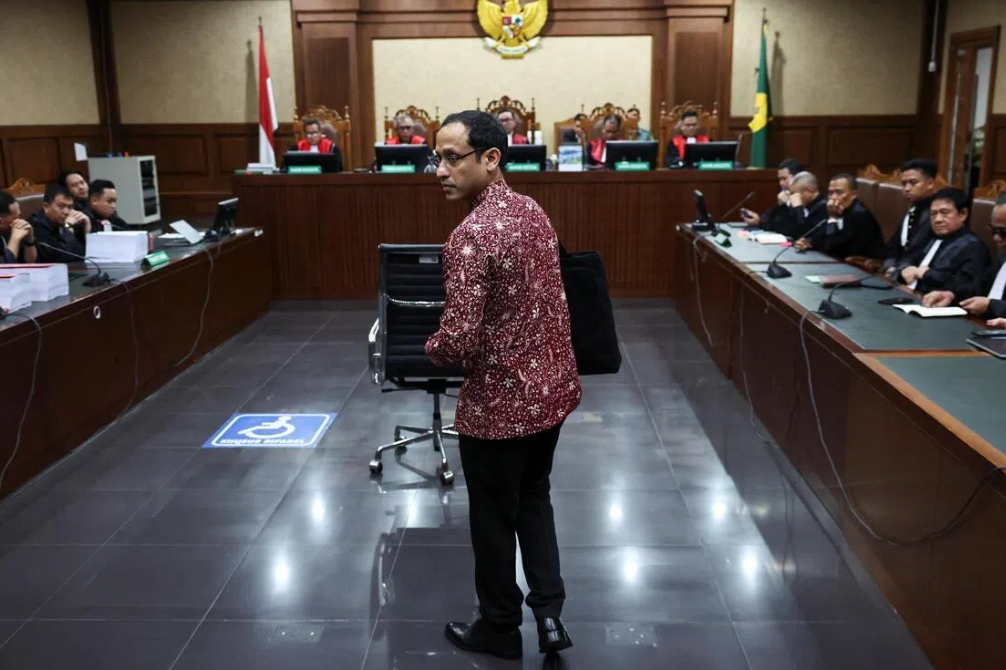
One of Indonesia's most prominent technology entrepreneurs has been handed a 10-year prison sentence after a court found him guilty of abuse of authority in connection with a massive school laptop procurement scheme. Nadiem Makarim, who built Gojek into a US$10 billion super-app empire before joining government in 2019, now faces the dramatic unravelling of a career that once symbolised the promise of a new generation of leaders bringing private-sector innovation to public administration. The Jakarta Corruption Court's Tuesday conviction also imposed a 1 billion rupiah fine and ordered him to repay 809.6 billion rupiah in restitution, with an additional five-year sentence looming should he fail to settle the outstanding amount.
The case centres on a programme to acquire approximately 1.1 million Chromebook laptops between 2020 and 2022, when Indonesian schools pivoted to remote learning during the Covid-19 pandemic. Chief Judge Purwanto's verdict determined that Makarim had deliberately directed the procurement policy whilst harbouring intentions to benefit particular parties unlawfully. The panel found his actions were driven by a desire to strengthen commercial ties between Google and his own firm, PT Aplikasi Karya Anak Bangsa, which served as Gojek's parent company. The five-judge bench characterised such motivation as "highly reprehensible" given his ministerial oath.
Makarim's trajectory from startup visionary to convicted official represents a stunning reversal of fortune in Indonesian public life. A Harvard-educated entrepreneur, he transformed Gojek from a motorcycle-taxi platform into a diversified digital payments and logistics operation that achieved unicorn status—becoming Indonesia's first company to reach that valuation milestone. When President Joko Widodo recruited him as education minister in 2019, observers viewed the appointment as evidence that Indonesia's leadership was willing to embrace technocratic expertise and disrupt entrenched bureaucratic practices. Yet the very digitalisation push that defined his ministerial tenure ultimately became the subject of corruption allegations filed in January 2026.
Prosecutors had pursued a more severe outcome, requesting an 18-year sentence alongside a 1 billion rupiah fine and 5.6 trillion rupiah in restitution. They contended the procurement resulted in approximately 2.18 trillion rupiah in state losses and that Makarim personally benefited by around 809 billion rupiah through the company's involvement. The prosecution also advanced claims that Google's investment in Gojek influenced the government's preference for Chromebooks, though such allegations remained unproven and Google itself was never charged. A 2018 ministry study conducted before Makarim's appointment reportedly identified significant obstacles to Chromebook implementation in remote regions lacking adequate internet connectivity, evidence prosecutors leveraged to suggest the procurement was predetermined rather than pedagogically sound.
Makarim's legal team mounted a vigorous defence grounded in claims of procedural integrity and pandemic-era necessity. Throughout the trial, the defendant consistently rejected allegations as baseless, and his lawyers submitted a plea in early June 2026 seeking complete acquittal. The defence emphasised that the laptop programme was executed in good faith during an unprecedented educational disruption, with approximately 97 percent of the 1.1 million units delivered to 77,000 schools by 2023. They further argued that Makarim received no personal financial benefit from the transactions and that the initiative's fundamental purpose—maintaining educational continuity—remained legitimate even if particular implementation choices drew scrutiny.
The trial attracted extraordinary public attention rarely seen in Indonesian corruption proceedings. Dozens of Gojek drivers attended court sessions to demonstrate solidarity with their founder, while livestreamed hearings prompted social media calls for organised viewing events. The court received amicus curiae briefs supporting the defendant's position, reflecting deeper questions about whether Indonesia could attract talented outsiders willing to serve in public roles. Makarim himself attended hearings in symbolic dress, once arriving in a Gojek driver jacket before changing into a blue batik shirt, a visual reminder of the company he had built and the workers whose livelihoods depended upon his professional standing.
Makarim's family background situated him within Indonesia's establishment circles, potentially shaping both public perception and legal proceedings. His father, Nono Anwar Makarim, is a prominent lawyer with significant standing in Indonesian jurisprudence, while his maternal grandfather participated in Indonesia's independence struggle. Such connections might have been expected to facilitate legal outcomes, yet the conviction underscores that no amount of institutional proximity guaranteed judicial leniency. The case demonstrates that Indonesian courts, particularly specialised corruption tribunals, operate with sufficient autonomy to pursue cases involving powerful figures regardless of their political networks or business achievement.
As final arguments concluded on June 23, Makarim reframed the trial as transcending mere questions of procurement procedure. In his defence plea, he urged the judges to consider how their verdict would influence the willingness of talented professionals to abandon lucrative private careers for government service. He posed a direct question to the bench: "Is this country still safe for us to serve?" Such framing attempted to shift discourse away from specific allegations toward broader concerns about whether Indonesia could retain skilled administrators from outside traditional political structures. The implicit argument suggested that harsh outcomes in high-profile cases involving well-intentioned officials might discourage future civic participation from the private sector.
The conviction carries profound implications for how Indonesia manages the intersection of technological innovation and public administration. Makarim's fall demonstrates that good intentions and genuine achievements in the private sphere offer no protection against corruption charges once officials wield state authority. Whether the Chromebook procurement genuinely represented corrupt self-dealing or merely misguided policy priorities remains contested, yet the court's determination settled the legal question decisively. The outcome may well deter other successful entrepreneurs from accepting government positions, potentially narrowing the pool of talent available to modernise Indonesian administration and reinforcing reliance on career bureaucrats whose innovation records often trail private-sector practitioners.
The broader Southeast Asian business community will likely scrutinise how Indonesia treats prominent founders who transition to public service. Makarim's case suggests risks inherent in such transitions, particularly when personalised corporate relationships intersect with state procurement processes. Other regional technology entrepreneurs contemplating government roles may recalibrate their willingness to accept ministerial appointments given the legal exposure demonstrated here. For Malaysia and other neighbouring nations pursuing digital government initiatives, the Indonesian experience offers cautionary lessons about establishing clear governance frameworks around technology procurement before appointing private-sector leaders to oversee such initiatives.

