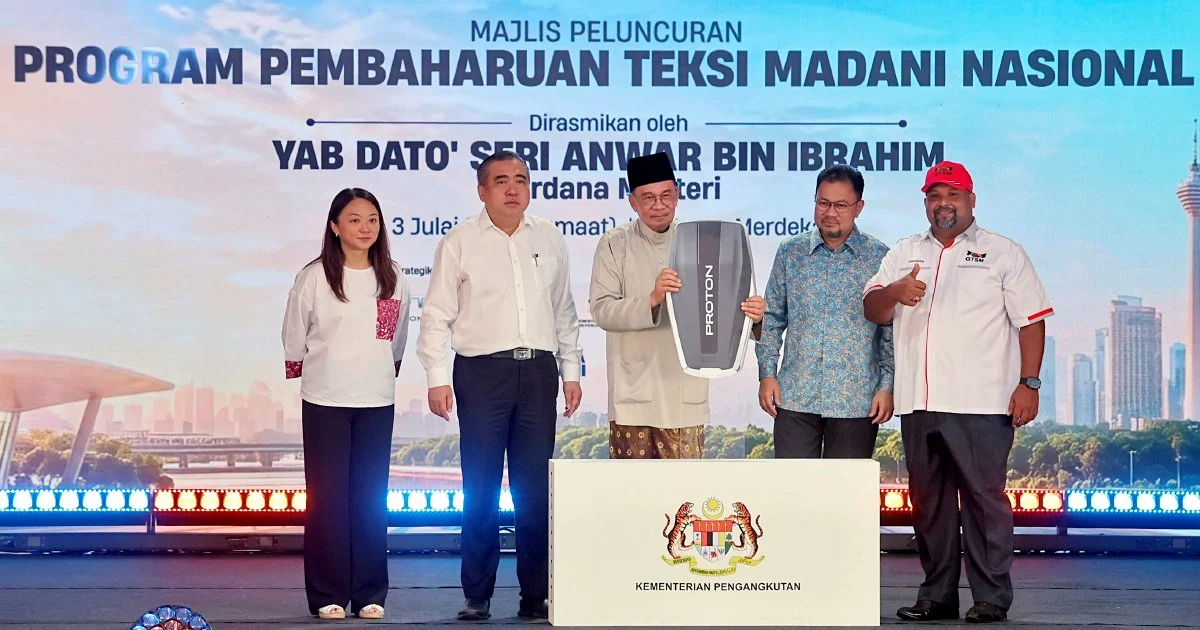
Prime Minister Datuk Seri Anwar Ibrahim announced today that the government has secured RM10 million in fresh allocation to accelerate the replacement of old taxis across the country through an enhanced matching grant scheme. The funding approval represents a significant step towards revitalising Malaysia's taxi industry, which has long grappled with an ageing fleet that struggles to meet modern safety and emission standards.
The matching grant programme operates on a cost-sharing basis, where the government contributes funds alongside taxi operators to reduce the financial burden of purchasing new vehicles. By increasing the available pool of government support, policymakers aim to make vehicle replacement more accessible to individual taxi owners and small operators who might otherwise lack the capital to upgrade their fleet. This approach has proven effective in other jurisdictions seeking to modernise public transport while maintaining operator viability.
Malaysia's taxi industry has faced persistent challenges in recent years as competition intensified from ride-hailing platforms and concerns mounted about vehicle safety and reliability. Many taxis currently operating have exceeded their optimal lifespan, presenting maintenance complications and reducing customer confidence in the traditional taxi service. The RM10 million injection addresses these systemic issues by directly incentivising modernisation at the vehicle level rather than pursuing broader regulatory restrictions.
The matching grant model also carries significant environmental implications for Southeast Asia's rapidly growing transport sector. Older vehicles typically consume more fuel and generate higher emissions per journey, contributing to urban air quality deterioration in major Malaysian cities. Replacement with newer models featuring contemporary engine technology and emission controls aligns with regional climate commitments and national sustainability goals established in Malaysia's 2050 carbon neutrality target.
Taxi operators in Kuala Lumpur, Selangor, and other major metropolitan areas have long sought targeted government support to manage the economics of fleet renewal. The sector employs tens of thousands of Malaysians directly while serving millions of commuters daily, particularly among lower-income urban residents who depend on affordable taxi services. Any disruption to taxi availability affects broader transport network efficiency, making the health of the industry a matter of public interest beyond commercial considerations.
The additional RM10 million comes as the government reviews multiple transport policy initiatives simultaneously. Transport regulators have been developing stronger oversight mechanisms for ride-hailing services whilst simultaneously recognising the need to support traditional taxi operators through transition periods. This dual approach suggests policymakers are moving away from zero-sum competition narratives toward an integrated vision where multiple transport modes coexist and serve different market segments effectively.
Implementation mechanics for the expanded scheme will likely follow established protocols where eligible taxi owners apply through designated channels, with approvals determined by vehicle age, safety compliance records, and intended replacement vehicle specifications. The matching grant structure typically requires operators to contribute a substantial portion themselves, ensuring stakeholder commitment and financial discipline in vehicle selection. Clear guidelines on eligibility and application procedures will be crucial to transparent fund distribution across the country's diverse taxi operating landscape.
For taxi drivers and owners, the expanded funding opens concrete pathways toward vehicle modernisation that many have deferred due to cost barriers. A newer taxi provides operational advantages including lower maintenance expenses, improved fuel efficiency, enhanced passenger comfort features, and reduced mechanical breakdowns that disrupt income generation. The cumulative effect of these factors often justifies the initial capital investment even for operators operating on tight margins.
Regional observers have noted Malaysia's increasing emphasis on targeted sectoral support rather than wholesale market restructuring. The taxi scheme exemplifies pragmatic policy design that recognises both emerging transport technologies and the legitimate interests of workers and operators within traditional industries. Other Southeast Asian nations facing similar transport transition pressures may reference Malaysia's approach when designing their own modernisation initiatives.
The announcement arrives amid broader government focus on cost-of-living concerns affecting ordinary Malaysians. Taxi services remain comparatively affordable transport options for many citizens, and maintaining service quality through fleet modernisation indirectly benefits consumers through more reliable, efficient journeys. Government investment in taxi renewal thus carries implicit recognition that transport accessibility and affordability remain central social policy considerations alongside modernisation objectives.
Successful implementation of the expanded matching grant scheme will require coordinated effort between the Prime Minister's office, transport ministry, financial institutions administering fund disbursement, and taxi association representatives managing operator participation. Communication campaigns targeting taxi owners about application procedures and eligibility criteria will be essential to ensure the RM10 million reaches intended beneficiaries efficiently. Monitoring mechanisms should track both fund utilisation rates and actual vehicle replacement outcomes to assess scheme effectiveness.

