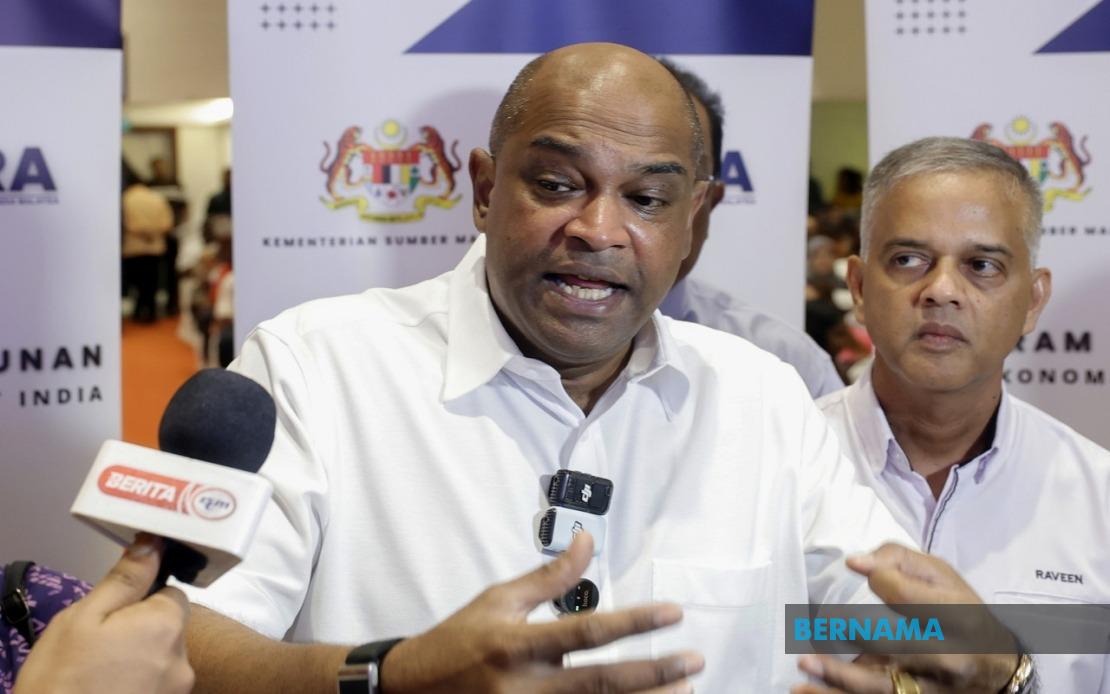
The Malaysian government has channelled RM6.7 million into three distinct programmes designed to accelerate socio-economic progress within the Indian community, Human Resources Minister Datuk Seri R. Ramanan announced in Kuala Lumpur this week. The funding represents a targeted intervention aimed at bridging educational disparities and fostering entrepreneurial resilience among a demographic segment that has historically faced structural barriers to advancement. The comprehensive approach signals recognition that community development requires simultaneous intervention across education, economic opportunity, and institutional support.
The Tuisyen MADANI 2026 Programme forms the educational pillar of this initiative, establishing 28 tuition centres across seven states to serve students pursuing their final secondary qualifications. The scheme targets 2,343 candidates preparing for the Sijil Pelajaran Malaysia (SPM) and Sijil Tinggi Persekolahan Malaysia (STPM) examinations, providing five consecutive months of free tuition instruction spanning August through December. This condensed timeframe reflects the programme's strategic positioning to provide intensive academic support during the critical examination preparation window. By absorbing tuition costs, the initiative directly alleviates household financial pressures during economically sensitive periods and aims to narrow achievement gaps that have traditionally disadvantaged Indian students relative to other demographic cohorts.
The tuition component received an allocation of RM2.63 million, underscoring the government's commitment to addressing educational inequality as a foundational element of broader empowerment. Ramanan framed this investment as instrumental to improving academic performance, reducing the educational attainment gap, and lightening the financial strain on families navigating the increasingly expensive landscape of tertiary preparation. The strategic positioning of tuition centres across multiple states ensures geographic accessibility, preventing urban-rural disparities from compounding existing disadvantages. This geographical distribution reflects a sophisticated understanding that infrastructure alone is insufficient without proximity and convenience for beneficiary populations.
The entrepreneurial dimension operates through the 2026 B40/M40 Indian Entrepreneurs Grant Programme (Uyarvu MADANI), which in its inaugural Series I phase selected 128 entrepreneurs for direct capital support. Recipients shared more than RM3.05 million in grants distributed across three categorical tiers: micro-enterprises operating at the smallest scale, growth-stage businesses expanding their operations, and high-impact ventures positioned for significant economic contribution. Ramanan emphasised that this capital infusion serves a dual purpose: strengthening individual business resilience and competitiveness while simultaneously cultivating the micro, small and medium enterprise (MSME) ecosystem within the Indian community itself. This two-level impact—individual business viability and sectoral development—multiplies the effective return on public investment.
The grant structure acknowledges that Indian entrepreneurs frequently encounter capital access constraints that impede business formation and expansion. Ramanan further clarified that MITRA funding represents only one portal for community entrepreneurs to access business support, directing applicants toward complementary financing channels including SME Bank, Bank Rakyat, and Amanah Ikhtiar Malaysia. This signposting function elevates government intervention beyond direct capital allocation toward a more comprehensive facilitation role, connecting entrepreneurs with an ecosystem of financial institutions and developmental agencies. By positioning MITRA as one option within a broader institutional landscape, the government potentially maximises capital deployment and encourages cross-institutional collaboration.
The third pillar, the Dharma MADANI Programme in its fourth series iteration, directed RM1.04 million toward 52 Hindu places of worship, with a further 324 institutions scheduled to receive grants in forthcoming tranches. This component recognises that religious and cultural institutions function as infrastructure for community cohesion, social welfare provision, and cultural preservation. The phased rollout approach suggests a deliberate sequencing strategy rather than simultaneous distribution, potentially allowing for assessment of impact and resource optimisation between tranches. The accumulated allocation across all series will ultimately reach 676 religious institutions, representing comprehensive coverage of Hindu worship and community spaces within the accessible funding envelope.
The tiered structure of these three programmes—education, entrepreneurship, and cultural infrastructure—reflects sophisticated policy architecture recognising that community advancement operates across multiple interconnected dimensions. Educational investment develops human capital essential for upward mobility; entrepreneurial funding activates economic agency and wealth creation within communities; while religious institution support maintains the social infrastructure that sustains community identity and mutual support systems. This holistic framework rejects the false economy of piecemeal interventions, instead pursuing compound developmental effects through coordinated action across sectors.
The government's decision to pool these initiatives under the Malaysian Indian Transformation Unit (MITRA) institutional umbrella signals intentionality around Indian community development as a distinct policy priority rather than an incidental component of general social programmes. This institutional distinctiveness enables targeted performance metrics, dedicated resource allocation, and constituency accountability that might be diluted within larger, demographically aggregated schemes. MITRA's existence as a dedicated institutional home suggests durability and continuity of policy focus, though funding renewal cycles remain contingent on political priorities and budgetary constraints.
In contextual remarks, Ramanan also addressed the resignation of Subang Member of Parliament Wong Chen from the People's Justice Party (PKR), characterising the departure as disappointing to both the party and his electoral constituency. Ramanan noted that PKR had provided Wong with three electoral opportunities to win the seat before his successful 100,000-vote majority victory under the PKR banner. The minister's framing emphasised the reciprocal relationship between party investment and member loyalty, implicitly questioning the equity of Wong's decision to depart after benefiting from party support and resources. Ramanan nonetheless stated respect for Wong's autonomy regarding party affiliation, indicating acceptance of individual political choice despite institutional disappointment.
The commentary on Wong's departure, while structurally peripheral to the main programmatic announcement, reflects the intersection of development policy with partisan politics. Indian community-focused initiatives inherently function within electoral calculations, as community support translates into decisive voting blocs in crucial constituencies. Political departures like Wong's therefore carry implications beyond individual career trajectories, potentially signalling shifting political alignments or internal party pressures. Ramanan's carefully calibrated response—expressing disappointment while respecting autonomy—attempts to preserve party standing among community stakeholders while avoiding inflammatory language that might further alienate departing members or their supporters.
The RM6.7 million allocation must be contextualised within Malaysia's broader budget envelope and relative priority weighting. For the Indian community representing approximately six percent of Malaysia's population, the funding level suggests meaningful but not transformative commitment. Whether these programmes demonstrate scalability toward expanded intervention or remain circumscribed demonstration projects depends on political sustainability and demonstrated outcomes. The phased rollout approach across multiple tranches and series iterations implies iterative expansion potential, contingent on positive assessments at intermediary checkpoints and continued political will across electoral cycles.

