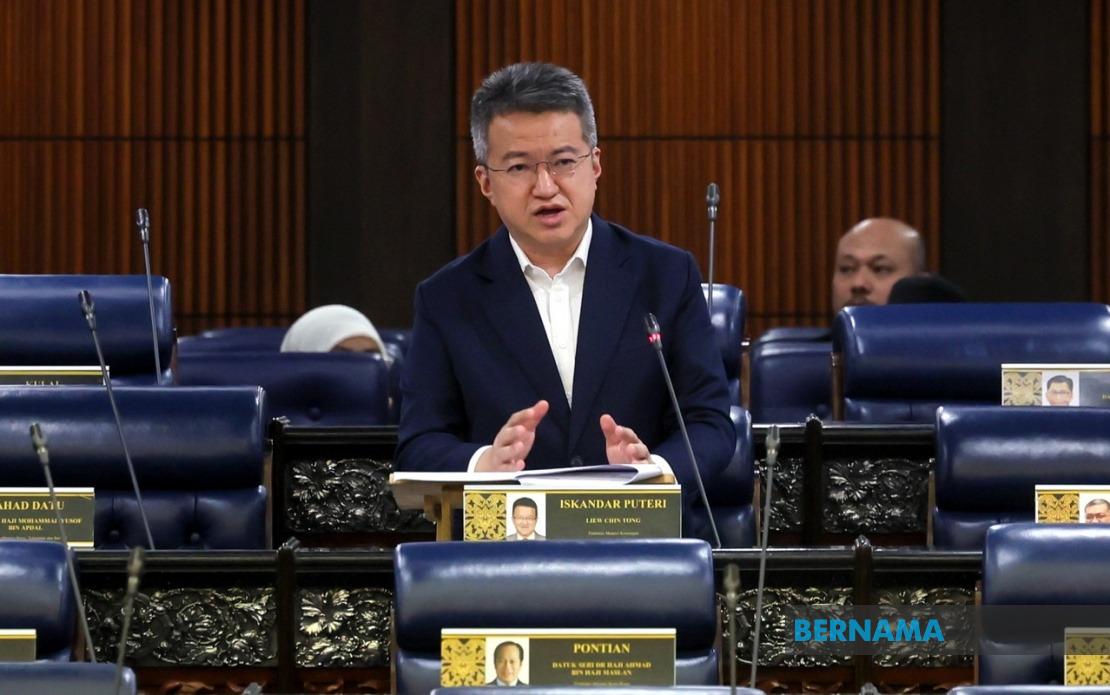
The Malaysian Human Rights Commission (SUHAKAM) has secured government funding of RM15.77 million for its 2025 operations, marking a substantial increase that reflects continued government commitment to strengthening the institution's capacity. The Ministry of Finance approved this allocation through Deputy Finance Minister Liew Chin Tong during parliamentary proceedings on July 8, signalling a 16 per cent boost compared to the RM13.55 million awarded in 2024. This funding expansion arrives as SUHAKAM navigates an increasingly complex human rights landscape across the region, balancing investigative mandates with the need for expanded public engagement and institutional modernisation.
The 2025 grant encompasses operational expenses for both SUHAKAM and the Office of the Children's Commissioner (OCC), a joint administrative arrangement that pools resources across Malaysia's complementary human rights bodies. The allocation accounts for commissioner salaries and allowances, alongside essential overhead costs such as office rentals and utility payments. Beyond these fixed expenses, the budget supports SUHAKAM's comprehensive annual programme calendar, enabling the commission to conduct public inquiries, produce investigative reports, and engage with communities across the nation. This integrated funding structure demonstrates the government's intention to position SUHAKAM and the OCC as coordinated pillars within Malaysia's human rights framework.
Deputy Finance Minister Liew emphasised the government's consistent financial stewardship of SUHAKAM since its establishment, asserting that funding allocations had never lapsed despite Malaysia's economic fluctuations over past decades. He contextualised the 2025 appropriation within the broader Budget 2024 review process, noting that allocation decisions reflected both SUHAKAM's historical spending performance and the government's prevailing fiscal capacity. This statement carries particular weight given Malaysia's experience managing competing budgetary priorities during periods of economic slowdown and fiscal consolidation. The government's maintenance of SUHAKAM funding, even during tighter budget cycles, underscores institutional recognition that human rights monitoring requires sustained, reliable financial foundations rather than subject to annual discretionary trimming.
The funding increase for SUHAKAM arrives alongside parallel government initiatives addressing social protection gaps among Malaysia's rapidly expanding informal and gig economy workforce. Deputy Finance Minister Liew outlined enhancements to the i-Saraan programme, a voluntary contribution mechanism designed to channel informal sector workers into the Employees Provident Fund (EPF). The scheme provides government matching contributions at 20 per cent of individual annual contributions, capped at RM500 yearly or RM5,000 over a participant's lifetime. This approach recognises that traditional employment-based social security models increasingly fail to protect workers outside conventional corporate structures, a challenge Malaysia shares with regional peers as digitalisation transforms labour markets.
Beginning in 2026, the government plans to launch the i-Saraan Plus programme specifically targeting platform-based workers engaged in e-hailing and p-hailing services. This specialised initiative acknowledges the distinct characteristics of ride-sharing and parcel delivery work, offering enhanced government matching incentives of up to RM600 annually or RM6,000 across a lifetime. The distinction between standard i-Saraan and the plus variant reflects policymakers' understanding that gig platform workers face unique income volatility and occupational risks compared to traditional informal sector participants. Malaysian workers in these sectors frequently operate across multiple platforms simultaneously, generating irregular income streams that complicate conventional contribution planning. The enhanced incentive rate attempts to compensate for this structural precarity.
The government's expansion of social protection mechanisms for informal and gig workers addresses longstanding concerns within Malaysia's labour movement and civil society organisations regarding retirement security gaps. Millions of Malaysians depend on informal employment as primary income sources, yet remain outside mandatory employer-sponsored pension schemes. This vulnerability became particularly acute during economic contractions when informal workers faced income loss without institutional safety nets. Regional comparisons with Singapore's mandatory Central Provident Fund model and Thailand's strengthened informal sector provisions highlight Malaysia's previous relative underinvestment in protecting workers outside formal employment relationships. The i-Saraan initiative, while voluntary rather than compulsory, represents incremental policy progress toward bridging this protection divide.
Beyond the existing i-Saraan framework, the government indicated ongoing examination of alternative mechanisms to expand EPF contribution coverage among informal sector participants. This exploratory approach suggests official recognition that current voluntary schemes, despite incentivisation, may not achieve optimal participation rates or coverage breadth. Policymakers increasingly recognise that blanket voluntary programmes struggle to reach workers with minimal disposable income, those lacking financial literacy, or those operating in remote areas with limited banking infrastructure. Malaysian researchers have documented significantly lower i-Saraan uptake among lower-income informal workers compared to higher-earning self-employed professionals, indicating that current incentive structures may insufficiently motivate participation among most vulnerable populations.
The government framed these social protection initiatives within broader objectives of ensuring adequate retirement savings and improved wellbeing for workers entering old age without employer pension provisions. Malaysia's demographic trajectory toward an ageing population heightens urgency around retirement security, particularly for informal workers who may lack family support systems or accumulated savings. Current projections suggest that absent expanded EPF coverage, significant numbers of Malaysians will enter retirement with insufficient financial resources, potentially placing strain on government assistance programmes and family safety nets. Regional development comparisons indicate that countries with stronger informal sector pension coverage experience better health outcomes and reduced elderly poverty rates, providing evidence for Malaysian policymakers considering whether to transition voluntary schemes toward mandatory participation models.
The parliamentary debate capturing these funding announcements reflects broader governmental attempts to simultaneously address multiple policy domains through budget allocation messaging. Questions from PH-Rasah legislator Cha Kee Hin regarding OCC funding and PN-aligned representatives Datuk Idris Ahmad and Roslan Hashim concerning informal sector protection indicate cross-party parliamentary interest in these institutional domains. The deputy finance minister's comprehensive responses across distinct policy areas—human rights commission funding, children's rights oversight, and gig economy worker protection—demonstrate attempts to construct narratives linking institutional strengthening with social protection expansion. This cross-domain approach suggests official framing of budget allocations as components of holistic governance modernisation rather than isolated departmental appropriations.
For Malaysian readers, these funding developments carry significance extending beyond technical budget mechanics. SUHAKAM's enhanced resources potentially enable more robust investigation of human rights complaints and independent monitoring of government institutions—functions that require adequate staffing, technical capacity, and operational independence. The organisation's work investigating allegations of custodial abuse, workplace discrimination, and vulnerable community treatment depends partly on fiscal capacity to conduct site visits, compile documentation, and produce detailed investigative reports. The RM2.2 million increase, while modest in absolute terms, permits incremental expansion of investigative capabilities and public engagement activities that strengthen accountability mechanisms within Malaysia's broader governance framework. Simultaneously, the i-Saraan programme enhancements acknowledge that millions of Malaysian workers lack adequate retirement security, a challenge requiring sustained policy innovation and cross-institutional coordination between finance ministries, the EPF, and labour regulators to achieve meaningful impact.

