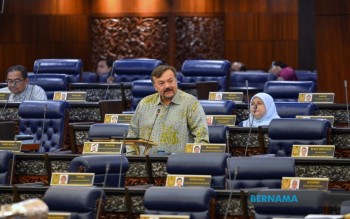
Finance Minister II Datuk Seri Amir Hamzah Azizan has announced that the government approved more than RM500 million in micro-financing between May 15 and June 26, 2026, reaching over 30,000 entrepreneurs seeking financial lifelines. The rapid disbursement reflects intensified government efforts to shore up the fragile small business sector, which has been grappling with inflationary pressures and tighter operating margins across Malaysia's economy.
The approved financing represents a significant chunk of the government's RM5 billion Micro Financing Facility Programme, a comprehensive safety net designed specifically for micro enterprises struggling to maintain operations amid escalating production and overhead costs. This targeted allocation underscores policymaker recognition that small traders and hawkers, who form the backbone of Malaysia's informal and semi-formal economy, require timely capital access to survive economic turbulence. The scale of disbursement within such a compressed timeframe suggests both robust demand from borrowers and streamlined processing by participating lenders.
The funding flowed through established microfinance channels including Amanah Ikhtiar Malaysia, Agrobank, Bank Simpanan Nasional, Bank Rakyat, MARA and TEKUN Nasional. This multi-institution approach diversifies delivery mechanisms and ensures wider geographical reach, particularly important for reaching enterprises in less urbanised areas where conventional banking penetration remains limited. By distributing capital through proven microfinance operators alongside traditional development banks, authorities maximise both speed of deployment and tailoring to borrower circumstances.
Parallel to direct micro-financing, the government launched the RM5 billion MADANI Government Assistance Guarantee Scheme through Syarikat Jaminan Pembiayaan Perniagaan Bhd to expand credit access for micro, small and medium enterprises. Between May 15 and June 20, the guarantee scheme approved RM219 million covering more than 300 MSMEs, with particular concentration in agriculture, construction, logistics and tourism sectors. These industries have demonstrated acute vulnerability to global supply chain disruptions and shifting consumer demand patterns, making them priority recipients of government support.
The guarantee approach addresses a critical market failure where many MSMEs lack sufficient collateral to secure conventional bank financing. By absorbing credit risk through government backing, SJPP enables financial institutions to extend loans to viable but under-capitalised borrowers who would otherwise face rejection. This mechanism simultaneously supports enterprise sustainability while building banking sector exposure to small business segments typically considered high-risk under standard lending protocols.
Beyond direct financing and guarantees, the government tasked SJPP with facilitating restructuring and rescheduling of existing MSME debt obligations. Targeted repayment assistance programmes further ease liquidity pressures on businesses already burdened by maturing loan commitments. This multi-layered approach recognises that many struggling enterprises need cash flow flexibility rather than fresh capital, acknowledging the distinction between growth financing and survival financing that development-focused policies sometimes overlook.
Bank Negara Malaysia contributed through the RM5 billion SME Stabilisation Relief Facility launched mid-May 2026, which had approved nearly RM1 billion for more than 1,500 MSMEs by early June. The central bank's direct involvement lends credibility and scale to relief efforts while ensuring programme design aligns with broader monetary policy objectives. The substantial take-up within weeks of launch demonstrates genuine distress across the MSME population and validates the relief facility's accessibility and terms.
With approximately RM4 billion in funds remaining available across these various schemes, the government maintains substantial capacity for future applications through 2026 and potentially beyond. This financial cushion suggests either conservative initial projections of demand or deliberate programme design to sustain support as economic conditions evolve. For Malaysian entrepreneurs, the retained firepower offers reassurance that financing windows remain open, though awareness of application procedures and eligibility criteria remains uneven across the intended beneficiary population.
The coordinated deployment of micro-financing across multiple schemes reflects systemic government recognition that small business resilience directly affects employment, household incomes and social stability. In the Malaysian context where hawkers, small traders and family enterprises employ millions and generate significant local economic activity, targeted micro-credit functions as both economic stimulus and social safety net. The sequential approval announcements and transparent fund availability communicate policy commitment while creating political momentum for further support measures if macroeconomic conditions deteriorate further.

