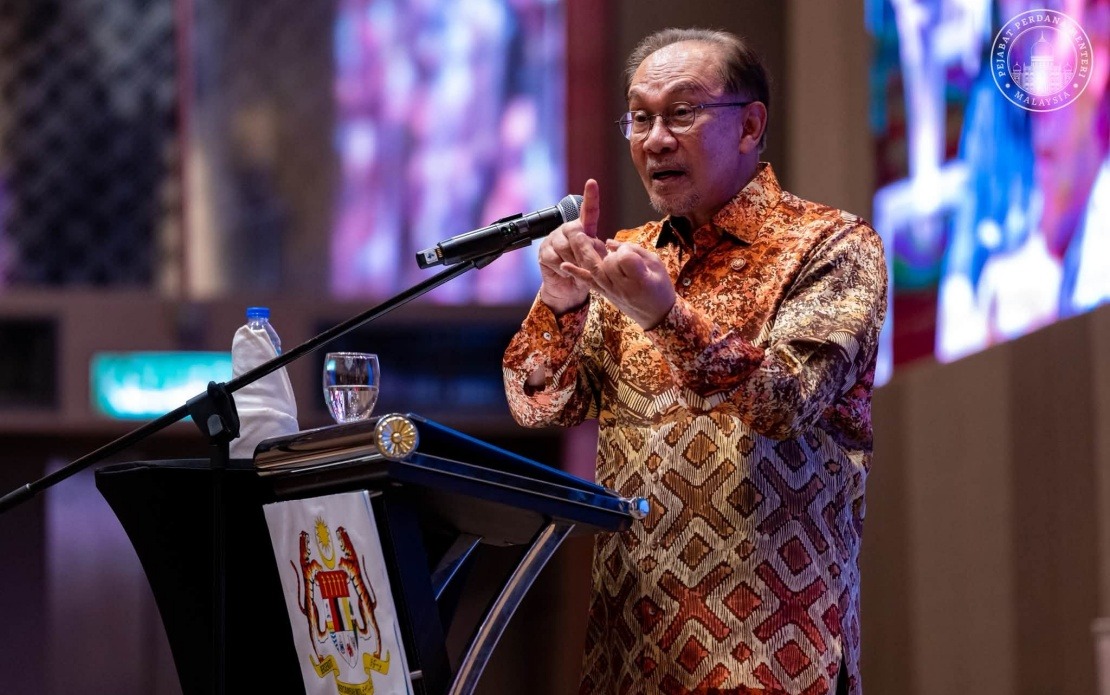
Prime Minister Datuk Seri Anwar Ibrahim has reaffirmed the government's dedication to supporting Malaysia's youth population as they grapple with the complexities of the modern world. Speaking through a Facebook statement on Tuesday evening, he outlined the administration's intention to leverage its available resources to help young people confront various pressing issues and challenges that define their generation's experience.
The Prime Minister's comments emerged following two significant youth-focused engagements held in Klang, Selangor. He participated in a "Temu Anwar" session, a direct interaction platform, and attended the opening ceremony of the 2026 International Youth Assembly (HAMKA), both of which provided opportunities for him to listen directly to the concerns, perspectives, and recommendations articulated by young Malaysians. This direct engagement approach reflects a broader strategy of the current administration to maintain closer ties with the youth constituency through dialogue and consultation.
Anwar's observations about the contemporary landscape facing today's generation carry particular resonance for a nation grappling with rapid technological change, economic pressures, and evolving social expectations. He acknowledged that young people today inhabit an increasingly intricate environment characterised by the prevalence of divergent viewpoints and the frequent collision of competing ideologies. Rather than viewing this pluralism as inherently problematic, the Prime Minister framed it as a natural and potentially enriching aspect of modern society, provided it remains grounded in constructive principles.
Central to his message was an emphasis on the manner in which disagreements and intellectual differences ought to be conducted. The Prime Minister stressed that such exchanges must be anchored in knowledge, logical argumentation, and respectful conduct rather than driven by emotional reactions, animosity, or the narrow interests of particular groups. This distinction reflects a governance philosophy that seeks to elevate public discourse beyond polarisation and toward evidence-based, reasoned dialogue—a particularly important message in an era where social media and digital platforms can amplify divisive narratives.
The Prime Minister indicated that the insights gathered from youth representatives during these sessions would inform the government's policy directions and programmes aimed at addressing young people's needs. While he acknowledged the practical constraints on governmental capacity, his assurance that the administration would "try our best within our available capacity" suggests a realistic approach to youth support that balances ambition with fiscal and administrative realities. This candour may resonate with a youth demographic increasingly sceptical of empty promises and expecting transparency about governmental limitations.
Anwar's references to the 2026 International Youth Assembly drew a connection to historical intellectual figures whose legacies might illuminate contemporary challenges. He evoked Abdul Malik Karim Amrullah, the early 20th-century Islamic scholar, reformer, and literary figure known by his pen name Hamka, after whom the assembly is named. This historical parallel serves multiple purposes: it grounds the assembly in a tradition of serious intellectual engagement, invokes the example of a figure celebrated for bridging religious scholarship and modern thinking, and subtly positions Malaysia within a broader Muslim intellectual heritage.
Hamka, as a public intellectual and prolific writer, exemplified qualities the Prime Minister identified as essential for youth development: a commitment to generating knowledge, willingness to articulate ideas publicly despite potential controversy, and intellectual openness to diverse perspectives. The invocation of this historical figure suggests that the government views youth development not merely as addressing immediate economic or social problems, but as cultivating a generation of thoughtful, articulate citizens capable of grappling with complex issues. This intellectual framing elevates the discourse beyond simple welfare provision to encompass the formation of informed, engaged citizens.
For Malaysia's youth constituency, these remarks signal official recognition that their concerns warrant serious governmental attention and that pathways exist for their voices to influence policy. The emphasis on knowledge, reasoned argument, and openness to diverse ideas implicitly endorses critical thinking and civic participation among young people. However, the remarks also implicitly establish certain boundaries around acceptable modes of political and social engagement—dissent and disagreement are acknowledged as legitimate, but must be conducted through particular frameworks of conduct and intellectual rigour.
The strategic importance of maintaining youth support cannot be overstated in Malaysia's contemporary political context. Younger demographics represent a crucial electoral constituency with distinct policy priorities ranging from employment opportunities and housing affordability to climate action and digital rights. Direct engagement through platforms like Temu Anwar and participation in international youth assemblies represents an attempt to convert this administrative accessibility into sustained political support. The government's willingness to listen, however, must be accompanied by tangible policy outcomes if youth engagement is to translate into meaningful political dividends.
The establishment of the 2026 International Youth Assembly in Malaysia also reflects broader regional positioning. By hosting such a gathering, Malaysia signals its commitment to youth development and its role as a convener of regional dialogue on generational challenges. For Southeast Asia, such forums provide opportunities to address shared concerns including digital literacy, economic transition, climate resilience, and regional integration. Malaysia's positioning as a host and participant in these conversations elevates its profile within regional youth networks and governance structures.
Moving forward, the substantive challenge for the government lies in translating rhetorical commitments into concrete programmes and policy initiatives. Youth expectations in Malaysia are increasingly sophisticated, shaped by exposure to global best practices and awareness of peer nations' approaches to youth development. Generic promises to help "with various issues" lack the specificity that younger voters increasingly demand. The government's capacity to address particular challenges—whether job creation with adequate wages, affordable housing, mental health support, or meaningful political participation—will determine whether these engagement initiatives result in sustained youth confidence or fade into routine political messaging.
The Prime Minister's framing also raises important questions about how Malaysia negotiates the tension between encouraging open intellectual discourse and maintaining social stability. While the emphasis on reasoned debate and knowledge-based argument is commendable, the implicit boundaries around acceptable conduct—steering youth away from sentiment-driven mobilisation—suggest a careful calibration of permitted dissent. For a generation increasingly influenced by digital platforms where emotional appeals often overwhelm nuanced arguments, converting this philosophical commitment into practical educational and civic outcomes will require sustained effort beyond parliamentary statements.

