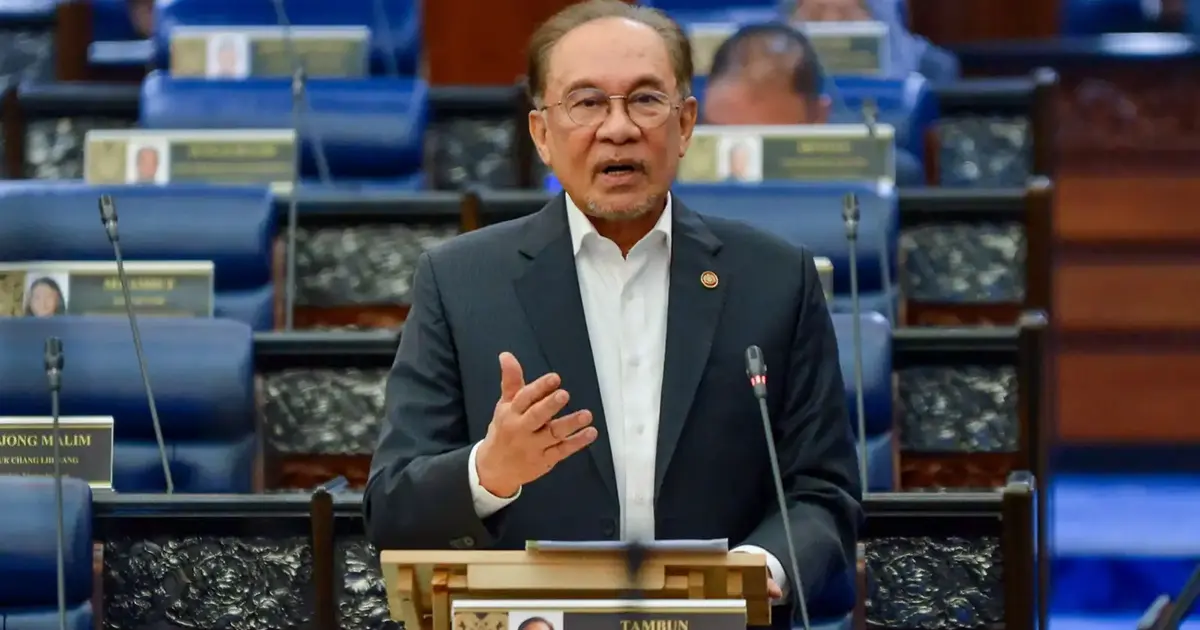
Prime Minister Anwar Ibrahim has reiterated his position that the government requires adequate time to execute its electoral mandate, dismissing renewed demands that polls be called ahead of schedule. His comments underscore a fundamental tension in Malaysian politics between those seeking continuity and those advocating for electoral renewal, a debate that reflects deeper anxieties about the nation's economic trajectory and political direction.
Anwar's resistance to early election speculation comes at a moment when Malaysia faces significant economic headwinds, including inflationary pressures, currency volatility, and concerns about youth unemployment. The Prime Minister's argument centres on a straightforward proposition: that perpetual campaigning and electoral uncertainty divert governmental attention and public resources from the practical work of economic management and policy implementation. This rationale appeals to business confidence and investor sentiment, both crucial for a middle-income nation attempting to navigate the transition towards higher-value economic activities.
The push for early elections, which surfaces periodically in Malaysian political discourse, typically emerges from coalition partners seeking to capitalise on favourable polling numbers or from opposition groups hoping to exploit perceived governmental weakness. Such calls have become almost ritualistic in Malaysian politics, particularly during periods when incumbent coalitions experience internal friction or when opposition movements gain momentum. However, Anwar's repeated rejection of these overtures suggests a calculation that stability—both political and economic—serves the government's longer-term interests more effectively than the gamble of an early poll.
From an institutional perspective, Anwar's stance reflects a broader understanding that Malaysia's governance structures, inherited from its Westminster traditions, function more effectively when governments operate with multiyear planning horizons. Major infrastructure projects, fiscal reforms, and structural economic transformations require sustained commitment and consistent policy direction. Constant electoral uncertainty, by contrast, encourages short-termism and creates disincentives for difficult but necessary policy decisions that might prove unpopular in the immediate term but benefit the broader economy over time.
The Prime Minister's emphasis on public preference for stability over campaigning also reveals an attempt to frame the debate in terms of national interest rather than partisan advantage. By positioning economic growth and democratic normalcy as the electorate's true priorities, Anwar implicitly critiques those who advocate for frequent elections as pursuing narrow political advantage at the expense of collective wellbeing. This rhetorical strategy has proven effective in previous Malaysian political contexts, though its persuasiveness depends significantly on whether actual economic outcomes meet public expectations.
Malaysia's contemporary political landscape features fragmented coalitions and a history of unexpected electoral results, making government stability inherently precarious. The Pakatan Harapan-led administration operates within structural constraints imposed by coalition mathematics and parliamentary arithmetic that leave little room for complacency. Anwar's repeated affirmations that the government requires time to fulfil its mandate may therefore reflect not merely confident rhetoric but also acknowledgement of the practical realities limiting governmental leverage and the necessity of preserving coalition coherence.
The rejection of early election calls also carries implications for regional stability and Malaysia's international positioning. Southeast Asian economies benefit from predictable governance environments, and Malaysia's trading partners and foreign investors view political uncertainty as a risk factor that increases borrowing costs and discourages long-term capital commitments. By emphasising continuity and the completion of its existing mandate, Anwar signals to international markets and regional partners that Malaysia remains committed to steady governance rather than embarking on destabilising political adventures.
Within the broader Malaysian context, Anwar's insistence on completing his government's full term must be understood against the backdrop of previous administrations' experiences. Recall that Malaysia held general elections in 2022 following a period of extraordinary political volatility, and voters indicated through their ballots a preference for relative stability despite fragmented outcomes. The implicit argument is therefore that the government should respect that electoral verdict and allow sufficient time for meaningful policy implementation rather than returning to the polling booths prematurely.
However, the perpetual resurfacing of early election speculation also reflects genuine anxieties within the ruling coalition about cohesion and electoral viability. Coalition partners, particularly those with smaller parliamentary representation, face incentives to seek electoral renewal when they perceive themselves in relatively strong positions. Managing these internal tensions while simultaneously rejecting external pressure for early polls represents a significant challenge for Anwar's administration, requiring continuous negotiation and reassurance across multiple political constituencies.
The debate over electoral timing ultimately encapsulates competing visions of how Malaysia should prioritise its national resources and political energy. Anwar's position privileges economic performance and institutional stability, arguing implicitly that these conditions create the foundation for democratic legitimacy and public satisfaction. By rejecting early election calls, he stakes his government's future on its capacity to demonstrate tangible improvements in living standards, employment, and economic opportunity. For Malaysian voters, the question becomes whether the government can convert its stability argument into concrete results before the natural conclusion of its mandate.

