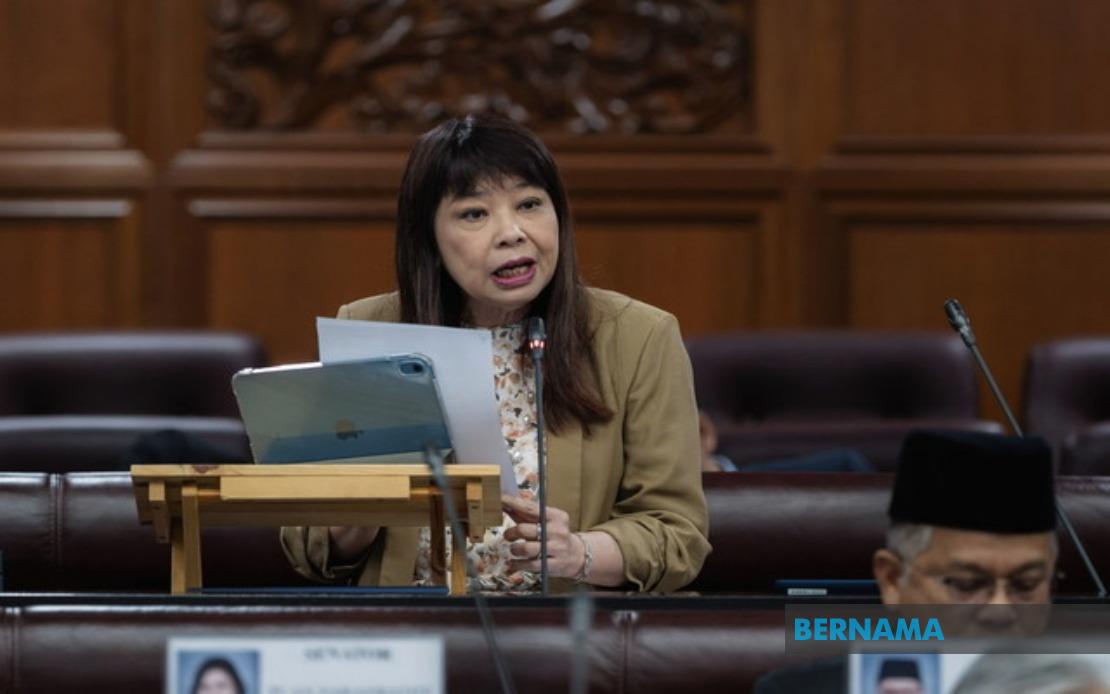
Malaysia's government is moving forward with plans to establish a dedicated registry for domestic violence offenders as part of a broader strategy to combat the persistent problem of repeat abuse. Deputy Women, Family and Community Development Minister Lim Hui Ying disclosed during parliamentary proceedings that the Women, Family and Community Development Ministry (KPWKM), working alongside the Royal Malaysia Police (PDRM) and the judiciary, is currently examining how such a system could be implemented effectively across the country.
The impetus behind this initiative stems from a recognised gap in the government's ability to identify and track individuals who repeatedly commit domestic violence offences. Speaking in the Dewan Negara, Lim acknowledged that Malaysia currently lacks comprehensive and reliable data on recidivist offenders, making it difficult for authorities to implement preventive measures. By creating a centralised registry system, the government aims to equip law enforcement agencies with the tools necessary to identify dangerous patterns of behaviour and intervene before additional victims suffer harm.
The proposed mechanism would function similarly to existing criminal records systems but would be specifically tailored to domestic violence cases. Rather than treating each incident in isolation, as occurs under the current framework, a dedicated registry would enable police officers, magistrates, and protection order officials to quickly access a person's abuse history. This information could prove crucial when a victim seeks emergency protection, allowing courts to make more informed decisions about bail conditions, custody arrangements, and the level of protective measures required.
Lim emphasised that the government remains steadfast in its commitment to addressing domestic violence through what officials describe as a comprehensive whole-of-government and whole-of-society approach. This phrase reflects the recognition that tackling abuse requires coordination across multiple institutions and community engagement beyond the criminal justice system alone. The inter-agency collaboration between KPWKM, PDRM, and the judiciary represents an attempt to break down institutional silos that have historically hindered effective responses to domestic violence.
Beyond the registry initiative, the government is simultaneously investing in physical infrastructure to support victims. The Women, Family and Community Development Ministry has allocated RM2.1 million in the current financial year specifically for upgrading more than 20 government-operated shelters for domestic violence survivors nationwide. These facilities serve as critical safe havens for individuals fleeing dangerous situations, offering temporary refuge while victims assess their options and pursue legal remedies.
According to the latest figures from the Social Welfare Department (JKM) as of July 2026, Malaysia's shelter network comprises 43 approved facilities operating under the Domestic Violence Act 1994. The network includes 39 government-managed shelters supplemented by four operated by non-governmental organisations, reflecting a mixed public-private model for service delivery. The upgrade programme aims to ensure these shelters maintain adequate safety standards, operational functionality, and capacity to accommodate the demand for emergency accommodation from abuse survivors.
Beyond shelter provision, the government's victim support framework encompasses several legal mechanisms designed to offer rapid protection. The Emergency Protection Order (EPO) system enables courts to issue protective orders within two hours in cases deemed to require immediate intervention, providing a swift administrative response to acute danger. Through the Social Welfare Department, the ministry also assists victims in navigating the court process to obtain Interim Protection Orders (IPOs) and longer-term Protection Orders (POs), which establish legal boundaries prohibiting contact and harassment by offenders.
The initiative addresses a critical gap in Malaysia's domestic violence prevention infrastructure. Without a centralised registry, repeat offenders can transition between different police jurisdictions or courts, potentially escaping accountability by exploiting bureaucratic fragmentation. A victim in one state might obtain a protection order, only to find that an abuser relocated elsewhere faces no institutional memory of prior violence. The registry system would establish continuity in the state's knowledge of dangerous individuals.
For Malaysian domestic violence advocates and victim support organisations, the registry proposal represents a concrete policy response to long-standing calls for better offender accountability and tracking mechanisms. However, questions remain regarding implementation timelines, data security protocols, and how the registry would interface with existing criminal records systems. Privacy concerns regarding information accessibility and use must also be carefully managed to prevent misuse of the database.
The registration approach reflects international best practices observed in countries including Australia, Canada, and parts of the United States, where domestic violence offender registries have been established to enhance community safety and provide law enforcement with intelligence tools. However, Malaysian policymakers will need to adapt these models to suit the country's legal framework, institutional capacity, and cultural context.
The announcement carries particular significance for Southeast Asia, a region grappling with elevated rates of domestic abuse and limited institutional mechanisms for tracking offenders across jurisdictions. As Malaysia develops this registry system, neighbouring countries facing similar challenges may view the initiative as a potential template for regional approaches to offender management and victim protection. The success of Malaysia's implementation could influence policy discussions throughout the Association of Southeast Asian Nations regarding standardised approaches to domestic violence prevention.

