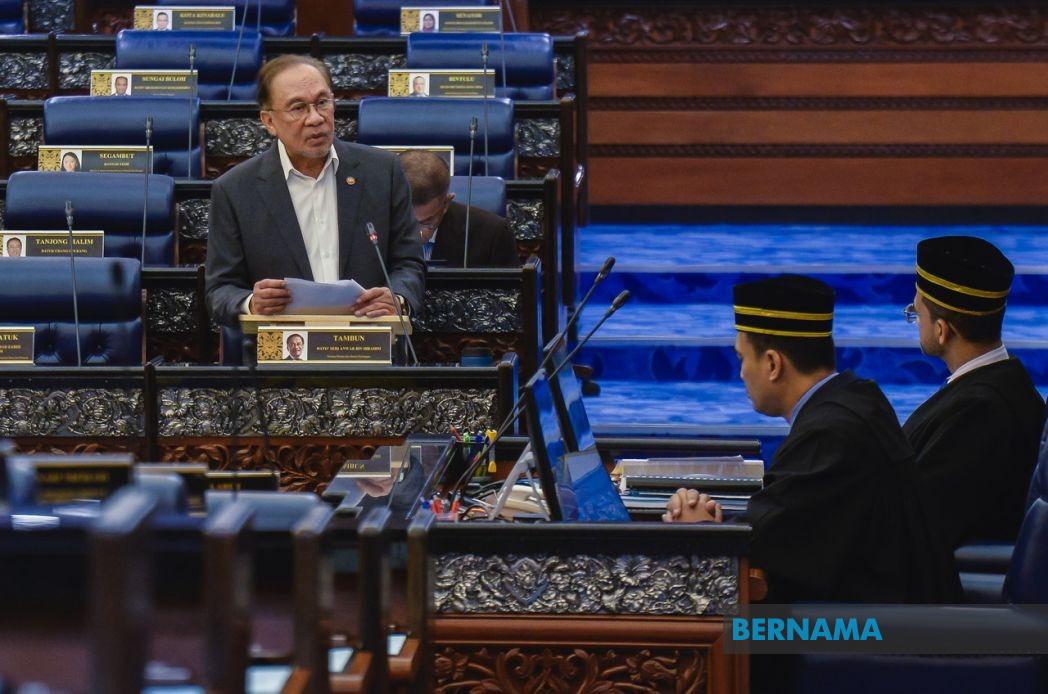
Prime Minister Datuk Seri Anwar Ibrahim has firmly rejected claims that his administration has barred programmes from operating within Federal Land Development Authority settlements, making the distinction during parliamentary proceedings on June 30. The clarification came in response to questions raised in the Dewan Rakyat, where Anwar emphasised that the government maintains an open-door approach to activities organised by state authorities and other bodies wishing to engage with FELDA communities.
The core of Anwar's statement centres on a crucial demarcation between prohibiting events entirely and restricting the use of government machinery for campaigning purposes. Under Malaysian election law, federal resources—including FELDA administrative structures and equipment—cannot be mobilised to support any political party's electoral activities. This legal framework applies uniformly across the administration and does not represent a blanket ban on programmes themselves. State governments and other organisations remain entitled to hold gatherings, launch initiatives, and conduct affairs within FELDA areas without hindrance, provided they operate independently of government apparatus.
The Prime Minister specifically addressed accusations that the government had issued directives to cancel the FELDA Settlers' Day programme scheduled for Kluang in Johor on June 20 and 21. Anwar explicitly denied involvement in any such cancellation, suggesting that confusion may stem from the distinction between government prohibition and the regulatory boundaries surrounding campaign-related activities. This denial carries significance for state-level governance, as it signals the federal administration's commitment to maintaining clear separation between legitimate administrative operations and election-related conduct.
Anwar's remarks underscore that state administrations retain considerable autonomy in their dealings with FELDA communities. A menteri besar faces no governmental obstruction when entering settlements to organise programmes or when his state government decides to issue land titles—matters falling squarely within state jurisdiction. The restriction mechanism targets exclusively the deployment of FELDA institutional resources, not the initiatives themselves. This nuance proves essential for understanding the government's position, particularly in federal systems where state and federal authorities exercise overlapping jurisdictions in rural areas.
The MADANI Government has positioned itself as a custodian of FELDA welfare, departing from what Anwar characterises as historical neglect. According to the Prime Minister, previous administrations permitted FELDA communities to languish without adequate infrastructure investment and developmental attention. The current government's policy framework seeks to reverse this trajectory through targeted initiatives. Establishing dialysis centres within settlements represents a tangible healthcare commitment, while expanding development facilities through federal agencies addresses the broader infrastructure deficit accumulated over decades.
Deputy Prime Minister Datuk Seri Dr Ahmad Zahid Hamidi collaborates with Anwar in driving this revitalisation agenda. Their joint commitment signals cross-party institutional focus on FELDA transformation, moving beyond electoral calculations toward sustained investment in settler communities. This positioning attempts to reframe the government's relationship with FELDA from one of regulatory constraint to one of developmental partnership, emphasising material improvements in living standards and access to services.
The parliamentary clarification occurs within a broader context of rural governance dynamics in Malaysia. FELDA settlements, established across multiple states, have historically served as important constituencies in electoral calculations due to their concentrated populations and agricultural orientation. When federal authorities impose restrictions on the use of government machinery for campaigning, rural communities may experience this differently than urban populations, partly because FELDA administrative structures often provide essential services that blur the line between governance and campaign infrastructure in community perception.
Anwar's distinction between prohibiting programmes and restricting machinery usage reflects evolving interpretation of election law compliance in the current administration. The Election Commission maintains responsibility for ensuring compliance with electoral regulations, but the Prime Minister's parliamentary statement suggests the government itself recognises the need to articulate clearly where legitimate boundaries lie. This transparency serves multiple audiences—state governments seeking guidance on their own activities, FELDA settlers assessing government intentions, and opposition parties monitoring executive conduct.
The broader implications for Malaysian federalism merit consideration. State governments, particularly those not aligned with the federal administration, may utilise FELDA areas for political organising. The government's affirmation that no blanket programme prohibition exists potentially constrains federal authorities' ability to resist opposition state initiatives in federal land schemes. Conversely, states aligned with the federal government gain reassurance that legitimate developmental and governance activities will proceed unimpeded. This equilibrium, however precarious, depends on consistent interpretation and application of the election law framework across all levels.
Looking forward, Anwar's clarification establishes a precedent regarding FELDA administrative autonomy within electoral boundaries. Future disputes over programme cancellations or restrictions will likely reference this parliamentary statement as the standard for assessing government compliance with its own declared principles. The emphasis on improved facilities and services simultaneously serves as a counterargument to any future opposition claims that the government neglects FELDA communities, positioning infrastructure investment as evidence of genuine commitment beyond electoral cycles.
The dialogue between the government and rural constituencies, particularly through FELDA, remains politically consequential. By explicitly denying prohibitions while acknowledging regulatory boundaries, Anwar attempts to navigate between maintaining election law compliance and avoiding perceptions of heavy-handed federal control over state-level activities. Whether this nuanced position satisfies all stakeholders—state governments, FELDA settlers, and electoral watchdogs—will become apparent as implementation proceeds across diverse settlement areas facing varied local political dynamics.

