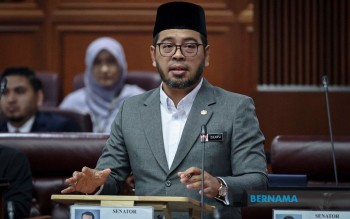
The Malaysian government has undertaken a substantial financial rescue of Lembaga Tabung Haji (TH), committing more than RM10 billion to stabilise the Islamic pilgrimage savings institution following years of financial deterioration. In a parliamentary briefing on the findings of a Royal Commission of Inquiry into TH's collapse, the Minister in the Prime Minister's Department (Religious Affairs), Dr Zulkifli Hasan, clarified that the intervention was designed to restore the institution's solvency and operational viability rather than to position the state for asset acquisition.
The bailout represents a watershed moment in addressing the financial crisis that engulfed TH, which had accumulated a staggering deficit of more than RM10 billion by the final quarter of 2018. At that critical juncture, the institution faced insolvency with only a three-month window to implement corrective action before total systemic failure became inevitable. This dire situation compelled the Pakatan Harapan administration to develop and execute a comprehensive restructuring strategy that would restore TH to financial health and ensure its long-term sustainability as a trusted custodian of Muslim savings for the pilgrimage to Mecca.
Dr Zulkifli emphasised a crucial distinction regarding asset ownership and management in response to public speculation and misinformation circulating about the rescue operation. The assets held within TH's restructuring framework are managed through Urusharta Jamaah, a subsidiary wholly owned by the Minister of Finance Incorporated, ensuring they remain under Malaysian government stewardship rather than being transferred to private entities. This institutional arrangement provides transparency and accountability while maintaining the assets' dedication to serving TH's depositors and supporting the institution's recovery trajectory.
The minister took particular care to address inflammatory claims that had circulated in certain quarters alleging that assets had been sold to non-Muslim interests or transferred to foreign or Chinese entities. Such assertions, Dr Zulkifli asserted, were entirely false and represented attempts by irresponsible parties to inflame communal sensitivities and manipulate public opinion through deliberate misinformation. The clarity on asset ownership was essential to counter narratives that could undermine public confidence in the government's stewardship of this religiously significant institution and damage social cohesion.
The underlying causes of TH's financial catastrophe traced back to systematic mismanagement and embezzlement that had depleted the institution's reserves over an extended period. These breaches of fiduciary responsibility had accumulated to create the massive deficit that threatened the livelihoods of millions of Malaysian Muslims who had entrusted their savings to TH in preparation for their hajj obligations. The Royal Commission of Inquiry's investigation illuminated the depth of these failures, establishing the factual foundation for the government's intervention strategy.
The restructuring plan orchestrated by the Pakatan Harapan government represented more than emergency financial intervention; it constituted a comprehensive reimagining of TH's operational and governance frameworks. By injecting capital through the bailout mechanism, the government essentially absorbed the accumulated losses while simultaneously implementing reforms aimed at preventing recurrence of the institutional failures that had triggered the crisis. This dual approach addressed both immediate solvency concerns and longer-term governance deficiencies.
For Malaysian depositors, the bailout carried profound implications extending beyond the preservation of their accumulated hajj savings. The rescue operation demonstrated government commitment to protecting the religious and financial interests of its Muslim citizens, a constituency that represented the vast majority of TH's base. The intervention reassured millions of Malaysians who had accumulated savings through TH that their contributions would not be forfeited due to administrative negligence or criminal misconduct at institutional leadership levels.
The financial scale of the bailout underscored the magnitude of the mismanagement that had occurred within TH's operations. A deficit exceeding RM10 billion could not be remedied through minor operational adjustments or cosmetic reforms; it demanded systemic intervention and substantial capital infusion. The government's willingness to commit such resources reflected the political and social importance of maintaining TH's viability as an institution integral to Malaysian Muslim life and practice.
From a regional perspective, the TH crisis and its resolution offered lessons regarding institutional governance, financial oversight, and the dangers of concentrated administrative power within religious institutions managing substantial public funds. Southeast Asian governments overseeing similar savings mechanisms or religious endowments could draw insights from both the failures exposed by the RCI and the restructuring approaches adopted during recovery. The Malaysian experience demonstrated how weak internal controls and inadequate external audit mechanisms could permit financial deterioration to advance unchecked until crisis intervention became unavoidable.
The parliamentary briefing on the TH rescue reflected broader questions about accountability and institutional reform. While the government's financial intervention addressed the immediate crisis, the underlying governance improvements and preventive mechanisms would determine whether TH could function sustainably over subsequent decades. The Royal Commission of Inquiry's findings would presumably inform future policy adjustments aimed at strengthening oversight, enhancing transparency, and ensuring that institutional resources remained dedicated to their intended purpose of facilitating pilgrimage for Malaysia's Muslim population while protecting depositor interests.

