The Malaysian government has committed to comprehensive reforms at Lembaga Tabung Haji (TH) to prevent a recurrence of the financial crisis that nearly crippled the institution and could have exposed the state to liabilities exceeding RM74.5 billion. During a lengthy parliamentary session lasting over ten hours on August 12, senior government officials outlined a series of legislative amendments and structural changes designed to strengthen controls over the pilgrim fund's management and investments. The reforms follow a damning Royal Commission of Inquiry report released in July that exposed systematic weaknesses spanning from 2014 to 2020.
Dr Zulkifli Hasan, Minister in the Prime Minister's Department (Religious Affairs), announced that a task force comprising TH chairman Tan Sri Abdul Rashid Hussain, Bank Negara Governor Datuk Seri Abdul Rasheed Ghaffour, and Securities Commission (SC) chairman Datuk Mohammad Faiz Azmi has been established to implement the RCI's recommendations. The task force has already reached consensus on a pivotal restructuring: regulatory responsibility for TH's investment portfolio will transfer to the Securities Commission, while pilgrimage management remains with the religious affairs ministry. This division aims to insulate core hajj operations from investment-related turbulence while subjecting financial activities to stringent capital markets supervision.
The underlying crisis was severe. TH's investment losses had accumulated to nearly RM13 billion before government intervention. More alarming was the potential systemic risk: had panic withdrawals accelerated in 2018 when confidence collapsed, the institution could have triggered liabilities approaching RM74.5 billion for the federal government to absorb. Seven of the fourteen troubled investments recorded total losses, while TH's entanglement in Putrajaya Perdana Bhd had indirectly drawn the pilgrim fund into the 1Malaysia Development Bhd (1MDB) scandal. These revelations underscore how weak governance and inadequate investment oversight transformed TH into a vehicle for high-risk ventures bearing little relation to its primary charitable mission.
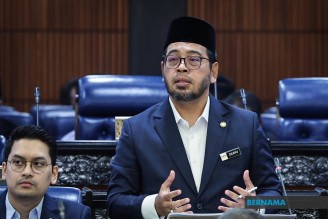
Finance Minister II Datuk Seri Amir Hamzah Azizan stressed that the MADANI administration was disclosing painful truths rather than concealing institutional failures. Accountability would be pursued comprehensively, he said, without favouritism and with zero tolerance for wrongdoing. The government's legislative agenda includes amendments to the Tabung Haji Act 1955 specifically prohibiting active politicians from serving on the board of directors—a critical reform addressing how political capture had enabled questionable investments. Additionally, hibah distributions to depositors will henceforth be calculated only from audited accounts, eliminating the opacity that previously masked mounting losses. Every TH decision will be benchmarked against a single criterion: the interests of the ummah.
Parliamentarians offered diverse proposals during the debate, with 39 MPs given five minutes each to contribute. Aminolhuda Hassan from Sri Gading (PH) advocated for establishing a unified regulator for all significant non-bank financial institutions, arguing that Malaysia currently lacks a single authority wielding consolidated supervisory jurisdiction over prudential regulation, systemic risk assessment, and governance oversight across the non-bank sector. Her proposal encompassed the Employees Provident Fund (EPF), Permodalan Nasional Bhd (PNB), Retirement Fund Incorporated (KWAP), the Armed Forces Fund Board (LTAT), and TH. Such fragmentation has historically allowed major institutional failures to develop unchecked, as no single regulator possessed comprehensive visibility into interconnected risks.
Bentong MP Young Syefura Othman focused on TH's revenue concentration, noting that the institution had relied on UJSB sukuk income for nearly 26 per cent of annual revenue according to the RCI report. This dependency exposed TH to sector-specific shocks and created incentives for aggressive investment strategies to supplement sukuk returns. Reducing reliance on a single income source would enhance financial resilience and reduce pressure to pursue speculative ventures, she suggested. The concern reflects a broader vulnerability in Malaysian institutional finance: over-reliance on particular revenue streams can distort risk management priorities and encourage management to chase returns through increasingly questionable channels.
The RCI itself was announced in 2021, with members appointed on January 20, 2022. Its 211-page report, presented to the Yang di-Pertuan Agong on August 30, 2022 and made public on July 29, 2024, documented extensive operational and management deficiencies across the seven-year period from 2014 to 2020. The report included 25 recommendations for institutional improvement. As of July 30, TH had already implemented 75 per cent of these recommendations, suggesting willingness to embrace reform, though the remaining quarter remains incomplete. The comprehensive analysis has provided the government with a detailed roadmap for transformation, moving beyond ad-hoc crisis management toward systematic preventive architecture.
For Malaysian Muslim depositors who entrust the pilgrim fund with savings earmarked for the hajj, these reforms carry profound significance. The near-catastrophic loss of confidence that triggered panic withdrawals in 2018 reflected legitimate concern that their funds were being gambled away. The introduction of Securities Commission oversight provides external professional scrutiny from an agency experienced in policing capital markets conduct. The prohibition on active politicians from board membership removes the most obvious vector for political patronage and conflicts of interest. Audited account-based hibah distributions restore transparency and eliminate creative accounting that had obscured deteriorating fundamentals. Together, these measures should restore institutional credibility among the Muslim majority who depend on TH's stability.
The broader regional context matters too. Southeast Asian governments increasingly grapple with governance failures at quasi-public financial institutions entrusted with citizens' savings. Whether sovereign wealth funds, pension schemes, or pilgrimage trusts, these entities occupy a grey zone between public accountability and private operational autonomy. TH's crisis exemplifies how political oversight without professional regulation, combined with insufficiently robust audit mechanisms and weak investment mandates, can enable catastrophic misallocation of capital. Malaysia's reform effort, if implemented faithfully, may offer lessons for other countries wrestling with similar institutional vulnerabilities, particularly those with large Muslim populations seeking secure channels for hajj savings.
Implementation fidelity will ultimately determine success. The task force faces the challenge of translating legislative intent into operational practice, ensuring that Securities Commission oversight gains real teeth without strangling legitimate investment activity. TH must rebuild depositor confidence eroded over years of poor performance and hidden losses. Political resistance may emerge if the ban on active politicians from the board is perceived as limiting party patronage networks, though public revelation of TH's travails should sustain pressure for meaningful compliance. The coming months will test whether Malaysia's governance crisis at TH catalyzes genuine institutional renewal or devolves into cosmetic adjustment. The ummah's financial security, and the government's credibility in safeguarding public institutions, depends on seeing commitments translated into concrete change.

