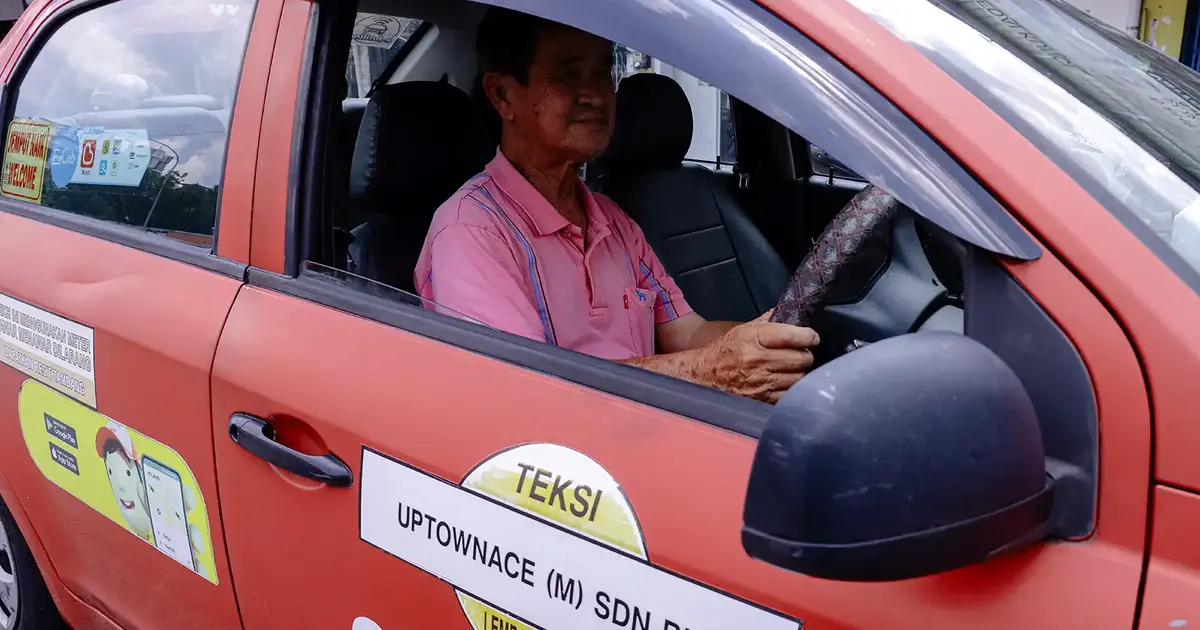
Malaysia's government has announced a supplementary allocation of RM10 million specifically directed towards taxi drivers, underscoring the administration's recognition of their economic significance and social role. Prime Minister Anwar Ibrahim framed the initiative within a broader context of valuing workers who operate at the intersection of public service and economic activity, particularly those whose daily interactions with foreign visitors contribute substantially to Malaysia's global perception.
Taxi drivers occupy a unique position in Malaysia's service economy, functioning as informal ambassadors who provide first impressions to international tourists and business travellers arriving at airports, transport hubs, and city centres. Their professionalism, product knowledge, and interpersonal skills directly influence visitor experiences and, by extension, Malaysia's reputation as a welcoming and well-organised destination. This symbolic recognition by the Prime Minister signals that policymakers increasingly view frontline service workers as integral to Malaysia's competitive positioning in regional and global tourism markets.
The RM10 million commitment addresses a sector that has experienced considerable financial strain over recent years. Taxi drivers have navigated mounting operational costs including fuel expenses, vehicle maintenance, insurance premiums, and licensing fees, while simultaneously facing intensified competition from ride-hailing platforms such as Grab and Maxim. This structural pressure has compressed profit margins and created economic uncertainty for drivers who depend on daily earnings to support themselves and their families.
The timing of this allocation reflects governmental awareness of the taxi industry's persistent difficulties. Unlike ride-hailing services that operate through algorithmic matching and digital payments, traditional taxis rely on street-hailing and established routes, limiting their flexibility to respond to changing market conditions. Many drivers are aging or semi-retired workers who lack the digital literacy or smartphone ownership to transition towards newer business models, making targeted government support a practical necessity rather than merely symbolic gesture.
Malaysia's taxi sector comprises an estimated 60,000 licensed drivers operating under various regulatory frameworks across states and cities. These workers represent a significant constituency whose livelihoods remain vulnerable to technological disruption and economic cycles. Previous support schemes have included fuel subsidies, vehicle purchasing assistance, and training programmes aimed at improving service quality. The latest RM10 million injection demonstrates continued commitment to sustaining this workforce even as the broader mobility landscape continues evolving.
The policy announcement also reflects considerations about employment stability in a sector employing thousands of Malaysians and their dependents. Unlike formal employment contracts that provide severance, pension, and medical benefits, taxi drivers operate as independent operators bearing full responsibility for business costs and personal welfare provisions. Government assistance serves as a partial buffer against income volatility and unexpected expenses, whether from vehicle repairs or temporary loss of income during economic downturns or public health emergencies.
FromAsian perspective, Malaysia's approach parallels efforts by other regional governments to support traditional taxi industries facing digital transformation challenges. Thailand, Indonesia, and the Philippines have implemented comparable programmes recognising that abrupt market disruption without corresponding support creates social instability and unemployment among vulnerable worker populations. Singapore's more aggressive approach of integrating taxis into digitalised platforms through government-regulated frameworks offers an alternative model that Malaysia might eventually consider as complementary to direct financial assistance.
The allocation's designation specifically for taxi drivers rather than broader transport categories underscores the political significance of maintaining rural and urban connectivity. Taxis serve less profitable routes and passenger demographics that ride-hailing platforms deliberately avoid, particularly late-night services, disabled passengers, and journeys to peripheral areas. Without dedicated support, systematic withdrawal from these services could compromise transport access for vulnerable populations across Malaysia's socioeconomic spectrum.
Implementation mechanisms for the RM10 million fund remain crucial to determining the policy's effectiveness. Distribution channels might include direct cash transfers, subsidised maintenance programmes, training initiatives to enhance service competitiveness, or technology adoption grants enabling drivers to integrate digital booking systems. Transparent allocation procedures and accountability measures would ensure resources genuinely benefit intended recipients rather than disappearing through bureaucratic intermediaries or being captured by well-connected operators.
The announcement carries implications extending beyond individual driver welfare to broader questions about Malaysia's economic transition strategy. As the nation pursues digital economy objectives and service sector upgrading, decisions about supporting incumbent workers and industries become increasingly consequential. Balancing innovation encouragement against employment protection requires deliberate policy choices that recognise both competitive market dynamics and social obligations to workers whose skills may not readily transfer to emerging sectors.
Longer-term sustainability of Malaysia's taxi industry likely depends on structural adaptations beyond temporary financial support. Encouraging collaborative arrangements between traditional taxi operators and digital platforms, facilitating industry consolidation to improve operational efficiency, and investing in driver education programmes for customer service excellence could generate more durable competitive advantages. Government support should ideally catalyse industry transformation rather than merely subsidising continuation of dated business models.
The RM10 million commitment represents recognition that Malaysia's development trajectory encompasses not only cutting-edge technology adoption but also social responsibility toward workers displaced by market transformation. This balanced perspective acknowledges that economic progress measured solely through GDP growth or productivity indices overlooks human costs borne by workers in declining sectors. By channeling resources toward taxi drivers, the government demonstrates responsiveness to legitimate worker concerns while maintaining broader development objectives.

