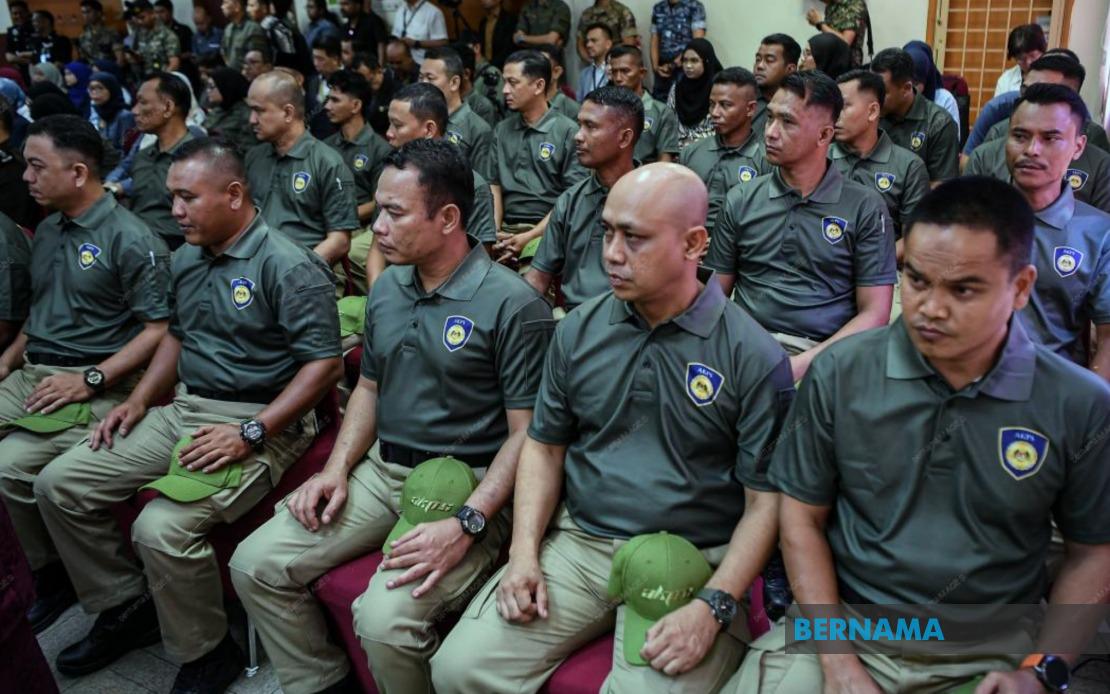
The Malaysian government has moved to reassure thousands of civil servants that their employment protections remain intact as the Border Control and Protection Agency (AKPS) undergoes a significant administrative restructuring set to commence on July 1. Deputy Home Minister Datuk Seri Dr Shamsul Anuar Nasarah delivered these assurances during parliamentary proceedings, addressing widespread concerns among enforcement personnel about the implications of shifting to a unified service scheme managed by the Public Service Department (PSD).
At the heart of the transition lies a fundamental reorganisation of how AKPS—itself a relatively recent institution formed through the consolidation of multiple enforcement bodies—will operate under civil service governance. The agency currently manages border security and customs control across 122 national entry points, making it a critical component of Malaysia's immigration and customs infrastructure. The move represents an effort to standardise employment conditions across these consolidated agencies while maintaining operational continuity at these strategically important locations.
Shamsul Anuar provided specific reassurances that officers electing to remain under their original service frameworks within their parent agencies will face no disadvantages whatsoever. This protection extends across multiple dimensions critical to public sector employment: advancement opportunities through the promotion pipeline, recognition of service seniority accumulated under previous arrangements, entitlements upon retirement, and the comprehensive welfare provisions that characterise Malaysian civil service employment. The government's emphasis on these guarantees reflects sensitivity to the anxieties that major institutional changes typically generate among affected workforces.
The staffing architecture of AKPS has historically relied upon a secondment model, where officers from core enforcement departments were assigned to border control positions while technically remaining employees of their originating agencies. This interim arrangement created complexity regarding permanent career pathways and service conditions. Under the new scheme, the PSD will assume greater administrative responsibility, potentially offering clearer career progression but raising legitimate questions about whether protections would translate smoothly across the institutional boundary.
For personnel declining the transfer to the new AKPS service scheme, the government has outlined a structured redeployment process. These officers will initially maintain positions within AKPS on a transitional basis whilst the PSD coordinates permanent placement arrangements. Subsequently, individuals may be reassigned to their original parent departments, with specific postings determined by departmental leadership according to operational vacancies and institutional requirements. This staged approach aims to prevent sudden disruptions whilst enabling systematic reallocation according to service priorities.
Current staffing levels reveal the ongoing challenge of maintaining full operational capacity across border operations. As of mid-June, AKPS had filled 6,824 of its 8,403 allocated positions, leaving approximately 1,579 vacancies. These gaps represent genuine operational concerns for an agency responsible for monitoring movement across the nation's external boundaries. The government indicated that filling these positions occurs through coordinated recruitment efforts involving AKPS leadership, the Home Ministry, the PSD, and the contributing agencies, suggesting recognition that vacancies represent a meaningful constraint on effectiveness.
To incentivise personnel to accept positions within the reorganised AKPS framework and to offset any perceived disadvantages from the transition, the government has introduced supplementary financial arrangements. These include an additional annual salary increment mechanism (known locally as KGT) and a RM200 annual service incentive allowance. These provisions explicitly acknowledge that relocation to the new service scheme carries implicit costs—whether psychological, in terms of transferred seniority recognition, or operational, given the demanding nature of border control work. The financial sweeteners represent an attempt to bridge the gap between maintaining institutional stability and individual employee concerns.
The broader context surrounding this transition reflects Malaysia's ongoing efforts to strengthen border security and modernise its public service infrastructure. Regional security challenges, including transnational crime and irregular migration patterns affecting Southeast Asia, create operational pressures on agencies like AKPS. Institutional restructuring must therefore balance administrative efficiency gains against the very real risk that personnel uncertainty could degrade service quality precisely when enforcement demands are intensifying. The government's detailed assurances appear calibrated to prevent a morale collapse that could undermine these critical functions.
Shamsul Anuar's parliamentary intervention was prompted by direct questioning regarding institutional stability and civil service welfare implications, suggesting that concerns about the transition had reached parliamentary level. This political attention underscores the sensitivity surrounding changes affecting thousands of public sector employees. By providing comprehensive written assurances through the formal parliamentary record, the government has created a documented commitment that personnel can reference should disputes arise regarding promised protections during implementation.
The success of this transition will ultimately depend on whether the PSD and participating agencies can translate these theoretical protections into practical implementation. Civil service restructurings routinely generate friction between policy commitments and operational reality, particularly when coordinating across multiple institutional actors with divergent priorities. The presence of 1,579 vacancies simultaneously complicates matters, as recruitment pressures might incentivise shortcuts that undermine protections ostensibly extended to incumbent personnel.
For Malaysian readers and regional observers, this restructuring carries implications beyond immediate personnel management. Border control agencies directly affect everything from trade facilitation and tourism flows to security operations and customs revenue collection. Staff morale and institutional coherence at these agencies consequently ripple through economic and security dimensions of governance. The government's efforts to smooth this transition reflect awareness that administrative restructuring affecting thousands cannot be treated as merely technical exercises disconnected from broader policy effectiveness.
Looking forward, the July 1 implementation date represents a defined inflection point that will test whether theoretical protections translate into practice. The government's specific numerical commitments regarding filled positions and the transparent acknowledgment of existing vacancies suggest a degree of accountability that may help anchor compliance with stated assurances. However, the coming months will reveal whether the coordination mechanisms linking AKPS, Home Ministry, PSD and originating agencies function sufficiently smoothly to deliver on these commitments without degrading operational capacity at critical border infrastructure.

