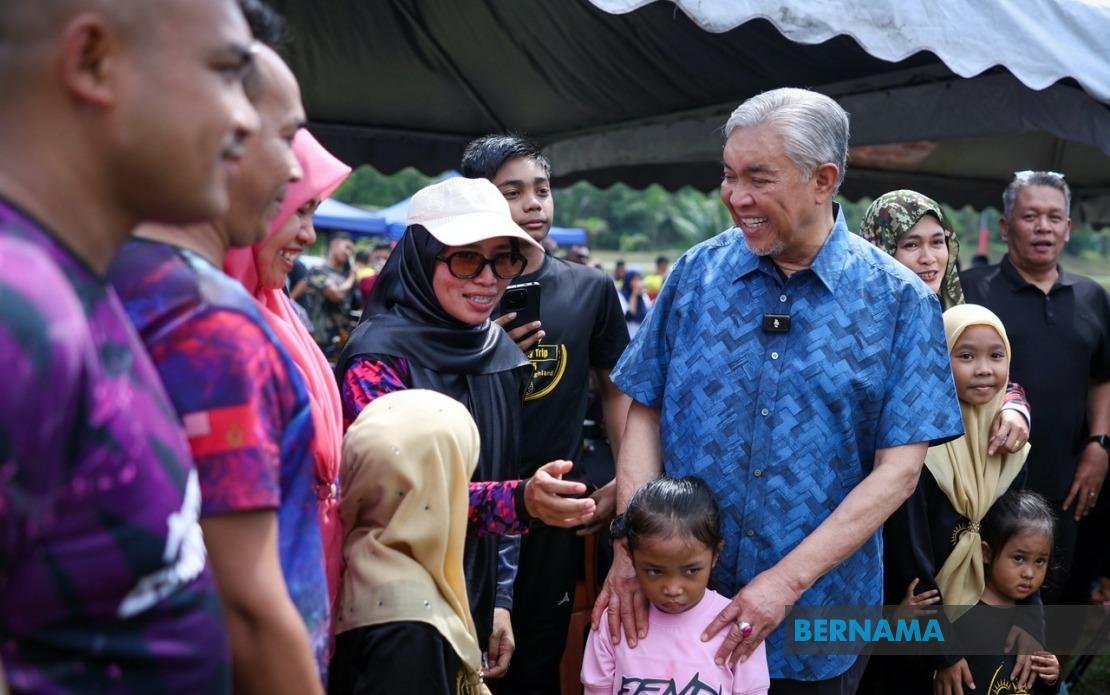
Deputy Prime Minister Datuk Seri Dr Ahmad Zahid Hamidi has underscored the government's commitment to comprehensive welfare support for Malaysian Armed Forces (ATM) personnel and their families, framing such investments as essential to maintaining military operational effectiveness. Speaking at the Southern Zone ATM Family Day Carnival at Kem Syed Sirajuddin in Gemas on July 26, Ahmad Zahid stressed that when service members and their dependents have their fundamental needs met, they can dedicate themselves fully to the nation's defence without distraction or concern.
The government's welfare agenda encompasses three interconnected pillars: housing, education, and broader family support systems. Ahmad Zahid articulated the rationale behind this integrated approach, noting that military personnel cannot perform their constitutional duties with the required focus if they are preoccupied with inadequate accommodation or their children's schooling challenges. This framing reflects a strategic understanding that military readiness depends not only on hardware and training but also on the psychological assurance that families are properly cared for.
Among the concrete initiatives announced is the construction of 1,300 Military Family Housing (RKAT) units at Kem Syed Sirajuddin in Gemas, representing a substantial infrastructure investment in military accommodation nationwide. This project forms part of a broader modernisation effort to upgrade living conditions across the armed forces, addressing long-standing concerns about military housing standards and availability. The scale of this undertaking reflects government acknowledgement that housing shortages and poor quality have been chronic issues affecting service personnel morale and retention.
Educational support for military families has also received renewed emphasis, with Ahmad Zahid highlighting improvements to schooling facilities and transport arrangements for children. The government recognises that safe and reliable transport to educational institutions removes a significant logistical burden from military families, many of whom are stationed in remote or geographically challenging locations. Enhanced educational infrastructure represents an investment in the next generation while simultaneously supporting current personnel retention and satisfaction.
Prime Minister Datuk Seri Anwar Ibrahim reinforced this welfare commitment in remarks made the previous Friday, allocating RM844 million under this year's housing services budget specifically for military family accommodation upgrades and development projects. This substantial budgetary commitment demonstrates that welfare for serving and retired military personnel occupies a prominent position in the government's fiscal priorities. The allocation encompasses both new housing construction and essential infrastructure upgrades at military installations across the country, ensuring that improvements reach personnel stationed at diverse locations.
The timing and emphasis of these announcements reflect broader governmental recognition that military personnel represent a distinct demographic deserving targeted policy attention. Unlike civilian workers, service members operate under unique constraints including geographic posting requirements, security restrictions, and the inherent dangers of their profession. The government's welfare framework acknowledges these distinctive circumstances, treating military family support not as optional social programming but as a fundamental obligation tied to national security requirements.
Army Chief Gen Tan Sri Azhan Md Othman's presence at the carnival underscored institutional endorsement of the welfare initiatives, signalling alignment between political leadership and military command regarding priorities. This coordination is significant because it demonstrates that welfare improvements receive validation from those directly responsible for operational readiness. When military leadership publicly supports such initiatives, it carries weight among service personnel who may otherwise regard government pledges with scepticism based on historical experience.
The philosophical foundation underlying these initiatives rests on a principle that has gained international acceptance in modern military policy: personnel welfare directly correlates with operational capability. Military forces that neglect their personnel's fundamental needs experience higher attrition rates, reduced morale, diminished training effectiveness, and compromised unit cohesion. By contrast, militaries that provide comprehensive support for families and address housing and educational concerns typically enjoy stronger retention of experienced personnel and more stable institutional functioning.
For Malaysia specifically, these welfare commitments carry particular significance given the country's security environment and the ATM's multiple operational commitments. Beyond conventional defence responsibilities, Malaysian armed forces engage in counter-terrorism operations, maritime security patrols, disaster relief, and border security across vast geographical areas. Personnel engaged in such demanding and sometimes hazardous work require the assurance that their families' basic needs are secured, reducing psychological stress that could compromise their field performance.
The housing and education initiatives also carry broader implications for military families' economic stability and social mobility. Well-constructed military housing reduces housing costs for service members, effectively increasing their disposable income and improving living standards. Similarly, quality educational facilities and transport support enhance children's academic prospects, facilitating upward mobility for military families and strengthening the social fabric binding military communities together.
These policy commitments also address historical grievances that have periodically emerged within the armed forces regarding material treatment and family support. By visibly investing in housing, education, and welfare infrastructure, the government provides tangible evidence of its stated commitment to military personnel. Such concrete measures carry greater impact among service members than rhetorical acknowledgements of their sacrifices and contributions.
Moving forward, the success of these initiatives will depend on implementation quality and ensuring that allocated funds translate into genuinely improved conditions rather than unfulfilled promises. Military families typically develop keen awareness of gaps between announced programmes and actual service delivery, so rigorous project management and transparent progress reporting will be essential to maintaining credibility. The RM844 million allocation represents a meaningful commitment, but sustained political will and bureaucratic efficiency will determine whether these investments achieve their intended effect of enhancing military personnel welfare and, by extension, national defence capability.

