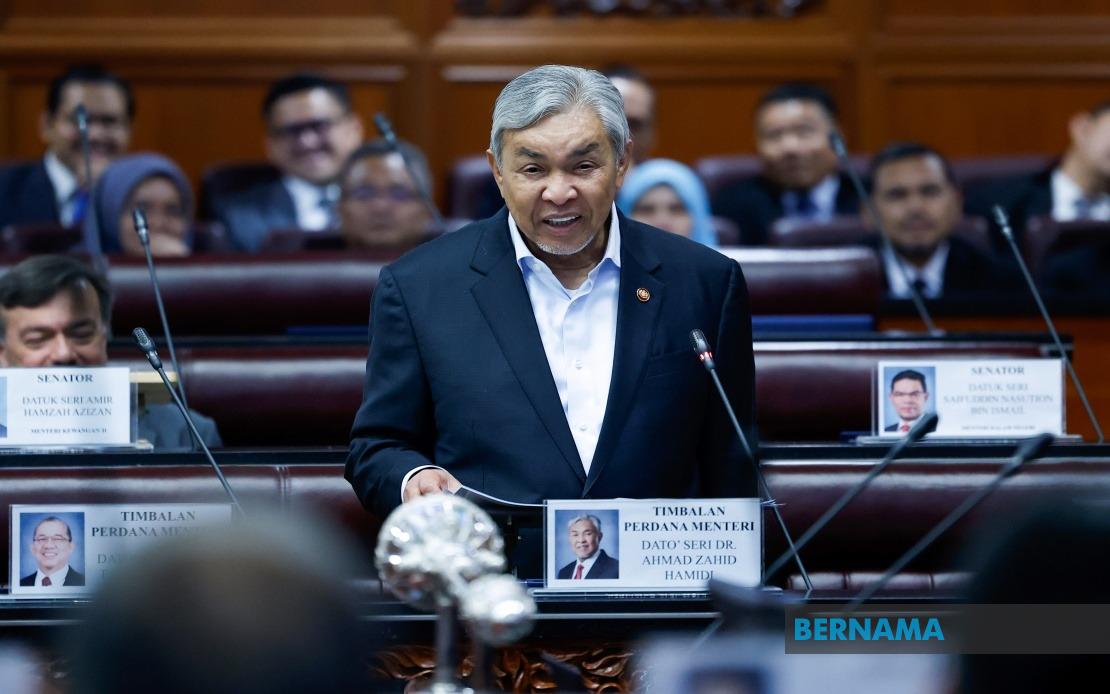
The government is undertaking a comprehensive review of its land administration framework governing federal land settlement schemes, with Deputy Prime Minister Datuk Seri Dr Ahmad Zahid Hamidi confirming that several significant proposals are under consideration to modernize regulations that have remained largely unchanged since 1960. The administration is examining mechanisms to streamline heir registration procedures and clarify inheritance pathways, whilst simultaneously exploring provisions that would permit settlers to construct more than one residential unit on allocated plots, subject to stringent conditions and approval from state and local planning authorities.
Ahmad Zahid's remarks, delivered as Rural and Regional Development Minister, signal a recognition within government circles that the existing framework struggles to accommodate contemporary needs, particularly among younger generations of FELDA beneficiaries seeking greater flexibility in how they utilize their land entitlements. The proposed amendments reflect broader acknowledgment that rigid restrictions imposed during the scheme's inception no longer align with evolving settlement patterns, demographic pressures, and economic aspirations of rural communities. By permitting multiple dwelling units subject to planning compliance, the government appears intent on facilitating incremental housing development without compromising the original settler protections that remain fundamental to the scheme's foundational principles.
The proposal to restrict heir registration to two nominated individuals represents a significant departure from previous inheritance arrangements, though the government has not yet detailed how existing multi-heir situations will be managed during any transition period. This limitation likely aims to reduce administrative complexity and expedite land title processing, which has historically suffered from protracted delays when managing extensive heir networks. The appointment of a single administrative representative would further centralize decision-making regarding land transactions and leasing arrangements, potentially streamlining communications between settler families and government agencies whilst establishing clearer accountability structures within the administration framework.
Crucially, Ahmad Zahid emphasized that proposed amendments must maintain equilibrium among competing interests: protecting the rights and inheritance expectations of current settlers, accommodating the legitimate housing aspirations of FELDA's second generation, respecting state governments' regulatory autonomy over land administration within their jurisdictions, and advancing national development priorities. This balancing exercise carries significant political complexity, as any perceived erosion of settler protections risks alienating crucial rural constituencies, whilst excessive rigidity would exacerbate housing shortages affecting young families dependent upon FELDA's developmental support infrastructure. The government's cautious approach reflects awareness that reform must be genuinely consultative rather than imposed, necessitating sustained dialogue with settler communities before legislative changes proceed.
Progress on land title issuance demonstrates substantial but incomplete achievement across the FELDA system. With 109,104 of 112,638 settlers nationally, representing 96.86 percent, now holding registered land titles, the government has substantially resolved a longstanding grievance that previously left many settlers vulnerable to disputes and unable to leverage their land as collateral for financial services. The remaining 3,534 settlers without titles, whilst numerically small as a proportion, still represent thousands of families awaiting legal clarification of their ownership rights. Government coordination with state land authorities and district offices continues in efforts to complete title registration in staged phases, acknowledging that bureaucratic capacity constraints require managed timelines rather than precipitous implementation.
The government's assertion that it has worked closely with state governments and land offices reflects the constitutional reality that land administration remains fundamentally a state matter under Malaysia's federal system, requiring genuine partnership rather than federal directives. This institutional arrangement, whilst sometimes generating coordination challenges, ensures that local contexts and preferences shape implementation approaches. The staged completion of title issuance recognizes practical constraints whilst reinforcing government commitment to eventually guaranteeing legal ownership security for all FELDA beneficiaries, addressing a critical deficiency that previously constrained settlers' economic opportunities and intergenerational wealth accumulation.
FELCRA Berhad's progress on housing site title issuance presents a more complex picture, with 4,274 of 6,025 house site lots, or approximately 71 percent, having received formal titles as of June 2026. The remaining 1,751 lots remain immobilized within state land office processing pipelines, reflecting administrative bottlenecks that systematically impede FELCRA beneficiaries' ability to consolidate legal ownership rights. FELCRA's involvement in managing this process, combined with dependence upon state authority cooperation, illustrates the institutional fragmentation that has historically characterized Malaysian land administration, where multiple agencies with overlapping mandates create administrative friction. These unresolved titles affect 43 separate projects nationwide, suggesting that remediation requires coordinated action across numerous state and federal touchpoints rather than isolated interventions.
For Malaysian and Southeast Asian observers, the government's review of FELDA land administration framework carries implications extending beyond settler communities themselves. The scheme represents a foundational component of Malaysia's post-independence rural development strategy, and modernizing its regulatory framework signals broader commitment to updating inherited colonial-era legislation that continues governing significant land areas. The proposals outlined—particularly permitting multi-unit development and rationalizing heir registration—suggest incremental liberalization rather than fundamental dismantling, preserving settler protection whilst acknowledging that contemporary economic dynamics require greater flexibility than historical arrangements accommodated.
The regional significance lies partly in demonstrating how Southeast Asian governments navigate land reform in contexts where settlement schemes carry deep historical and political meaning. Unlike wholesale land privatization or communal reversion, FELDA's incremental modernization approach maintains continuity with original developmental objectives whilst pragmatically accommodating changing circumstances. For neighboring countries managing comparable land settlement systems—notably Indonesia's transmigration program and Thailand's cooperative settlement initiatives—Malaysia's experience offers instructive lessons regarding sustainable institutional evolution.
The government's emphasis on balancing settler interests against new-generation housing needs reflects demographic realities affecting rural Malaysia, where land-constrained younger population cohorts seek economic independence from parental landholdings yet frequently lack capital for additional land acquisition. Permitting multiple dwelling units on existing lots offers potential intermediate pathways, enabling family members to construct separate homes without fragmenting consolidated holdings into non-viable parcels. This approach addresses genuine hardship among second-generation beneficiaries without destabilizing the land consolidation logic underlying the original scheme's design.
Successful implementation of proposed amendments will demand sustained political will and bureaucratic capacity. The government must navigate legitimate settler concerns regarding inheritance and land security, manage state governments' diverse preferences regarding land administration modernization, and implement changes through institutional structures that have demonstrated inconsistent execution on previous reform initiatives. The extended timelines for title issuance completion suggest that governmental execution capacity remains constrained, implying that even well-intentioned reforms may encounter implementation delays affecting ultimate beneficiary realization of intended improvements.
Moving forward, the government's commitment to completing these reviews and consulting affected stakeholders will determine whether proposed amendments genuinely modernize the framework or merely postpone unresolved tensions. The substantial progress on FELDA title issuance offers cautious optimism that bureaucratic systems can eventually resolve accumulated backlogs, though FELCRA's ongoing struggles suggest that state-level coordination remains inconsistent. For Malaysian settlers awaiting title resolution, the government's review represents both opportunity for meaningful improvement and reminder that substantive land reform requires extended implementation timelines and sustained institutional commitment beyond initial legislative enactment.

