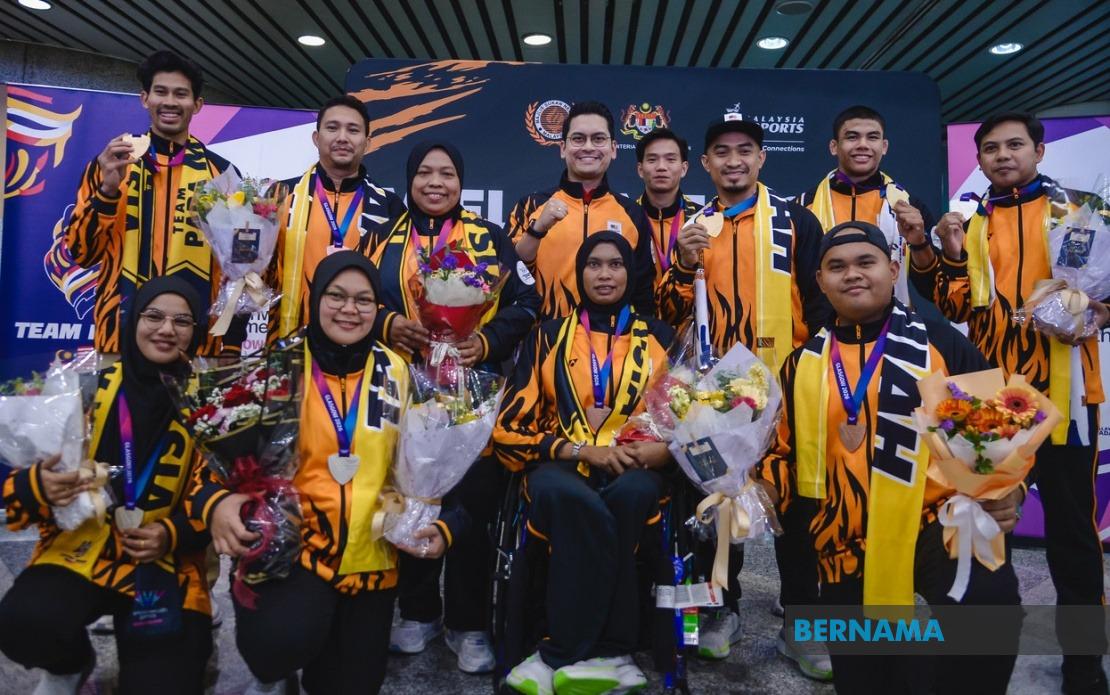
The Malaysian government has earmarked RM1.1 million in financial rewards for the nation's medal-winning athletes at the 2026 Glasgow Commonwealth Games, underscoring the administration's commitment to recognising sporting excellence and athlete dedication. Youth and Sports Minister Dr. Mohammed Taufiq Johari announced the disbursement scheme at the Kuala Lumpur International Airport, where the returning delegation received an official welcome ceremony. The allocation represents both gratitude for the athletes' contributions to national pride and a tangible investment in future sporting ambitions across the region.
The incentive structure has been carefully calibrated to reward achievement across all medal categories whilst elevating gold-medal performance. Gold medalists will receive RM80,000 each, with an additional RM10,000 bonus for those who establish new Commonwealth Games records—a provision designed to incentivise record-breaking performances. Silver medalists will take home RM40,000, while bronze medalists receive RM20,000. This tiered approach reflects a deliberate prioritisation of top-tier achievement whilst acknowledging the value of all podium finishes. The reward amounts, though substantial by regional standards, may be subject to upward revision as the National Sports Council engages with corporate sponsors to supplement government funding, suggesting potential for enhanced incentives in future competitions.
Malaysia's haul of eight gold, three silver, and five bronze medals represents a significant success, particularly given that the contingent was smaller than teams sent to previous Commonwealth Games editions. This achievement demonstrates improved efficiency in athlete selection and preparation, surpassing the initial target of five gold medals and exceeding expectations across the broader medal count. The performance ranks among Malaysia's strongest Commonwealth Games showings since 2010, validating the ministry's recent strategic overhaul in how medal targets are conceptualised and pursued. The success carries particular weight for Malaysian sports administrators who had questioned whether setting rigid colour-based targets might psychologically burden athletes with excessive pressure.
Dr. Mohammed Taufiq emphasised that the ministry's pivot towards colour-specific medal targets—particularly focusing on gold—represents a fundamental shift in sporting philosophy. Rather than treating all medals equivalently, the new approach channels organisational effort and athlete motivation towards the highest echelon of performance. This strategic reorientation emerged from comprehensive consultations with sports associations, coaches, and athletes themselves, ensuring that ambitious targets retained credibility and feasibility. The minister positioned the gold-focused targeting system as foundational work towards an ambitious long-term objective: securing Malaysia's first-ever Olympic gold medal. Such aspirations underscore how Commonwealth Games performance serves as a training ground and confidence builder for athletes progressing towards Olympic competition.
The psychological dimension of this strategic shift warrants examination, particularly for Malaysian sports professionals. Initially, officials harboured concerns that emphasising gold medals above all other outcomes might demoralise athletes competing in non-gold events or create counterproductive anxiety. Instead, the experience in Glasgow suggests that clearly articulated, colour-based targets energised the athletic community by providing transparent benchmarks and removing ambiguity about organisational priorities. This represents a maturation in how Malaysia approaches elite sports management, moving beyond generic excellence rhetoric towards specific, measurable aspirations. The approach carries implications for how Southeast Asian nations conceptualise sporting development, potentially influencing regional competitors' strategic planning.
Datuk Awalan Abdul Aziz, serving as Chef de Mission and President of the Malaysian Lawn Bowls Federation, offered perspective on how individual sports navigated the government's medal targets. The lawn bowls squad, whilst internally aspiring to gold medals, refrained from publicly adopting gold as an official target, fearing excessive psychological pressure on competitors. This cautious approach yielded two silver and two bronze medals—a marked improvement over the one silver and one bronze secured at Birmingham 2022. The deliberate separation between internal aspirations and external targets demonstrates sophisticated understanding of sports psychology, acknowledging that publicly communicated expectations can either galvanise or destabilise athlete performance depending on contextual factors and individual temperament.
The Glasgow outcome validates the ministry's comprehensive approach to athlete development and competition preparation. Success resulted not from isolated excellence but from coordinated effort spanning athlete training regimes, coaching staff expertise, sports association involvement, and government resource allocation. The contingent's ability to exceed colour-based medal targets across multiple sports indicates successful talent identification, targeted investment, and effective preparation protocols. For Malaysian policymakers, this success provides empirical evidence supporting continued investment in elite sports infrastructure and athlete support systems, even as government resources remain constrained relative to larger developed economies. The returns on investment, measured in both medals and international recognition, justify the policy direction adopted by the ministry.
Looking forward, the government's commitment to establishing RM1.1 million in immediate rewards, potentially supplemented by additional corporate funding, signals confidence in sustained medal-winning performance at future Commonwealth Games. The colour-based targeting methodology will likely persist as the governing framework for Malaysian sports strategy, with continuous refinement based on performance data and stakeholder feedback. For athletes, the financial rewards provide material recognition of sacrifice and achievement, potentially enhancing recruitment and retention within competitive sports. The scheme also carries broader cultural significance, elevating sporting achievement within national consciousness and encouraging younger Malaysians to pursue athletic excellence as a viable and respected career pathway.
Regionally, Malaysia's Glasgow performance and accompanying policy innovations merit attention from neighbouring Southeast Asian nations competing in Commonwealth Games and other international sporting forums. The success demonstrates that medal achievements are not predetermined by population size or economic capacity but rather reflect strategic prioritisation, focused resource deployment, and sophisticated athlete management. Countries across the region might draw lessons from Malaysia's colour-based targeting approach and its integration of multi-stakeholder consultation in developing sporting strategy. As Southeast Asia continues developing its sports infrastructure and competing for international recognition, the Malaysian model offers a template for balancing ambitious goals with realistic assessment of resources and human capital availability.
The RM1.1 million allocation and supporting policy framework represent more than immediate financial recognition; they constitute investment in Malaysia's sporting future and positioning within regional and global athletic competition. By rewarding medal achievement, prioritising gold-medal pursuit, and creating transparent performance incentives, the government has constructed a systematic approach to elite sports development that extends beyond individual competitions. The success in Glasgow provides momentum for continued advancement towards the ministry's ultimate objective of Olympic gold-medal achievement, a goal that would fundamentally elevate Malaysia's status within the international sporting community and inspire future generations of athletes to pursue excellence at the highest levels of competition.

