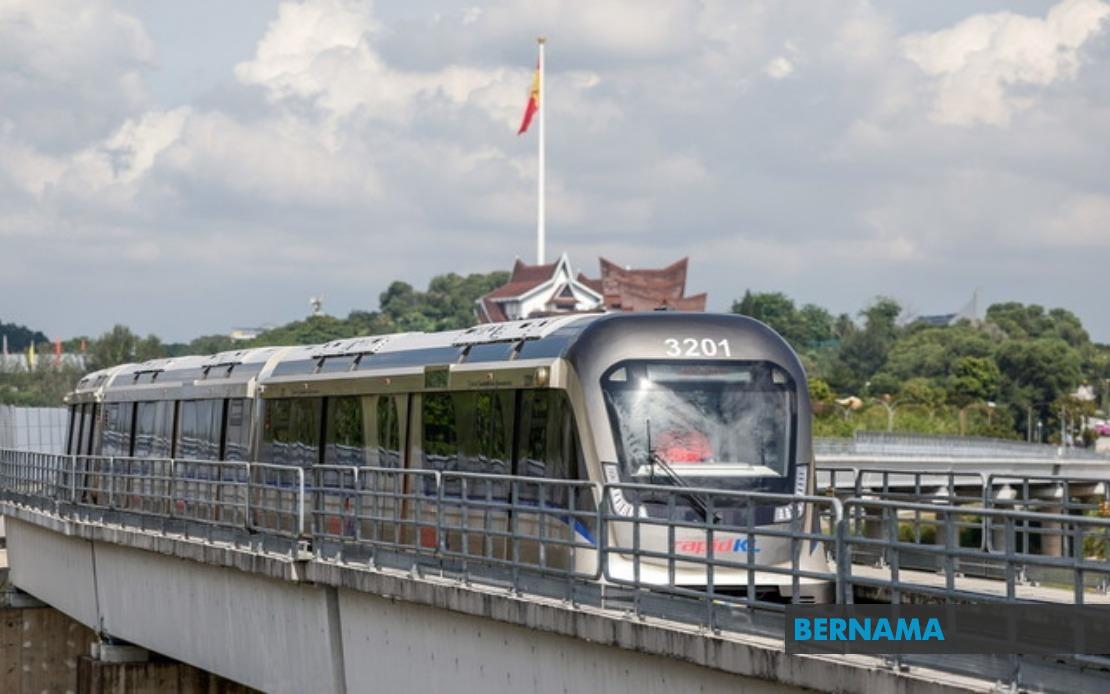
The MADANI Government has committed to seeking an audience with Sultan Sharafuddin Idris Shah to offer detailed explanations regarding the LRT3 Shah Alam Line, responding to royal concerns expressed about the project's escalating expenses and persistent construction delays. Transport Minister Anthony Loke made the announcement during a charity gathering in Kuala Lumpur, signalling the administration's willingness to directly engage with Selangor's ruler on the controversial transit initiative that has become emblematic of Malaysia's infrastructure development challenges.
Loke stated that his ministry would arrange the meeting to provide comprehensive clarification on the project's trajectory and current status. The commitment underscores the sensitivity surrounding large-scale public infrastructure ventures, particularly those affecting major metropolitan areas and carrying substantial budgetary implications. The decision to seek royal audience reflects constitutional protocols while also acknowledging that the ruler's public commentary carries significant weight in shaping public perception of government initiatives.
Sultan Sharafuddin had previously articulated pointed observations about the LRT3's troubled history. Following the transition in federal administration in 2018, the project experienced a suspension spanning more than 18 months, a pause that effectively froze progress and planning. The difficulties compounded when the COVID-19 pandemic imposed an additional 19-month delay that extended into 2021, meaning the project lost nearly four years in combined downtime across the two interruptions.
The cumulative effect of these suspensions prompted significant project revisions that substantially altered its original scope. Each station's planned dimensions were reduced, necessitating structural and operational adjustments. The number of train carriages designated for the line was decreased, directly affecting the system's passenger capacity and operational efficiency. Most notably, five stations originally planned along the route were eliminated entirely, shrinking the network's geographic coverage and potentially limiting accessibility for communities the original proposal would have served.
The Sultan emphasised a crucial philosophical point about the project's purpose and value proposition. He stressed that the LRT3 venture was conceived not as a prestige-driven megaproject designed to demonstrate governmental ambition or international competitiveness, but rather as a practical infrastructure development intended to deliver tangible benefits to ordinary Selangor residents. This framing challenges the notion that the project exists primarily to showcase development credentials, instead positioning it as a utilitarian initiative whose primary justification must rest on genuine service delivery to commuters and communities.
Parallel to addressing the LRT3 matter, Loke highlighted complementary transport policy initiatives aimed at facilitating democratic participation. The Ministry of Transport had developed measures to enhance public transport accessibility for voters returning to their home constituencies for elections. Recognising that geographical distance often discourages electoral participation, particularly among interstate and international migrants, the ministry pursued practical solutions to reduce barriers to voting.
Keretapi Tanah Melayu Berhad, the primary national rail operator, agreed to substantially increase Electric Train Service frequency on the Kuala Lumpur to Johor Bahru corridor. This augmented service directly benefits outstation voters planning to return for the 16th Johor State Election scheduled for July 11. The expanded capacity permits not only direct journeys between the two major terminals but also intermediate stops at stations including Segamat and Labis, providing flexible routing options for voters scattered throughout the state.
The electoral logistics assume particular importance given the scale of the Johor state contest. The election encompasses 56 state seats contested by 172 candidates, representing a comprehensive political engagement across the state's constituencies. Early voting, scheduled for July 7, preceded the main polling day, allowing those unable to return by the primary date an opportunity to exercise franchise. The coordination between transport authorities and electoral bodies illustrates how infrastructure decisions carry implications extending beyond their primary design purpose into civic participation and democratic accessibility.
For Malaysian readers and regional observers, the LRT3 situation encapsulates broader tensions within the national infrastructure development agenda. The project's troubled trajectory reflects vulnerabilities inherent in long-term capital projects vulnerable to political disruption and external economic shocks. Each suspension cascades through subsequent decisions, forcing costly redesigns and scope reductions that ultimately diminish the original development ambition. The Sultan's critique implicitly raises questions about cost-benefit analysis and whether truncated versions of infrastructure projects deliver justifiable returns on invested resources.
The willingness of Transport Minister Loke to engage directly with the ruler on the LRT3 matter demonstrates recognition that royal institutions in Malaysia's constitutional framework possess legitimate authority to scrutinise public projects affecting their territories. This deference, whether politically calculated or principled, acknowledges that megaprojects imposing long-term consequences on state residents warrant explanation and justification to state leadership, not merely to federal bureaucratic structures.
The convergence of these transportation matters—addressing a troubled existing project while simultaneously enhancing transport access for electoral purposes—illustrates how infrastructure becomes embedded within broader political and social dynamics. Transport policy intersects with development aspirations, budgetary constraints, democratic processes, and constitutional relationships simultaneously. For Southeast Asian nations pursuing infrastructure modernisation while navigating complex political environments, Malaysia's experience with projects like LRT3 offers cautionary lessons about long-term planning vulnerability and the necessity of sustained political commitment transcending electoral cycles and administrative transitions.

