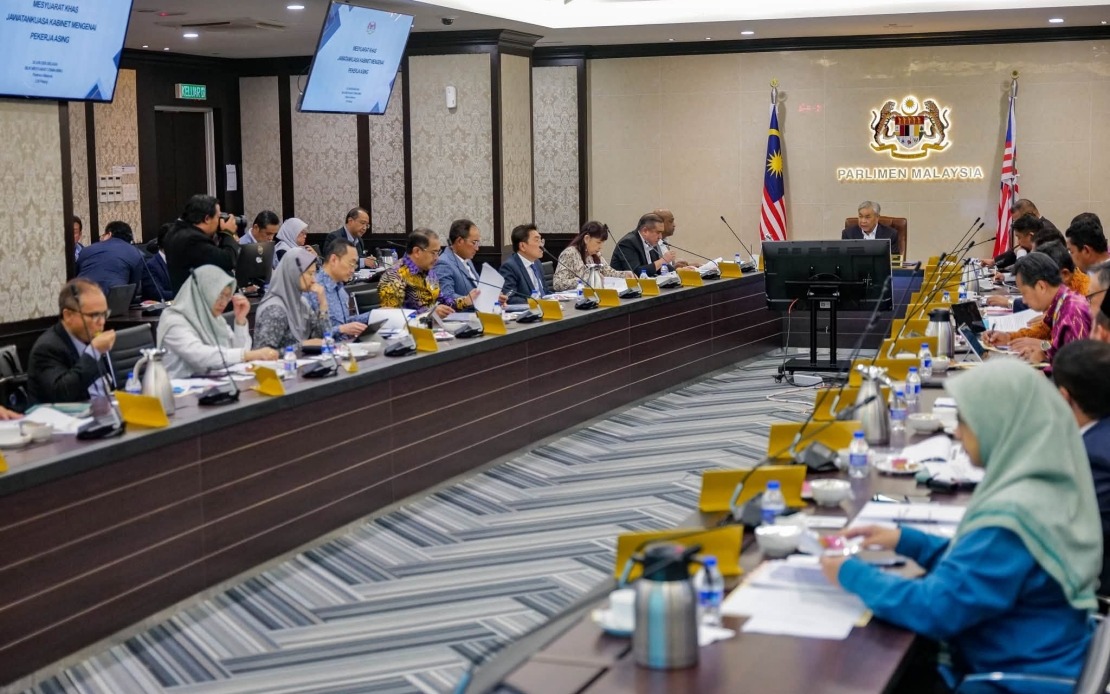
The Malaysian government is embarking on a significant restructuring of how it manages foreign workers, aiming to create a more streamlined and responsive system that better serves national interests while balancing industry demands. Deputy Prime Minister Datuk Seri Dr Ahmad Zahid Hamidi announced the overhaul following a special Cabinet Committee meeting on Foreign Workers held at Parliament, signalling this is a priority reform at the highest governmental level.
The restructuring reflects growing recognition that Malaysia's approach to foreign labour requires modernisation. Currently, responsibility for foreign worker management is scattered across multiple agencies, creating inefficiencies and coordination challenges. By consolidating operations and placing the One Stop Centre for Foreign Worker Management under the Ministry of Human Resources, the government intends to streamline approvals, reduce bureaucratic friction, and provide clearer pathways for both employers seeking workers and workers themselves navigating Malaysia's complex labour framework.
For Malaysian employers, this centralisation offers potential benefits through faster processing times and more transparent procedures. The one-stop model, when effectively executed, can eliminate the need to visit multiple offices and reduce the time required to recruit and deploy foreign workers. This matters significantly for labour-intensive industries such as manufacturing, construction, agriculture, and hospitality, which depend on foreign workers but lose productivity to administrative delays.
However, the restructuring also reflects the government's stated commitment to reducing reliance on foreign labour. This dual objective—improving foreign worker management efficiency while simultaneously decreasing dependence on foreign staff—presents a delicate policy balance. The government plans to achieve this through boosting local workforce participation, developing skilled workers, and encouraging industrial automation. These initiatives acknowledge that Malaysia cannot sustainably maintain its current foreign worker numbers, particularly as competition for migrant labour intensifies across Southeast Asia and as automation technologies mature.
The Cabinet Committee's emphasis on strategic review of foreign labour requirements represents a shift toward more evidence-based decision-making. Rather than automatically approving requests from industries claiming labour shortages, the government will scrutinise whether those shortages reflect genuine gaps or simply employer preferences for cheaper, more compliant foreign workers. This approach aligns with broader regional trends, as countries from Thailand to Vietnam grapple with balancing labour market needs against social tensions around wages, working conditions, and job displacement of nationals.
National security and integrity considerations are explicitly incorporated into the restructuring framework. The government's emphasis on ensuring the system "upholds integrity" suggests tighter oversight to combat exploitation, trafficking, and undocumented labour. Malaysia has faced international criticism over labour abuses and trafficking vulnerabilities, particularly among migrant workers in agriculture, domestic work, and manufacturing. A more cohesive management structure could facilitate better enforcement of minimum standards, though success depends heavily on implementation quality and resourcing of compliance mechanisms.
The restructuring also addresses a longstanding concern: the patchwork nature of existing oversight has allowed some unscrupulous employers and recruitment agents to operate with minimal consequences. A unified One Stop Centre, backed by Ministry of Human Resources authority, can theoretically establish consistent standards across industries and regions. Whether this translates to improved worker protections depends on whether the Ministry receives adequate enforcement resources and political support to penalise violations.
For Southeast Asian readers, Malaysia's approach offers instructive lessons. The region's rapid economic development has created intense competition for migrant labour, driving significant cross-border flows from Myanmar, Cambodia, Laos, and the Philippines. Malaysia's size and relative wealth make it a major destination, but its experiences with managing integration, preventing exploitation, and balancing national priorities with foreign worker dependence directly mirror challenges facing neighbouring economies. How effectively Malaysia executes this restructuring could influence how regional peers approach similar reforms.
The government's commitment to maintaining foreign worker management within the framework of "national security and employment opportunities for Malaysians" underscores awareness that public sentiment around foreign labour is sensitive. Many Malaysians view foreign workers with ambivalence or concern, worried about competition for jobs, wage suppression, and social cohesion. A restructuring that visibly prioritises local worker protection and reduces perceived foreign labour influx could have positive political resonance, provided actual implementation matches rhetoric.
The timing of this restructuring coincides with broader government efforts to modernise labour administration. The appointment of new leadership at the Ministry of Human Resources signals determination to execute meaningful change rather than merely announce intentions. However, experience with previous labour policy reforms suggests implementation gaps often emerge between announcement and execution, particularly when institutional capacity constraints exist or when industry lobbying pressures the government to relax standards.
Industrial sectors will watch closely how the restructuring evolves. Manufacturing, construction, and agriculture sectors that heavily depend on foreign labour will seek assurances that the new system does not impose insurmountable barriers to recruitment. Conversely, worker advocates and civil society organisations will monitor whether improved coordination genuinely strengthens protections or merely creates a more efficient system for deploying vulnerable workers. The success of this restructuring will ultimately be measured not by administrative elegance but by concrete improvements in worker treatment and labour market outcomes for Malaysians.
The Cabinet's decision reflects mature governance recognition that Malaysia's foreign worker system requires fundamental reform. Whether the Ministry of Human Resources can translate organisational restructuring into tangible improvements in efficiency, integrity, and fairness will determine whether this initiative represents genuine progress or merely bureaucratic reshuffling.

