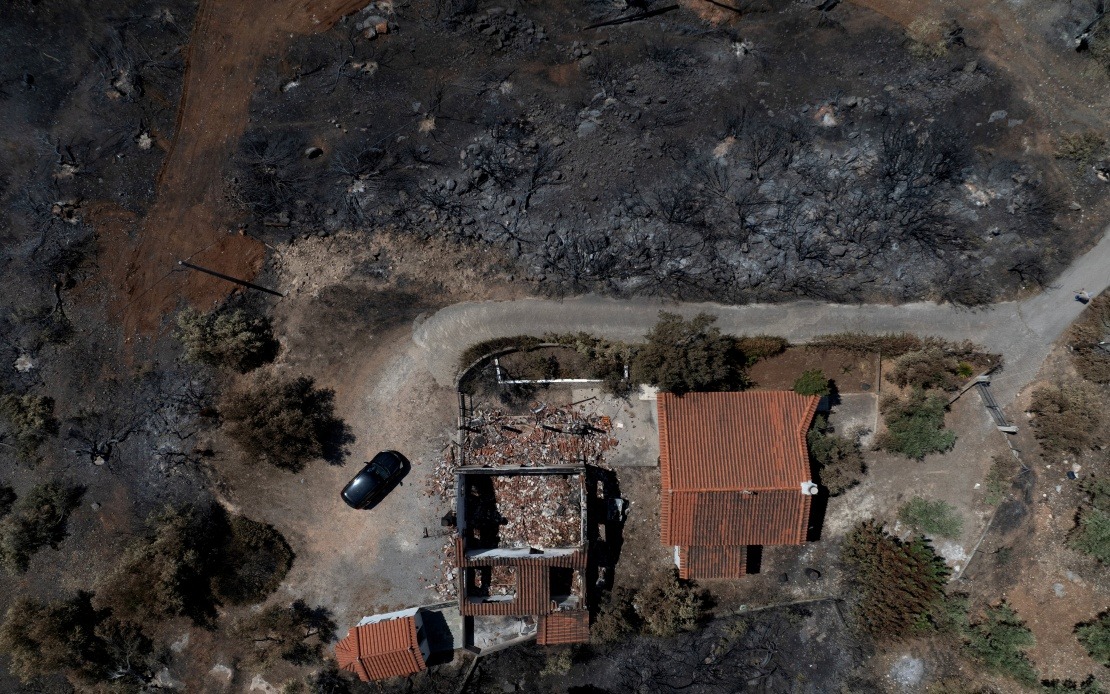
Greece has activated its highest-level wildfire alert for three critical regions, signalling the country's escalating struggle with dangerous fire conditions. The General Secretariat for Civil Protection placed Attica, Viotia and Evia on Category 4 alert for Thursday, the maximum threat designation, reflecting meteorological conditions and vegetation factors that combine to create exceptionally volatile burning circumstances. This decision mobilises the entire National Civil Protection Mechanism at full operational capacity, transforming the affected areas into zones of heightened emergency preparedness.
The alert represents far more than a bureaucratic protocol. It commits substantial state resources to preventing catastrophic spread of fire across inhabited and forested terrain near Greece's capital. Fire service teams, police units and armed forces personnel are conducting continuous ground and aerial surveillance across vulnerable zones. The government has established preventive traffic restrictions in forest areas and designated vulnerable locations, effectively limiting civilian access to regions where ignition sources could prove catastrophic. Residents received explicit guidance to refrain from activities that typically trigger wildfires—discarded cigarettes, unattended campfires and uncontrolled burning of agricultural waste.
Firefighters are simultaneously battling multiple major incidents that demonstrate the ongoing crisis. A significant blaze near Koropi, located southeast of Athens in low vegetation zones, erupted Wednesday afternoon and required rapid mobilisation of substantial aerial and ground resources. The Fire Service deployed fifty-two personnel including three specialised forest commando units and fourteen ground vehicles to the scene. The aerial component involved four helicopters and two water-dropping aircraft coordinating a comprehensive response strategy. Thermal and optical drone camera systems allowed operations coordinators to track fire behaviour in real time while local water tankers supplemented the aerial suppression effort. Investigators from an arson investigation team were dispatched to examine the Koropi fire's origins.
A far more destructive wildfire continues ravaging areas across Viotia and western Attica from an ignition that occurred last week. Satellite monitoring through the European Union's Copernicus system has documented that this single blaze has consumed approximately 14,424 hectares, equivalent to 35,642 acres of forest and agricultural land. The fire's scale and persistence underscore the severity of conditions faced by Greek emergency responders. Crew fatigue, equipment limitations and geographical challenges compound the difficulty of containing such extensive incidents within populated regions.
The human cost of these operations remains a sobering reality. Sunday's collision between two firefighting helicopters resulted in the deaths of a Danish pilot and a Greek aerial coordinator, casualties that highlight the operational risks inherent in aerial firefighting missions. These personnel were supporting suppression efforts against the major Viotia fire when the tragic accident occurred. The incident reflects the dangerous conditions and complex coordination required when deploying aircraft near active fire zones and difficult terrain.
For Malaysian and Southeast Asian observers, Greece's experience illuminates evolving climate challenges affecting Mediterranean and temperate regions globally. Wildfire seasons have intensified dramatically across southern Europe over recent decades, driven by warming temperatures, extended drought periods and shifting precipitation patterns. Regional governments face mounting pressure to enhance early warning systems, coordinate cross-border response mechanisms and invest in preventive infrastructure. Greece's activation of maximum-level alerts and deployment of specialist units represents standard contemporary practice in nations facing frequent, severe fire seasons.
The implications extend beyond Greece's borders. European Union countries increasingly share firefighting resources, personnel and expertise during major incidents, establishing precedents for regional cooperation during environmental emergencies. Malaysia and other Southeast Asian nations facing monsoon-influenced fire seasons in forest regions observe these international responses with professional interest. While geographic and climatic contexts differ, principles of pre-positioning resources, establishing graduated alert systems and coordinating aerial suppression assets remain universally applicable across diverse ecosystems.
The economic and social consequences of major wildfires carry particular weight in densely populated regions. Attica contains Athens and surrounding urban concentrations housing millions of people. Smoke from uncontrolled fires threatens air quality, public health and economic activity across extended areas. Agricultural lands burned in Viotia represent productive resources essential to rural livelihoods. Infrastructure including homes, roads and utilities becomes vulnerable to fire proximity. Recovery timelines extend across years as ecosystems regenerate and communities rebuild.
Greece's robust response infrastructure reflects lessons learned from successive fire seasons. Investment in specialised commando units trained specifically in forest firefighting, procurement of modern water-dropping aircraft and development of drone-based monitoring systems have strengthened response capacity. However, prevention remains the most cost-effective strategy. Land management practices, vegetation clearance in buffer zones around communities and public education campaigns reduce ignition probabilities and fire spread rates. As climate patterns continue shifting, governments across multiple continents anticipate requiring enhanced prevention frameworks and expanded emergency response budgets.

