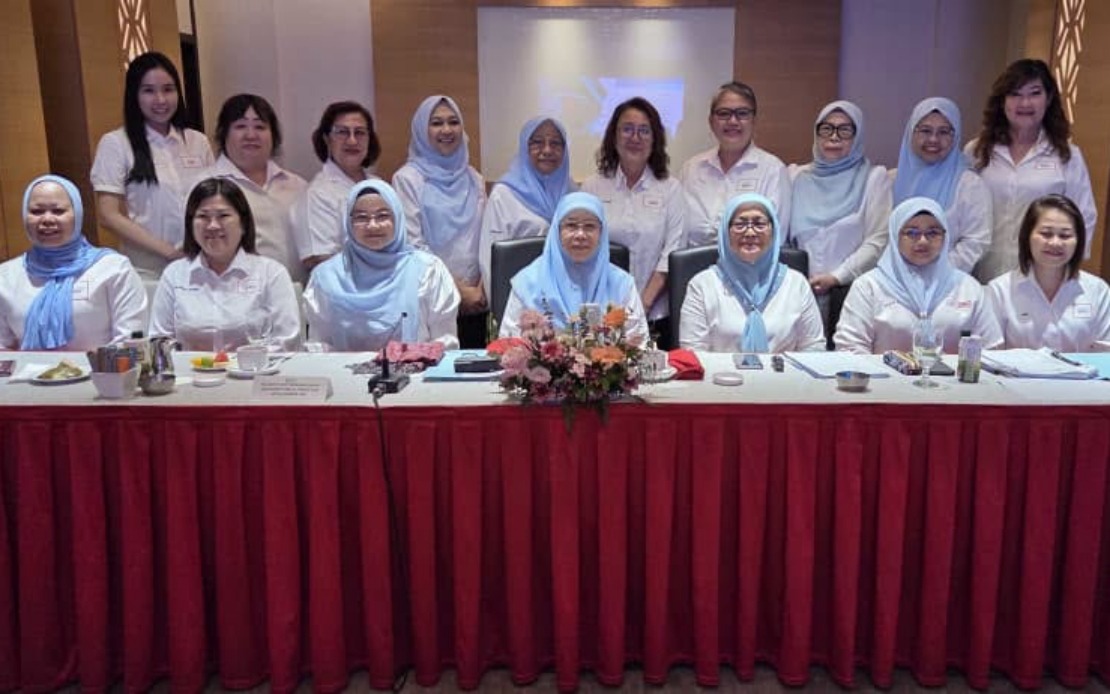
The women's division of Sabah's ruling coalition has taken a significant organizational step by establishing five specialized operational units designed to enhance its political machinery and grassroots effectiveness in the lead-up to the next general election. Datuk Seri Azizah Mohd Dun, the wing's chief, announced the decision following a meeting in Kota Kinabalu, signalling an institutional pivot toward more structured and responsive campaign planning within the party structure.
The decision reflects a broader strategic shift within the Gabungan Rakyat Sabah (GRS) to maximize the political potential of its women's division, traditionally a significant mobilizing force in Malaysian politics. By compartmentalizing responsibilities across five distinct units, the party aims to create specialized capacity in areas critical to electoral success while simultaneously deepening its connection with voters across different community sectors. The move underscores recognition that modern political competition requires not just unified messaging but also targeted, issue-specific engagement with different voter demographics.
The five new units each carry distinct mandates aligned with key policy areas. The Policy and Strategy Unit, which Azizah will personally oversee, functions as the strategic brain of the wing, responsible for developing coherent political positioning and long-term planning. The Economic Unit, headed by Datuk Surinam Sadikun, will focus on bread-and-butter issues that resonate with working families and small business operators. The Health Unit, under Simi Linggom's direction, acknowledges the heightened attention to healthcare accessibility and pandemic preparedness that has defined post-2020 Malaysian politics. The Information Unit, led by Datin Atin Belynda Buntot, will manage communications and counter-messaging in an increasingly digital political environment. Finally, the Welfare Unit under Datin Wong Siow Lee @ Mary Wong addresses social safety nets and poverty alleviation—perennial concerns that shape voting patterns.
This organizational restructuring carries particular significance for Sabah, where the GRS coalition has consolidated power following the 2020 political realignment. The state's political landscape has historically been fluid, with coalitions forming and reforming around regional interests and local personalities. By professionalizing its women's wing operations, GRS is attempting to build institutional durability that transcends individual political figures and establishes deeper roots in community structures.
Azizah's emphasis on preventing organizational complacency highlights an internal challenge facing parties that have recently consolidated power. Governing parties often become vulnerable to electoral reversals when internal discipline loosens and grassroots engagement becomes perfunctory. Her insistence that the wing cannot afford to remain in a comfort zone acknowledges this risk and signals determination to maintain momentum despite occupying the dominant position in state politics.
The appointment of specific leaders to each unit also reflects careful political balancing within the coalition's women's division. By assigning leadership roles to multiple individuals, GRS distributes influence and prevents excessive concentration of power within the women's structures, a consideration that matters considerably in Malaysian party dynamics where factional competitions frequently emerge within larger party organizations.
From a broader Southeast Asian perspective, this organizational move exemplifies how Malaysian political parties are increasingly adopting corporatized management structures and specialized functional divisions. This pattern mirrors developments in Singapore's People's Action Party and Indonesia's dominant party structures, suggesting a regional trend toward professionalizing party machinery beyond purely volunteer-based networks. For Malaysian observers, the GRS initiative represents an attempt to modernize political organization while maintaining the coalition-building traditions central to Sabah politics.
The women's wing itself carries substantial electoral weight in Malaysia. Women comprise roughly half the voting population, and women-focused party divisions have proven effective at translating policy concerns into voting behavior. GRS's investment in the women's wing therefore represents recognition that electoral victory increasingly depends on targeted appeal to women voters concerned with healthcare, education, economic opportunity, and family welfare. By creating specialized units addressing these domains, the party is effectively deploying women leaders as substantive policy advocates rather than primarily as symbols.
Looking forward, the success of these units will depend substantially on implementation capacity and political will. Malaysian parties frequently announce structural reforms that fail to generate meaningful change if senior party leadership does not sustain attention and resources. Azizah's continued personal involvement with the Policy and Strategy Unit suggests potential for meaningful follow-through, though outcomes will ultimately reflect party-wide commitment to empowering the women's wing as a strategic asset rather than a ceremonial component.
The timing of this organizational expansion, though formally positioned as general election preparation, also reflects GRS's awareness of ongoing political competition at the national level and the possibility of snap elections. Malaysian politics has demonstrated increasing unpredictability in recent years, making operational readiness a practical political imperative. Parties that maintain robust, mobilized grassroots structures prove more resilient when elections are called unexpectedly, providing organizational advantage that can translate into incremental electoral gains across multiple constituencies.

